
Soups & Stews
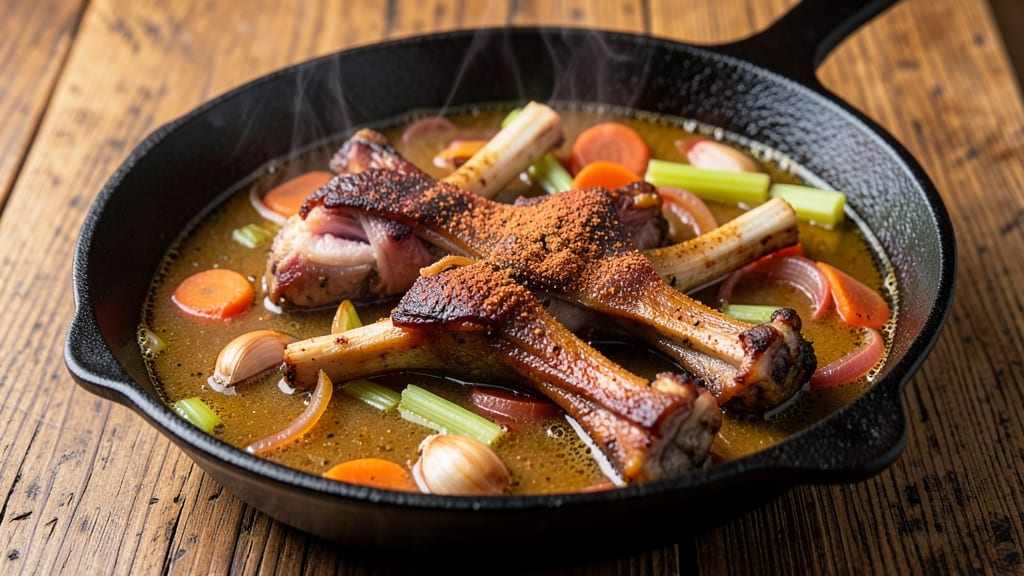
Slow-simmered soul food neck bones deliver the kind of rich, meaty comfort that turns ordinary weeknights into family gatherings. The secret lies in hours of gentle cooking that transforms tough bones into tender, flavorful morsels that practically melt in your mouth.
This recipe carries the weight of tradition—every spice, every slow simmer, every drop of broth is a tribute to the soul food heritage that makes it unforgettable.
What sets this dish apart is the balance of bold seasoning—smoky paprika, earthy garlic, and deep umami from soy sauce—all working together to create a broth so flavorful it deserves its own bowl.
The key technique is low-and-slow cooking, which breaks down collagen for that signature soul food richness while keeping the meat tender. No shortcuts here; this is the real deal, built to feed a crowd and leave everyone asking for seconds.
By the time you serve it, your kitchen will smell like Sunday dinner, and every bite will carry that perfect harmony of smoky, savory, and slightly sweet flavors.
The bones themselves become so tender they fall apart at the touch of a fork, releasing their marrow into the broth for maximum richness. This isn’t just a recipe—it’s an experience that connects generations through the power of home cooking.
Pair it with classic sides like buttery cornbread and collard greens for the full soul food spread. The leftovers? Even better the next day, as the flavors deepen and the broth becomes even more irresistible. Let’s get cooking—this is the kind of meal that turns ordinary days into memories.
Ingredients for soul food neck bone
Traditional soul food ingredients that transform tough bones into melt-in-your-mouth comfort.
| Ingredient | Amount | Notes |
|---|---|---|
| Pork Neck Bones 🦴 | 4 lb | With meat still attached, raw |
| Yellow Onion 🧅 | 2 whole | Medium size, chopped |
| Celery Stalks 🥬 | 4 whole | Cut into 1-inch pieces |
| Carrots 🥕 | 3 whole | Medium size, chopped |
| Garlic Cloves 🧄 | 8 cloves | Peeled, smashed |
| Smoked Paprika 🌶️ | 2 tbsp | High-quality, not cayenne |
| Ground Black Pepper 🌶️ | 1 tbsp | Freshly cracked |
| Dried Thyme 🌿 | 1 tbsp | Or 1 tbsp fresh |
| Bay Leaves 🌿 | 4 whole | Standard size |
| Salt 🧂 | 2 tbsp | Kosher or sea salt |
| Light Soy Sauce 🥄 | ½ cup | For umami depth |
| Apple Cider Vinegar 🍏 | 2 tbsp | For brightness |
| Water 💧 | 6 cups | Or low-sodium broth |
| Butter 🧈 | ½ cup | Unsalted, for richness |
The pork neck bones are the heart of this dish—look for marbled, meaty bones at your butcher or Costco for the best quality. If you can't find neck bones, pork shoulder bones work as a substitute, though they may yield slightly less marrow. The smoked paprika is non-negotiable; Penzeys or McCormick brands deliver that authentic soul food smokiness. For the vegetables, fresh, crisp celery and carrots add natural sweetness that balances the richness. If you're short on time, frozen chopped vegetables work in a pinch, though fresh is always preferred for that home-cooked taste. The garlic? Freshly smashed cloves release more flavor than pre-minced, so take that extra 30 seconds to crush them in a mortar or heavy pan.
No smoked paprika? Substitute 1 tbsp regular paprika plus ½ tsp liquid smoke—just don’t overdo it. Running low on thyme? Fresh thyme leaves work at a 1:1 ratio, or swap in ½ tsp dried oregano for a different but still soulful flavor. The soy sauce adds that deep umami kick—Kikkoman is reliable, but any light soy will do. For a vegetarian twist, replace the bones with mushrooms or extra vegetables and use vegetable broth instead of water. The butter at the end isn’t just for flavor; it emulsifies the broth for that silky texture, so don’t skip it unless you're watching fat content.
This dish tastes even better the next day as the flavors meld—double the batch if you're feeding a crowd. Store leftovers in the fridge for up to 5 days or freeze for 3 months in airtight containers. For serving, skim off any hardened fat before reheating, or simmer gently to redistribute the richness. The bones themselves are edible and packed with flavor, but if you prefer, pick them clean and serve the broth separately for dipping cornbread or over greens. The broth reduces as it cooks, so add a splash of water if it gets too thick before serving.
Why You'll Love This Recipe
- One-Pot Magic: I swear by this recipe because it’s all in one pot—no chopping boards, no extra pans. Just toss in the neck bones, dump in the onions, celery, carrots, and garlic, and let the slow simmer do the work. My hands stay clean, and my kitchen stays tidy.
- Deep, Rich Payoff: That first bite? Chef’s kiss. The neck bones render into crispy, flavor-packed shards while the broth turns into a velvety, savory elixir—thanks to the garlic and onions caramelizing right in the pot. It’s the kind of dish that makes you slow down and savor every spoonful.
- Meal Prep MVP: Between us, this recipe is my go-to for lazy Sundays or busy weeknights. Cook a big batch, and you’ve got leftovers for days—freeze some for later, or serve it over rice for a hearty lunch the next day. My freezer’s always stocked with this stuff.
- Budget-Friendly Feast: Pork neck bones are dirt cheap compared to other cuts, and they stretch into a massive pot of soul food. Honestly, it’s one of those recipes where you end up with more than you need, but nobody complains when seconds are on the table. Win-win.
Step-by-step instructions for slow-simmered soul food neck bones
This method delivers melt-in-your-mouth pork that falls from the bone with rich, flavorful broth.
Prepare the Bones and Aromatics
Pat the 4 lb pork neck bones completely dry with paper towels to remove any surface moisture. This step is crucial—wet bones won't brown properly and can make the broth cloudy. Place the bones in a large Dutch oven or heavy pot that can handle at least 6 cups liquid without overflowing.
In a separate bowl, combine the chopped 2 whole yellow onion, 4 whole celery stalks cut into 1-inch pieces, and 3 whole carrots chopped into similar-sized pieces. Add the 8 cloves peeled and smashed garlic cloves. This aromatic vegetable mix forms the flavor foundation for your broth, so don't skip chopping them finely.
Sear the Bones for Deep Flavor
Heat your Dutch oven over medium-high heat until it's very hot. Add the pork neck bones in a single layer and sear for 5-7 minutes, turning occasionally, until they develop a deep golden-brown crust. This caramelization creates complex flavors that will infuse your broth. Don't crowd the pot—work in batches if needed to achieve proper browning.
Once the bones are well-browned, remove them from the pot and set aside. Add the prepared vegetable mixture to the same pot and cook for 5 minutes, stirring occasionally, until the vegetables begin to soften and release their juices. This step develops additional flavor by cooking down the vegetables before adding liquid.
Build the Flavor Base
Return the seared pork neck bones to the pot. Sprinkle the 2 tbsp smoked paprika, 1 tbsp ground black pepper, 1 tbsp dried thyme, 4 whole bay leaves, and 2 tbsp salt evenly over the bones and vegetables. Stir gently to coat everything with the spices, ensuring the bones are well-covered. The spices will infuse into both the meat and the broth as they simmer.
Pour in the 0.5 cup light soy sauce and 2 tbsp apple cider vinegar, stirring to combine. The soy sauce adds umami depth while the vinegar provides brightness that cuts through the richness. Add the 6 cups water, bringing the total liquid to just cover the bones and vegetables. Bring the mixture to a boil over high heat, then immediately reduce the heat to maintain a gentle simmer.
Simmer Until Fork-Tender
Cover the pot and let it simmer gently for 3 hours. I know this seems like a long time, but patience is key here—this slow cooking breaks down the collagen in the bones and connective tissue, creating that luxurious, melt-in-your-mouth texture. Check the liquid level occasionally and add hot water if needed to keep the bones covered.
After 3 hours, remove the lid and increase the heat to medium. Simmer uncovered for another 30-45 minutes until the pork meat is fork-tender and easily pulls away from the bones. You'll know it's ready when you can see the meat fibers beginning to separate. The broth should have reduced slightly and developed a rich, deep color and aroma.
Finish with Butter and Strain
Reduce the heat to low and stir in the 0.5 cup butter, allowing it to melt completely and incorporate into the broth. This final step adds richness and helps create a velvety texture. Taste and adjust seasoning if needed—you may need to add a pinch more salt or a splash of vinegar to balance the flavors.
Using a slotted spoon, carefully remove the pork neck bones and transfer them to a serving platter. Strain the broth through a fine-mesh sieve into a clean pot or bowl, pressing gently on the solids to extract as much flavor as possible. The finished broth should be clear with just a hint of cloudiness from the vegetables. Serve the pork immediately with the strained broth ladled over the top for the ultimate soul food experience.
Pro Tips For Making Soul Food Neck Bone
- CHAR THE BONES FIRST: Skip the slow simmer until the bones are bone-dry and blackened in spots—this pulls out deeper flavor. I used to rush the sear, and the broth always tasted bland until I learned to let them sit uncovered on high heat for 10 minutes, stirring occasionally. (Yes, even if you’re impatient like me.)
- CHOP VEGETABLES UNIFORM: Dice onions, celery, and carrots into ¼-inch pieces—no bigger, no smaller. I learned this the hard way: big chunks stew instead of caramelizing, while tiny bits burn. A sharp knife and steady hand make this quick, but don’t skip it—those veggies are the flavor base.
- COVER THE POT AFTER 2 HOURS: Let the neck bones simmer uncovered for the first 2 hours to render fat and deepen color, then cover loosely to trap steam. After burning three batches, I finally figured out that sealing too early turns the broth murky. Use a lid propped open with a spoon—just enough to slow evaporation.
- ADD GARLIC LATE: Toss whole garlic cloves in at the 1-hour mark, not the start—they’ll burn before the bones are tender. I was skeptical until I tried it: the garlic infuses without turning bitter, and the aroma hits just right when you’re ready to serve. (Your future self will thank you.)
Essential equipment for soul food neck bone
Dutch Oven Essentials
Your Dutch oven is the star of this recipe—I swear by my Lodge 6-quart cast iron Dutch oven for its even heat distribution and durability. If you don’t own one, the Le Creuset Stoneware Dutch Oven is a great alternative, though it’s heavier.
The key is choosing a pot that can handle 6 cups of liquid without overflowing when the bones release their juices. For budget-friendly options, check out the Amazon Basics Dutch Oven, which works well for beginners. 🔥
Slow Cooker Adaptation
Short on time? A 6-quart slow cooker is a game-changer for this recipe. Transfer the seared bones and aromatics to the slow cooker, add all the remaining ingredients, and cook on LOW for 8 hours or HIGH for 5 hours.
The Hamilton Beach 6-Quart Programmable Slow Cooker is my go-to for even cooking. Just skip the final butter step—add it at the end when reheating for that rich finish. The broth will be slightly thinner, but the flavor is just as deep.
Meat Thermometer Must-Have
Never guess again—get a meat thermometer with a probe to monitor internal temperature. The ThermoWorks Thermapen ONE is my favorite for its instant-read accuracy, but the Taylor Precision Digital Probe Thermometer is a budget-friendly alternative.
Insert the probe into the thickest part of the meat—it should reach 203°F for perfect tenderness. Without one, you risk overcooking or undercooking the bones, which can ruin the texture. Trust me, this is a non-negotiable tool for soul food cooking. 🌡️
Fine-Mesh Strainer
A fine-mesh strainer is crucial for achieving that silky, clear broth. The OXO Good Grips Stainless Steel Fine-Mesh Strainer is my top pick—it’s durable and easy to clean. Avoid cheap plastic strainers that clog easily.
When straining, press gently on the solids with a wooden spoon to extract every last drop of flavor. If you’re in a pinch, a cheesecloth-lined colander works, but it requires more effort. The clearer the broth, the more restaurant-quality your dish will taste.
Butter for Richness
Don’t skimp on the butter—this is where the magic happens. Use unsalted butter (like Plugrá or Land O’Lakes) to control the salt content. Cold butter should be cut into small cubes before adding to the broth so it melts evenly.
If you’re watching calories, you can substitute 2 tbsp olive oil, but the butter adds an unmatched richness that’s worth it for this soulful dish. A little goes a long way in elevating the final flavor. 🧈
Optional: Smoker for Extra Depth
For an extra layer of smokiness, consider finishing the bones on a smoker after searing. A Traeger Pellet Grill or Weber Smokey Mountain Cooker works perfectly. Smoke the bones for 1-2 hours at 225°F before adding them to the Dutch oven.
This step adds a deep, wood-fired flavor that takes your neck bones to the next level. If you don’t have a smoker, a smoked paprika boost (up to 3 tbsp) can mimic the effect. 💫
Nutrition facts
Frequently asked questions
How do I know when the pork neck bones are fully cooked?
Your neck bones are ready when the meat pulls away from the bone with gentle pressure from a fork or spoon. The internal temperature should reach 203°F—this is the magic number for soul food tenderness. You'll also notice the broth has reduced and developed a deep, rich color. If you're unsure, cut into the thickest part of the meat—it should be fork-tender with no pink remaining.
Can I use pork shoulder bones instead of neck bones?
Yes, you can substitute pork shoulder bones, but expect slightly less marrow and a different texture. Shoulder bones tend to be meatier with larger chunks, while neck bones offer more delicate, gelatinous marrow. For the best results, use 4 lb of shoulder bones and increase the cooking time by 30 minutes to ensure full tenderness. The flavor will still be rich and soulful, just with a different mouthfeel.
What can I do with the leftover broth?
The strained broth is pure liquid gold—use it as a base for mashed potatoes, rice, or cornbread stuffing. Freeze it in ice cube trays for later use in soups or gravies. For extra richness, blend in a splash of the leftover butter. The broth keeps well in the fridge for 5 days or frozen for 3 months. Don't waste a drop—this is where the soul food magic lives!
Why does my broth look cloudy after straining?
Cloudiness usually means tiny food particles or starches escaped during straining. For a clearer broth, press the solids more gently with a wooden spoon or use a cheesecloth-lined colander as a secondary filter. If you prefer the cloudy look, embrace it—it adds body and authenticity to traditional soul food. Just ensure you've strained out any large chunks or skin.
Can I make this recipe in an Instant Pot?
Sear the bones as directed, then add all ingredients and cook on High Pressure for 60 minutes followed by a 10-minute natural release. The Instant Pot will speed up the process while still delivering rich, tender meat. For extra depth, finish with the butter and adjust seasoning before serving. The broth may be thinner, so reduce it on the stovetop if you prefer a thicker consistency.