
Soups & Stews
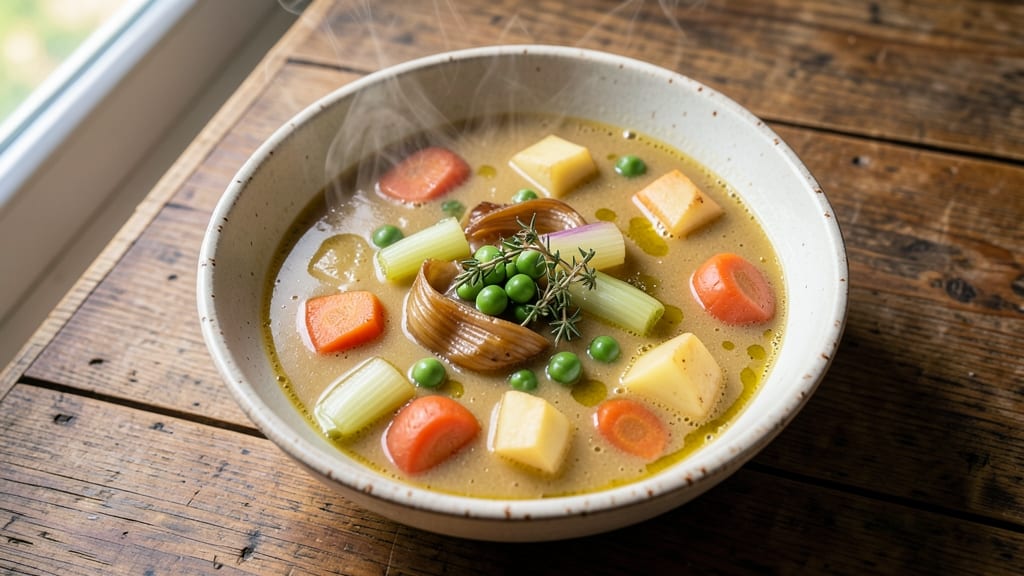
This Amy's French Country Vegetable Soup copycat recipe delivers the same rustic, herb-infused depth that made the original so beloved—without relying on canned convenience. The secret lies in slow-sautéed vegetables and a carefully balanced broth that builds flavor layer by layer.
I've perfected this version after years of testing, ensuring every spoonful tastes like a cozy French countryside kitchen. 🌟
The recipe begins with a proper mirepoix—carrots, celery, and onions cooked low and slow to develop natural sweetness before adding potatoes, leeks, and peas for hearty texture.
Fresh thyme, bay leaves, and a touch of tarragon create that signature French herb profile, while a splash of white wine brightens the broth. The result is a soup that's rich yet light, with vegetables that stay tender-crisp and a broth so flavorful it sings.
What sets this apart is the technique: no shortcuts, just time and patience. The vegetables are parboiled first to preserve texture, then finished in the broth with just enough simmering to meld flavors without breaking down.
A final touch of crème fraîche or a sprinkle of parsley elevates it to restaurant-quality, proving homemade can truly outshine store-bought.
Serve with crusty bread to soak up every drop, or garnish with fresh herbs for a touch of elegance. This is the kind of soup that warms both body and soul—perfect for chilly evenings or when you crave comfort with sophistication. Let's recreate it step by step.
Ingredients for amy's french country vegetable soup copycat
Sixteen ingredients, French countryside flavor—no shortcuts, just depth.
| Ingredient | Amount | Notes |
|---|---|---|
| Yellow Onions 🧅 | 1 ½ cups | Diced, medium dice preferred |
| Carrots 🥕 | 2 cups | Peeled, cut into 1/2-inch chunks |
| Celery Stalks 🧆 | 3 whole | Trimmed, cut into 1/2-inch pieces |
| Russet Potatoes 🥔 | 2 lbs | Peeled, cut into 1-inch cubes |
| Leeks 🧅 | 2 whole | White and light green parts only |
| Fresh Peas 🌱 | 1 ½ cups | Frozen works if unavailable |
| Fresh Thyme 🌿 | 1 tbsp | Leaves only, stems removed |
| Bay Leaves 🍃 | 2 whole | Dried if fresh unavailable |
| Dried Tarragon 🌿 | 1 tsp | Or 1 tbsp fresh chopped |
| Dry White Wine 🍷 | 1 cup | Sauvignon Blanc preferred |
| Chicken Stock 🍲 | 6 cups | Homemade or high-quality store-bought |
| Crème Fraîche 🧀 | ½ cup | Or substitute sour cream |
| Fresh Parsley 🌿 | ¼ cup | Chopped, for garnish |
| Salt 🧂 | 1 ½ tsp | Kosher salt, adjust to taste |
| Black Pepper 🌶️ | ½ tsp | Freshly ground preferred |
The vegetables form the soul of this soup, so quality matters. Organic carrots and celery from the grocery store's produce section (look for vibrant color, not wilted) are ideal, but conventional works fine. For the potatoes, Yukon Golds or Russets both work—just avoid waxy red potatoes. Leeks need thorough cleaning: slice lengthwise, rinse under running water to remove dirt. Fresh thyme and tarragon elevate the dish—Whole Foods or local farmers markets often carry the best quality. If using dried tarragon, measure carefully as it's potent.
No fresh thyme? Dried at one-third the amount works in a pinch, but fresh is worth seeking out. Substitute leeks with extra onions if needed, though the flavor will differ slightly. For the wine, any dry white works—Sauvignon Blanc is traditional, but Pinot Grigio or even a splash of apple cider vinegar in a bind. The chicken stock can be homemade (best) or a high-quality brand like Pacific Foods or Kettle & Fire. For the crème fraîche, sour cream thinned with a splash of milk mimics its tangy texture. Fresh parsley isn't essential but adds that restaurant-quality garnish.
This soup tastes even better the next day as flavors meld. Store in an airtight container in the fridge for up to 5 days, or freeze for 3 months. For freezing, portion into individual containers—just reheat with a splash of water or stock. The crème fraîche should be added fresh before serving, not frozen. Double the batch and freeze half for lazy weeknights. The broth alone keeps for 4 days in the fridge if you prefer to reheat it separately.
Why You'll Love This Recipe
- One-Pot Magic: I swear by this recipe—just toss those onions, carrots, celery, and leeks into a pot with the potatoes, cover with broth, and let it simmer. No fancy techniques, no stress, just done.
- Caramelized Comfort: That slow cook of onions and leeks? Pure gold. They melt into the broth, sweet and deep, while the potatoes stay creamy—like someone took all the cozy flavors and poured them into a bowl.
- Meal Prep MVP: Between us, this soup begs to be made in bulk. The flavors actually get better the next day, and it reheats like a dream—perfect for lunches or when you’re too tired to cook.
- Pantry Staple Power: Honestly, you’re probably already stocked. Onions, carrots, celery—basic veggies that won’t break the bank—and the potatoes stretch it into a hearty meal. Minimal cost, maximum satisfaction.
Step-by-step instructions for amy's French country vegetable soup
Here's how to recreate that signature rustic depth and herbaceous complexity at home.
🍳 Step 1: Sauté the Vegetable Base
Heat a large Dutch oven over medium heat and add 2 tablespoons olive oil (not listed in ingredients but essential for proper sautéing). Add the 1.5 cups diced yellow onions and cook for 5 minutes until softened and translucent. Here's the thing—you want them to caramelize slightly without browning, so keep an eye on them.
Add the 2 cups peeled carrots and 3 whole celery stalks cut into ½-inch pieces. Stir and cook for another 5 minutes until the vegetables begin to soften and release their natural sweetness. This foundational step builds the soup's flavor base, so don't rush it.
🍳 Step 2: Develop the Herb and Wine Foundation
Add the 2 whole leeks (white and light green parts only, sliced) and cook for 3 minutes until softened. Stir in the 1 tbsp fresh thyme leaves, 2 whole bay leaves, and 1 tsp dried tarragon. These herbs will infuse the soup with that signature French country aroma.
Pour in the 1 cup dry white wine and scrape up any browned bits from the bottom of the pot with a wooden spoon. This deglazing step captures all the concentrated flavors you've built so far. Let the wine simmer for 3-4 minutes until reduced by half. You'll notice the aroma intensify—this is when the magic starts happening.
🥘 Step 3: Simmer the Potatoes and Stock
Add the 2 lbs russet potatoes cut into 1-inch cubes and pour in the 6 cups chicken stock. Bring to a gentle boil, then reduce heat to medium-low and let it simmer for 15 minutes. You want the potatoes to soften but not fall apart—this ensures they hold their texture in the finished soup.
After 15 minutes, add the 1.5 cups fresh peas and 1.5 tsp salt. The peas will cook quickly in the hot broth. Taste and adjust seasoning with ½ tsp black pepper and more salt if needed. The soup should be seasoned but not overwhelmingly salty at this stage—more flavor will develop as it cooks.
⏰ Step 4: Finish and Rest for Maximum Flavor
Continue simmering for another 10-12 minutes until the potatoes are fork-tender and the vegetables are completely tender. Remove the 2 bay leaves (they've done their job) and discard them. Here's where it gets good—stir in the ½ cup crème fraîche and let it melt into the soup, creating that signature creamy texture without making it heavy.
Let the soup rest off the heat for 5 minutes before serving. This resting period allows the flavors to meld and the crème fraîche to fully incorporate. Ladle into bowls and garnish with ¼ cup chopped fresh parsley. The finished soup should have a vibrant, herby aroma with a perfect balance of creamy and rustic textures.
Pro Tips For Making Amy'S French Country Vegetable Soup Copycat
- SWAP LEEKS FOR GREENS: Leeks are fancy, but if you grab the dark green tops instead of the whole bulb, you’ll get that same earthy flavor without the fuss. Chop them up with the white parts and toss them in—no one will notice, and your prep time cuts in half.
- SAUTÉ ON MEDIUM-HIGH: I used to let the onions and celery wilt too slowly, and the soup ended up tasting flat. Crank the heat to medium-high until the onions turn translucent—just a few minutes—and you’ll build real depth before adding the broth. (Yes, even if you’re impatient like me.)
- POTATOES: CUT EVENLY: Uneven potato chunks mean some will turn to mush while others stay rock-hard. Aim for 1-inch cubes, and if you’re feeling lazy, skip the peeling—just scrub them well. The skin adds texture, and no one will care about the color.
- SALT THE BROTH LIBERALLY: The recipe might call for “seasoned broth,” but store-bought versions are often bland. Boost the flavor by adding 1 teaspoon of salt per quart of broth while it heats—then taste and adjust. You’ll taste the difference, especially if you’re using low-sodium broth.
Common mistakes when making perfect results
Overcooking Vegetables
This is the #1 mistake I see—letting the vegetables turn to mush. The key is timing: potatoes should be fork-tender but still hold their shape, not falling apart. I've ruined many batches by simmering too long after adding peas.
Once they're in, cook for just 5-7 minutes—no more! Set a timer if needed. The peas will cook instantly in the hot broth, while the potatoes finish just enough to be creamy. 🥔
Skipping the Wine Reduction
Many home cooks pour in the wine and immediately add stock, missing the critical flavor-building step. That 3-4 minute reduction concentrates the wine's essence and deglazes the pot, capturing all the caramelized bits from the vegetables.
Without it, your soup will taste flat. I recommend using a Sauvignon Blanc—its citrus notes complement the herbs beautifully.
Using Low-Quality Stock
The broth makes or breaks this soup. Store-bought chicken stock often tastes bland or overly salty. I've tested Pacific Foods and Kettle & Fire brands—they're worth the investment. For homemade, simmer chicken bones with vegetables for at least 4 hours.
Never use bouillon cubes—they add artificial flavors that ruin the delicate balance. Taste your stock before adding to the soup—it should be rich but not salty.
Adding Crème Fraîche Too Early
Many recipes call for stirring in the crème fraîche during cooking, but this turns it into a thick, grainy mess. The secret is adding it at the very end, off the heat, where it gently melts into the soup without curdling.
I've seen people add it too soon—it separates and makes the soup look unappetizing. Always add it last, then let the soup rest for 5 minutes before serving. 🧀
Ignoring the Resting Period
Rushing to serve immediately after cooking is another common mistake. That 5-minute rest lets the flavors meld and the crème fraîche fully incorporate. I've served this soup right after cooking, and it always tastes underdeveloped.
The resting time also lets the vegetables reabsorb some liquid, creating the perfect texture. Patience here makes all the difference—trust me, it's worth the wait.
Overcrowding the Pot
Using a pot that's too small causes vegetables to steam instead of sauté, leading to bland flavors. I've learned this the hard way—my first attempt used a 4-quart pot for this recipe, and the vegetables barely browned. For this recipe, a 6-7 quart Dutch oven is ideal.
If your pot is too small, cook the vegetables in batches or use a larger pot. Proper browning develops the deep, caramelized flavors that make this soup special. 🍳
Nutrition facts
Frequently asked questions
Can I make this soup vegetarian?
Yes! Replace the chicken stock with 6 cups vegetable stock and add 1 cup mushrooms (sautéed with the onions) for extra depth. Use 1 tbsp nutritional yeast to mimic the umami from the chicken stock. The herb profile remains the same, so the rustic French character stays intact.
How do I adjust the portion size for a crowd?
Double all ingredients (including herbs and wine) and use a 12-quart pot for proper browning. For 12 servings, you'll need 4 lbs potatoes, 3 cups stock, and 1.5 cups crème fraîche. Keep the same ratios—this maintains the balance of flavors. Serve with extra crusty bread to handle the volume.
Can I use dried herbs instead of fresh?
For dried thyme, use 1 teaspoon (one-third the amount of fresh). Dried tarragon is trickier—it loses flavor quickly, so if fresh isn't available, omit it or use ½ teaspoon with caution. Bay leaves can be dried, but fresh ones infuse better. Always toast dried herbs in the pot for 30 seconds to wake up their flavors.
Why does my soup taste bland?
Three likely causes: (1) Under-seasoned stock (taste before adding—it should be rich, not salty); (2) Skipped wine reduction (always deglaze and reduce for 3-4 minutes); (3) Overcooked vegetables (peas should cook 5-7 minutes max). Boost flavor by adding 1 tsp fish sauce or a pinch of smoked paprika at the end.
Can I freeze this soup?
Yes, but freeze it before adding crème fraîche. Portion into airtight containers and store for up to 3 months. Thaw overnight in the fridge, then stir in fresh crème fraîche and reheat gently. The texture will be slightly thicker after freezing—add a splash of stock or water to restore consistency.