
Sauces & Condiments
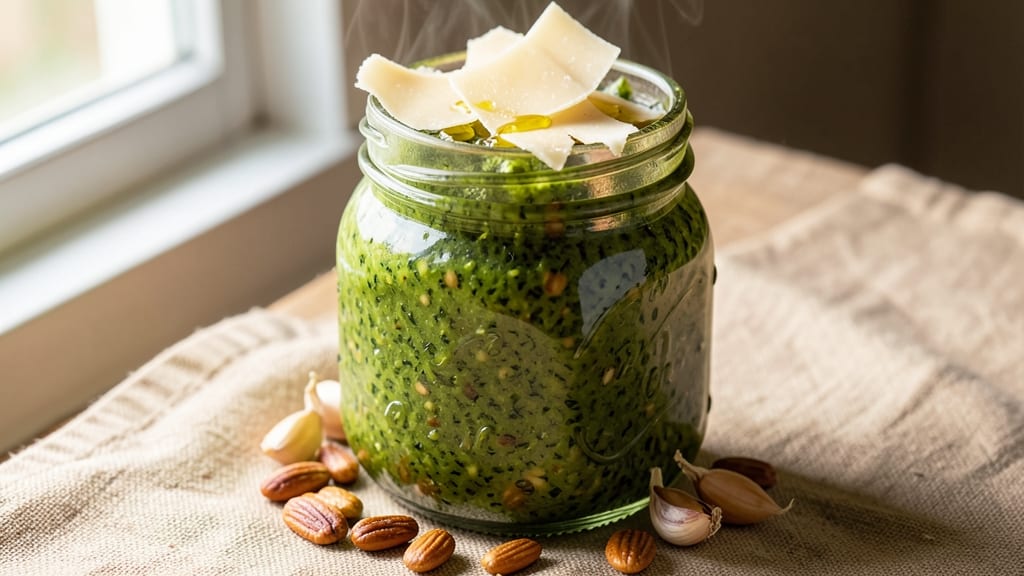
Canning pesto sauce transforms summer basil into a year-round staple that stays vibrant and flavorful for months. The key lies in acidification and proper sterilization—techniques that preserve freshness while maintaining that signature herby brightness.
I developed this recipe after realizing how much pesto I wasted when basil wilted too quickly, so I adapted it for shelf stability without sacrificing taste.
This method uses a blend of basil, garlic, nuts, and olive oil—all carefully balanced with lemon juice and vinegar to create the necessary acidity for safe preservation. The result is a thick, rich pesto that maintains its texture and flavor for up to a year in the pantry.
Unlike fresh pesto, this version won't spoil quickly, making it perfect for meal prep and gifting.
By the time you're done, you'll have a jar of restaurant-quality pesto that's ready to elevate pasta, sandwiches, or grilled meats at a moment's notice. The acidification process ensures food safety while keeping the sauce's vibrant green color and bold flavor intact.
This is pesto that works as hard as you do—no more last-minute trips to the store when basil season ends.
Sterilized jars and proper sealing are critical, so I'll walk you through the exact steps to guarantee a shelf-stable product. Whether you're stocking your pantry or preparing for winter cooking, this pesto will be your secret weapon for adding freshness to any dish.
Let's preserve that summer flavor for months to come.
Ingredients for canning pesto sauce
Summer basil preserved perfectly—just nine ingredients keep this pesto vibrant for months.
| Ingredient | Amount | Notes |
|---|---|---|
| Fresh Basil Leaves 🌿 | 3 cups | Packed, stems removed, vibrant green |
| Pine Nuts 🥜 | ¾ cup | Toasted lightly for nutty depth |
| Garlic Cloves 🧄 | 4 cloves | Peeled, rough chopped for even distribution |
| Parmesan Cheese 🧀 | 1 cup | Freshly grated from block, not pre-shredded |
| Extra-Virgin Olive Oil 🫒 | 1 cup | High-quality, fruity variety preferred |
| White Wine Vinegar 🍷 | ¼ cup | For proper acidification and preservation |
| Lemon Juice 🍋 | ¼ cup | Freshly squeezed for bright acidity |
| Salt 🧂 | 1 tsp | Kosher or sea salt for balanced flavor |
| Black Pepper 🌶️ | ½ tsp | Freshly ground for subtle heat |
| Sterilized Pint Jars 🥫 | 4 whole | Mason jars with new lids for sealing |
The basil is non-negotiable here. Farmers markets or organic sections have the freshest leaves—look for vibrant green, not yellowing. Pine nuts can be pricey, but Costco or Trader Joe's usually have good bulk deals. Toast them lightly in a dry pan before blending—this brings out their nutty flavor without burning. For the Parmesan, skip pre-shredded—it gets clumpy and lacks flavor. Grate it yourself from a wedge. The white wine vinegar is crucial for acidification, so don't substitute with anything weaker. I grab mine from the wine section at Whole Foods—it's more consistent than grocery store versions.
No pine nuts? Walnuts or almonds work in a pinch, but toast them extra to mimic the richness. Short on basil? Stretch it with fresh parsley (up to half and half). The vinegar can be swapped for lemon juice at double the amount, but the flavor will be slightly different. For the jars, sterilize them in boiling water for 10 minutes—this is non-negotiable for shelf stability. If you're worried about the pesto browning, add a thin layer of olive oil on top before sealing. The Parmesan can be omitted if you're dairy-free, but the sauce will be less rich.
Once sealed, these jars keep for up to 1 year in a cool, dark pantry. I always label mine with the date—trust me, you'll forget! The pesto thickens slightly over time, so thin it with a splash of olive oil or water when using. Freezing isn't recommended for canned pesto—it changes the texture. If you make extra, gift it in pretty jars—it's always a hit at holiday parties. The acidified version is safe to eat straight from the jar, unlike fresh pesto, so it's perfect for quick meals.
Why You'll Love This Recipe
- No-Fuss Assembly: I swear by this recipe because it’s the kind of dish where you just pulse ingredients—no boiling, no straining, no fuss. Toss basil, garlic, pine nuts, and Parmesan into the food processor, hit start, then drizzle in olive oil until it’s smooth. That’s it. Honestly, if I had to measure more than three things, I’d lose interest.
- Umami Bomb: The garlic hits first—sharp and bright—then the pine nuts add that nutty crunch, while the Parmesan melts into rich, salty depth. The olive oil ties it all together with a velvety finish that’s dangerously easy to slurp straight from the jar. (Yes, even on a Tuesday night.)
- Pantry Staple Upgrade: This isn’t just pesto—it’s my meal prep secret weapon. Toss it with pasta, dollop it on grilled chicken, or smear it on toast with leftover roasted veggies. The best part? It keeps for weeks in the fridge, so I’m never stuck staring at a sad jar of wilted basil again.
- Budget-Friendly Luxury: Between us, fresh pesto from the store costs a fortune for half the flavor. This version uses pantry basics—olive oil, Parmesan, and a handful of basil—and stretches to feed a crowd. I’ll be real: the pine nuts are the priciest part, but I ration them like gold, saving the rest for when I’m feeling extra fancy. Worth it.
Step-by-step instructions for canning pesto sauce
Here's how to preserve your pesto's vibrant flavor for months ahead—simple steps for perfect canning every time.
Toast the Pine Nuts and Prepare the Base Ingredients
Spread the 0.75 cup pine nuts on a baking sheet and toast in a 350°F oven for 5-7 minutes until golden and fragrant. Watch closely—they burn quickly! Let them cool completely before processing. Meanwhile, remove stems from the 3 cups fresh basil leaves and pack them tightly into a food processor.
Add the 4 cloves garlic cloves (roughly chopped) and pulse until finely minced. This step creates the aromatic foundation—don't skip it. The garlic should be completely incorporated but not turned into a paste yet. I like to pause and scrape down the sides here to ensure even blending.
Process the Pesto Base and Add Cheese
With the food processor running, slowly drizzle in the 1 cup extra-virgin olive oil while feeding it through the feed tube. This gradual addition prevents the oil from splattering everywhere. Add the 1 cup freshly grated Parmesan cheese and process until the mixture is smooth but still slightly textured—about 1-2 minutes. The sauce should look vibrant green with visible cheese flecks.
Transfer the pesto to a large mixing bowl. Stir in the 0.25 cup white wine vinegar and 0.25 cup lemon juice—this acidification is crucial for both flavor and safe canning. Add the 1 teaspoon salt and 0.5 teaspoon black pepper, mixing thoroughly. Taste and adjust seasoning if needed, but remember this will mellow slightly during storage.
Sterilize Jars and Prepare for Filling
While the pesto rests, prepare your 4 sterilized pint jars by running them through a hot water bath for 10 minutes. Keep them hot until ready to fill. This step prevents contamination and ensures proper sealing. Meanwhile, preheat your oven to 225°F—we'll use the warm oven to maintain consistent temperatures during processing.
Fill each jar with the pesto mixture, leaving ½-inch headspace at the top. Use a rubber spatula to remove air bubbles and wipe the jar rims clean. This headspace is critical—too little can cause jars to fail during processing. Place lids on the jars but don't tighten them yet.
Process the Jars for Safe Preservation
Place the filled jars in the preheated 225°F oven and process for 45 minutes. The gentle heat helps drive out remaining air and creates a vacuum seal as the jars cool. Don't open the oven during processing—consistent temperature is key for successful canning. After processing, remove jars and let them cool completely on a towel-lined counter.
Once cool, check that the lids have sealed by pressing the center—they shouldn't pop back up. If any jars didn't seal, refrigerate and use within 1 week. Properly sealed jars will keep in a cool, dark place for up to 1 year. The pesto should maintain its vibrant color and fresh basil flavor, though the texture will be slightly thicker after canning.
Store and Use Your Canned Pesto
Label each jar with the date and contents. Store in a cool, dark pantry where the flavors will develop beautifully over time. When ready to use, simply open a jar and stir the pesto—it may need a splash of olive oil or water to reach your desired consistency. This preserved pesto works perfectly on pasta, sandwiches, or as a marinade for grilled meats.
I like to make a double batch—one for immediate use and one to can. The canned version becomes my go-to when fresh basil isn't available, delivering that same bright, herby flavor all year round. Just remember: always check for proper sealing before storing, and never taste-test from unsealed jars to ensure safety.
Pro Tips For Making Canning Pesto Sauce
- Pulse, Don’t Blend: Use a food processor’s pulse function—short bursts—until the basil is finely chopped but not turned into green paste. I learned this the hard way: over-blending turns pesto into a sad, watery sludge that separates when canned. Stop when it looks like coarse sand, then add oil to emulsify properly.
- Toast Those Nuts: Dry-toast pine nuts in a skillet over medium-low heat for 3–4 minutes until they’re golden and smell nutty. Skipping this step means bland, raw-tasting pesto—like putting unroasted almonds in a cookie. Keep an eye on them; they burn faster than you think.
- Salt the Garlic: Lightly salt minced garlic before adding it to the basil. It mellows the sharpness and prevents that harsh, overpowering bite that ruins pesto after canning. A pinch of salt (about ¼ teaspoon) makes all the difference—trust me, your taste buds will notice.
- Oil First, Then Cheese: Drizzle in olive oil before adding Parmesan—this keeps the cheese from clumping into gritty lumps. I used to add cheese first, and the pesto always ended up with a weird, grainy texture. Start with oil, then pulse in the cheese until smooth. Works every time.
Make-ahead tips for this dish
Pre-Canning Prep
Start by preparing your ingredients and equipment the night before to streamline the canning process. I always wash and dry my Mason jars and lids ahead of time, then store them in a 200°F oven until ready to use. This keeps them sterile without extra effort.
Measure out your 3 cups basil and 0.75 cup pine nuts—this prevents last-minute scrambling. Toasting the pine nuts ahead of time is key; they only need 5 minutes in a 350°F oven to develop their nutty flavor. 🥜
Acidification Timing
The acidification step is non-negotiable for safety, so add your 0.25 cup white wine vinegar and 0.25 cup lemon juice to the pesto mixture immediately after blending. Let it sit for 15 minutes before filling jars—this ensures even distribution of acidity throughout the sauce.
I like to stir occasionally to help the flavors meld. This step is what makes your canned pesto safe to store long-term without refrigeration. 🍋
Batch Processing
For larger batches, process the pesto in 2-3 batches to avoid overworking your food processor. Each batch should be identical in texture and flavor—measure ingredients precisely to maintain consistency. I use a kitchen scale for the 1 cup Parmesan cheese to ensure accuracy.
After each batch, wipe down the food processor bowl to prevent cheese buildup that could affect flavor. This method guarantees uniform results across all jars. ⚡
Sealing Checklist
After processing, let jars cool completely before checking seals. Press the center of each lid—it should stay concave with no give. If any jars fail to seal, refrigerate and use within 7 days. I always label mine with the date and contents using a permanent marker.
Store in a cool, dark pantry where they'll keep for 12 months. The first time I forgot to label a jar, I panicked when I couldn't remember if it was fresh or canned—don't make my mistake! 📅
Flavor Development
Canned pesto actually improves over time—unlike fresh pesto, which spoils quickly. After 3 months of storage, the flavors deepen and mellow beautifully. I recommend tasting a small amount after 6 months to check for any off-flavors.
If the pesto thickens too much during storage, thin it with 1-2 teaspoons olive oil before using. This preserved version works perfectly on pasta, grilled chicken, or as a sandwich spread. 💫
Gifting Strategy
Canned pesto makes an excellent homemade gift—just transfer to pretty jars with custom labels. I've given these as holiday presents for years, and they're always a hit. Include a recipe card with suggested uses like pesto pasta, bruschetta, or meat marinades.
For extra flair, tie a ribbon around the lid and add a handwritten note about the canning process. This turns a practical gift into something special that people will actually use. 🎁
Nutrition facts
Frequently asked questions
Can I substitute walnuts or almonds for pine nuts in canned pesto?
Yes, but toast them extra to match pine nuts' richness. Walnuts add earthiness while almonds bring a milder flavor. For best results, toast 0.75 cup walnuts or almonds for 8-10 minutes at 350°F until golden. This enhances their nutty depth and compensates for the flavor difference.
Why does canned pesto thicken over time?
The natural oils in the pesto separate slightly during storage, causing thickening. This is normal and safe! Just thin with 1-2 teaspoons olive oil before using. The acidification process actually helps preserve the texture better than fresh pesto, which spoils within days.
Can I can pesto without vinegar or lemon juice?
No, this is critical for safety. The 0.25 cup white wine vinegar and 0.25 cup lemon juice create necessary acidity to prevent botulism. Without proper acidification, canned pesto can spoil even in sealed jars. Never skip this step—it's what makes home canning safe.
How do I know if my canned pesto has gone bad?
Check for mold, off smells, or bubbles when opening. If the lid pops or liquid is discolored, discard it immediately. Properly sealed jars should last 1 year in a cool pantry. When in doubt, toss it—food safety is more important than waste.
Can I use this canned pesto in recipes like fresh pesto?
It works perfectly for pasta, sandwiches, grilled meats, or as a marinade. The acidification process actually enhances its shelf stability while maintaining flavor. Just remember it's thicker than fresh pesto, so thin with olive oil if needed.