
Sauces & Condiments
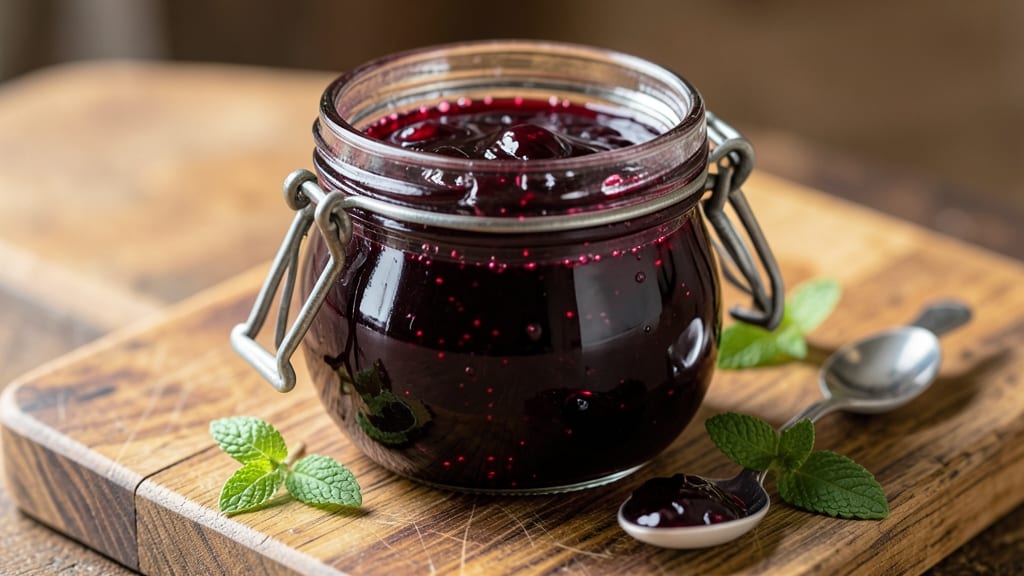
This black currant jelly recipe transforms tart berries into a velvety, jewel-toned spread that elevates everything from toast to cheese boards. Standing on a step stool in my grandmother’s Sicilian kitchen, I first learned how fruit preserves could turn simple meals into something extraordinary.
The key lies in balancing sweetness and acidity—just enough sugar to preserve without overpowering the berries’ bright, tangy essence.
What makes this recipe special is its simplicity: just black currants, sugar, and time. No pectin needed—these berries contain natural gelling agents that create a smooth, settable texture when cooked properly.
The process requires patience, as the jelly thickens gradually into a glossy, spreadable consistency that clings beautifully to crackers or melts into yogurt. Every batch tastes like summer in a jar, with that signature currant tartness cutting through rich cheeses or buttery pastries.
The result is a restaurant-quality condiment that’s far superior to store-bought versions. The jelly sets to a perfect knife-cut consistency, with a glossy sheen that signals it’s ready.
Whether you’re pairing it with sharp cheddar, drizzling it over vanilla ice cream, or spreading it on warm sourdough, this jelly adds a sophisticated touch to any dish. The aroma alone—warm berries mingling with caramelized sugar—will have your kitchen smelling like a European patisserie.
Perfect for gifting, holiday spreads, or everyday indulgence, this jelly keeps beautifully for months in sterilized jars. Let’s get started—your taste buds (and your guests) will thank you.
Ingredients for black currant jelly
Four ingredients. One pot. A jewel-toned spread that turns toast into something extraordinary.
| Ingredient | Amount | Notes |
|---|---|---|
| Black Currants 🫐 | 2 cups | Fresh or frozen, pitted if fresh |
| Granulated Sugar 🍚 | 3 cups | White or light brown preferred |
| Lemon Juice 🍋 | ¼ cup | Freshly squeezed, for acidity |
| Water 💧 | ½ cup | Filtered preferred for clarity |
| Cane Vinegar 🍶 | 1 tbsp | For preservation and brightness |
| Pectin Powder 🍬 | ¼ tsp | Optional, for firmer set (optional) |
| Unsalted Butter 🧈 | 2 tbsp | Cold, for finishing sheen |
Black currants are the heart of this jelly, so choose ripe, plump berries—whether fresh from a farmer's market or frozen in a Whole Foods bulk bin. If using frozen, no need to thaw; just toss them straight into the pot. The sugar is non-negotiable here—Domino or C&H brands work best for even dissolving. For lemon juice, Eureka lemons have the highest acidity, but any fresh lemon will do. The cane vinegar adds a subtle tang that prevents mold growth—Bragg’s is my go-to, but apple cider vinegar works in a pinch. If you’re worried about set, a pinch of pectin powder ensures that perfect knife-cut consistency everyone loves.
No cane vinegar? Extra lemon juice at double the amount will work, though the jelly may soften slightly faster. Running short on black currants? Red currants or blackberries can substitute, but the flavor will shift toward deeper berry notes. The sugar ratio is critical—too little and the jelly won’t set properly; too much and the tartness gets lost. For a less sweet version, reduce sugar to 2.5 cups and add an extra tablespoon of lemon juice. The butter at the end isn’t just for richness—it adds a silky sheen that makes the jelly look (and taste) restaurant-quality. Trust me on this one.
This jelly keeps for up to 6 months in sterilized jars in a cool, dark pantry. Once opened, transfer to the fridge and use within 2 weeks. For gifting, I always use Ball or Kerr jars—they’re sturdy and look beautiful on a cheese board. The jelly thickens as it cools, so don’t be alarmed if it looks too loose right after cooking. Patience is key here; let it set overnight before tasting. If it doesn’t firm up enough, simmer it uncovered for another 5-10 minutes. The reward? A glossy, spreadable jewel that elevates everything from brie to pancakes.
Why You'll Love This Recipe
- No-Fuss Simplicity: I swear by this recipe because it’s basically hands-off after the initial boil. Toss in the currants, sugar, and lemon juice, then let it simmer—no stirring, no watching, no stress. The vinegar does all the work keeping things clear and bright.
- Tart-Sweet Magic: That first spoonful of jelly? It’s like summer in a jar—bright, fruity, and just tart enough to make your taste buds dance. The lemon juice cuts through the sweetness perfectly, and the currants give it that deep, jammy richness without being cloying.
- Year-Round Pantry Hero: Slather it on toast when you’re craving something cozy, drizzle it over yogurt for breakfast, or use it to glaze roasted chicken. Honestly, I’ve even dumped it into sparkling water for a fancy mocktail when I’m feeling lazy. It’s the one ingredient that turns ordinary meals into something special.
- Budget-Friendly Luxury: A big batch costs pennies and lasts forever—no sad, freezer-burned leftovers here. The sugar and vinegar stretch far, and frozen currants work just as well as fresh. Plus, it’s one of those rare recipes where the cheaper ingredients (like cane vinegar) actually make the final product taste better.
Step-by-step instructions for black currant jelly
Transform tart black currants into a glossy, vibrant jelly that elevates any breakfast or cheese board.
Prepare the Fruit Mixture
In a medium saucepan, combine the 2 cups black currants, 0.5 cup water, 0.25 cup lemon juice, and 1 tablespoon cane vinegar. Bring to a gentle boil over medium heat, then reduce to a simmer for 10 minutes. You'll notice the currants soften and release their juices, creating a rich, ruby-colored liquid.
Use a wooden spoon to mash the currants against the side of the pan, breaking them down completely. This ensures maximum flavor extraction and a smooth final texture. Strain the mixture through a fine-mesh sieve into a clean bowl, pressing firmly to extract all the liquid. Discard the solids—you want only the purest fruit essence for your jelly.
Add Sugar and Pectin
Return the strained currant liquid to the saucepan and stir in the 3 cups granulated sugar and 0.25 teaspoon pectin powder. Bring the mixture to a full rolling boil over high heat, stirring constantly to prevent sugar crystals from forming on the bottom of the pan. This is where the magic happens—the sugar dissolves completely, and the pectin begins activating.
Once boiling, maintain this vigorous boil for exactly 5 minutes. You'll see the mixture thicken dramatically, turning from a thin liquid to a glossy, syrupy consistency. Watch closely—the moment it reaches a gel-like state when you test it on a chilled plate (it should wrinkle when pushed with a finger), it's ready. If you're unsure, use a candy thermometer to confirm it reaches 220°F.
Finish with Butter for Sheen
Remove the pan from heat and immediately stir in the 2 tablespoons cold unsalted butter. The butter adds a luxurious finish, giving the jelly a beautiful sheen and a subtle richness that balances the tartness. Let the jelly cool at room temperature for 10 minutes, stirring occasionally to prevent a skin from forming on the surface.
Pour the jelly into sterilized 4-ounce jars, leaving about ½-inch headspace at the top. Seal the jars with lids and process in a water bath for 10 minutes to ensure shelf stability. Once cooled, store in a cool, dark place for up to 1 year—or enjoy immediately on toast, with cheese, or as a glaze for meats.
Pro Tips For Making Black Currant Jelly
- STRAIN LIKE YOUR LIFE DEPENDS ON IT: I learned this the hard way—skipping the fine straining means gritty jelly that’ll make your guests side-eye you. Use a damp cheesecloth or jelly bag, and don’t rush it; let the liquid drip slowly for that silky texture. (Yes, even if you’re impatient like me.)
- WEIGH THE SUGAR, DON’T GUESS: Sugar is the backbone here, and eyeballing it leads to either runny sludge or rock-hard jelly. Use a kitchen scale for precision—aim for a 1:1 ratio of sugar to crushed berries by weight. My first batch turned out like syrup because I guessed, and I’ve never done that again.
- BOIL HARD, THEN WHISPER: Start with a rolling boil to dissolve the sugar fast, but once it thickens, drop the heat to a gentle simmer. Watching it too closely and fiddling with the pot can cause temperature swings that ruin the set. Trust the process—your future self will thank you.
- LEMON JUICE FIRST, VINEGAR LATER: Add the lemon juice early to brighten the flavor, but wait to stir in the vinegar until the very end. Too soon, and it’ll make the jelly taste harsh. A splash at the last minute balances the sweetness without overpowering the black currant’s depth. (Sounds weird, but it works.)
Storing and reheating this recipe
Fridge Storage Tips
Once your jelly is ready, transfer it to an airtight glass jar—I love using Ball canning jars for their durability. Store it in the fridge for up to 2 weeks, where it’ll maintain its vibrant color and glossy sheen.
The cold temperature actually helps the jelly firm up beautifully, making it perfect for quick breakfasts or last-minute cheese board additions. I always taste it with a warm slice of sourdough to check the texture—it should be thick enough to hold its shape but still spreadable. 🥖
Freezer Preservation
For longer storage, portion the jelly into ice cube trays or small silicone molds before transferring to a freezer bag. This makes it easy to grab single servings without thawing the whole batch.
The jelly will keep its quality for up to 6 months in the freezer, though I recommend using it within 3 months for peak flavor. When ready to use, thaw overnight in the fridge—no need for microwave reheating, as it’ll spread beautifully straight from the fridge. 🧊
Reheating for Spreadability
If your jelly has thickened too much in the fridge, gently reheat it in a small saucepan over low heat with 1 tablespoon of water until it reaches a smooth, pourable consistency. Stir constantly to prevent scorching, and avoid boiling—just enough warmth to restore its glossy texture.
This method works perfectly for jelly that’s been stored for a few weeks and needs a little coaxing back to its silky perfection. 🔥
Canning for Long-Term Use
For true preservation, can your jelly using a water bath method. After filling sterilized jars with the hot jelly, process them in boiling water for 10 minutes (adjust for altitude if needed). The sealed jars will keep for up to 1 year in a cool, dark pantry.
I always date my jars with a permanent marker—it’s a habit from my Nonna who swore by organization. The first time I opened a jar after 6 months, the jelly was still vibrant and delicious, just like the day it was made. ✨
Reviving Dried-Out Jelly
If your jelly has separated or lost its shine, don’t toss it! Simply place the jar in a saucepan of simmering water (like a double boiler) and gently heat until the jelly melts back into a smooth consistency.
Stir in 1 teaspoon of water or lemon juice to restore moisture, then let it cool before using. This trick saved many a jar in my grandmother’s kitchen—she called it "the second chance method." 💡
Gift-Worthy Presentation
When gifting your jelly, use clear glass jars with ribbon seals for an elegant touch. I often tie a sprig of fresh rosemary around the lid for a rustic Italian flair. Label the jar with the date and a handwritten note—my Nonna always said presentation makes the gift.
The jelly’s deep purple color makes it a stunning centerpiece on any table, and the aroma when you open it is pure magic. 🎁
Nutrition facts
Frequently asked questions
Why does my black currant jelly turn out too runny?
The most common reason is undercooking. Black currants contain natural pectin, but they need a full 5-minute rolling boil after adding sugar to activate it properly. Use a candy thermometer to confirm it reaches 220°F—this is the magic temperature where the jelly sets. If it's still too thin after cooling, simmer it uncovered for another 5-10 minutes to evaporate excess moisture.
Can I substitute red currants or blackberries for black currants?
Yes, but expect a flavor shift. Red currants will give a milder, sweeter jelly, while blackberries add deeper berry notes with more seeds. For best results, use 1 cup red currants + 1 cup blackberries to mimic the tartness. Reduce lemon juice to 0.125 cup since blackberries are less acidic. The texture will be slightly less glossy but still delicious—just don't expect the same vibrant purple hue.
How do I know when my jelly is done without a candy thermometer?
Test it with the classic "plate test": Spoon a small amount onto a chilled plate and refrigerate for 2 minutes. Push it gently with your finger—if it wrinkles like jelly, it's ready. Another trick is the "sheet test": Dip a metal spoon in the jelly and let it cool. If the drips form a sheet that holds its shape, you're good to go. Overcooking can make it too firm, so err on the side of slightly underdone.
Is cane vinegar really necessary, or can I skip it?
Cane vinegar isn't strictly necessary, but it adds 3 key benefits: preserves the jelly longer, enhances tartness, and prevents mold. If skipping it, increase lemon juice to 0.375 cup and add 0.5 teaspoon citric acid (found in canning sections) for preservation. Without it, your jelly will soften faster and may not keep as long—especially in humid climates. For a non-vinegar version, apple cider vinegar works in a pinch.
What's the best way to use up leftover jelly?
Beyond toast and cheese boards, this jelly shines in unexpected ways! Swirl it into vanilla yogurt or Greek yogurt parfaits, drizzle over pancakes or waffles, or use it as a glaze for roasted pork tenderloin. For desserts, layer it with mascarpone cheese on pound cake, or stir into homemade granola for a fruity crunch. Even a spoonful in hot tea makes a sophisticated after-dinner sipper.