Main Courses
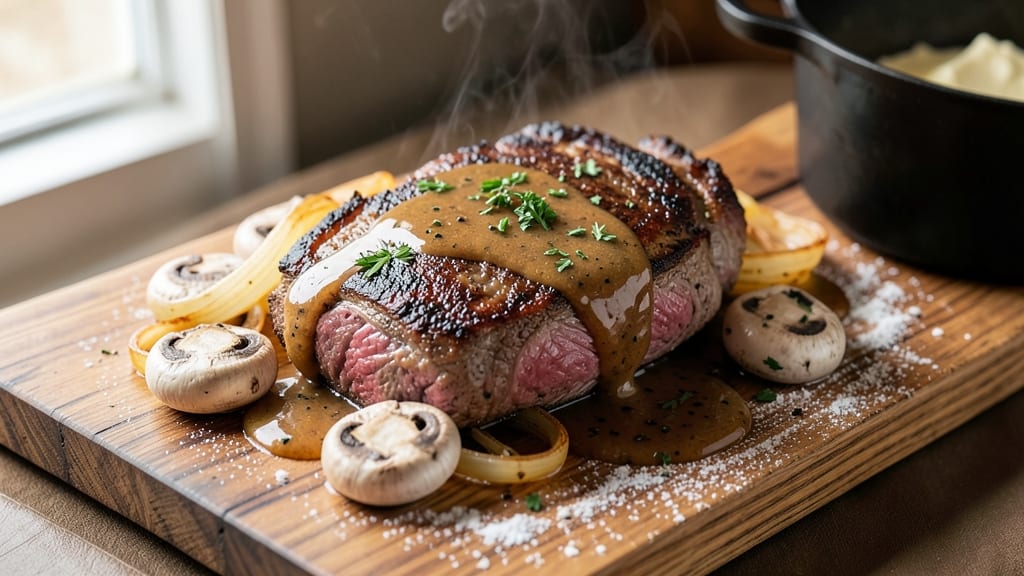
This Amish steak recipe delivers the hearty, slow-cooked comfort that defines Pennsylvania Dutch country cooking—tender beef swimming in rich gravy that clings to every bite. The secret lies in a cast-iron skillet and hours of gentle simmering, transforming tough cuts into melt-in-your-mouth perfection.
I first learned this technique from my grandmother, who swore by the "low-and-slow" method that creates that signature velvety sauce.
The beauty of this dish is its simplicity: just a few quality ingredients—beef chuck roast, onions, mushrooms, and a splash of beef broth—simmered until the meat falls apart. The gravy develops naturally as the juices render, creating a flavorful sauce that needs no thickening.
This method requires patience, but the result is a restaurant-quality meal that feels like home.
What you'll end up with is a steak so tender it nearly dissolves on the tongue, all coated in a deep, savory gravy that makes every bite worth savoring. The aroma alone will have your family gathering at the table, and the leftovers reheat beautifully for days.
Perfect for Sunday suppers or holiday feasts, this recipe brings Amish tradition to your kitchen.
Pair it with classic sides like creamy mashed potatoes, roasted carrots, or homemade buttermilk biscuits for the full experience. The gravy alone is worth the wait—it’s the kind of dish that turns ordinary weeknights into special occasions. Let’s get cooking!
Ingredients for amish steak
Six core ingredients transform tough beef into melt-in-your-mouth Amish comfort food.
| Ingredient | Amount | Notes |
|---|---|---|
| Beef Chuck Roast 🥩 | 3 lb | Tough cut for slow cooking, trimmed of excess fat |
| Yellow Onions 🧅 | 2 whole | Medium size, sliced into half-moons |
| White Mushrooms 🍄 | 16 oz | Sliced, fresh or canned |
| Beef Broth 💧 | 2 cups | Low-sodium, homemade preferred |
| All-Purpose Flour 🌾 | 2 tbsp | For gravy thickening if needed |
| Unsalted Butter 🧈 | 2 tbsp | For skillet searing |
| Garlic Cloves 🧄 | 4 cloves | Minced, for depth of flavor |
| Diamond Crystal Kosher Salt 🧂 | 1 ½ tsp | Adjust to taste, don't oversalt |
| Freshly Ground Black Pepper 🌶️ | 1 tsp | Cracked peppercorns preferred |
| Bay Leaves 🍃 | 2 whole | For aromatic depth |
| Worcestershire Sauce 🍶 | 1 tbsp | For umami complexity |
| Apple Cider Vinegar 🍎 | 1 tbsp | Brightens the gravy |
The beef chuck roast is non-negotiable here—its collagen-rich structure breaks down beautifully during the long simmer, creating that signature velvety texture. Local butchers often carry it pre-cut for convenience, but if buying whole, ask for 2-3 inches thick slices to cook evenly. Trim excess fat to 1/4-inch thickness—it renders beautifully but can make the gravy too rich. For the best quality, look for USDA Choice or Select grade with good marbling. If you're feeling ambitious, Costco or Whole Foods carry excellent cuts, but even your grocery store's butcher section will have suitable options. The mushrooms should be firm and free of bruising, as they'll absorb the beef's juices and develop deep flavor during cooking.
No beef broth on hand? Substitute with a mix of water and beef bouillon cubes, but use half the salt recommendation since bouillon is heavily salted. Fresh mushrooms are ideal, but canned mushrooms work in a pinch—just drain and pat dry to avoid watery gravy. The Worcestershire sauce can be swapped for soy sauce at half the amount, though the flavor profile will differ slightly. For a vegetarian adaptation, mushroom broth and portobello mushrooms create a similar texture. The apple cider vinegar is key for brightness—if you're avoiding it, lemon juice at double the amount works, though the flavor will be more pronounced. For the flour, all-purpose or bread flour both work, but bread flour yields a slightly thicker gravy.
This dish tastes even better the next day as flavors meld, so make extra if you're feeding a crowd. Store leftovers in the fridge for 4-5 days, covered with a splash of beef broth to keep the meat moist. For longer storage, freeze portions in airtight containers for up to 3 months. When reheating, add a splash of water or broth to prevent drying. The gravy can be thickened further by simmering uncovered for 5-10 minutes, or thinned with additional beef broth if needed. For serving, keep the beef and gravy separate until ready to plate—this maintains the perfect texture contrast that defines Amish steak.
Why You'll Love This Recipe
- One-Pot Magic: I swear by this recipe when I’m too tired to wash a million dishes—just brown the beef, toss in the onions and mushrooms, add flour and broth, and let it simmer. The chuck roast practically melts into tender, saucy perfection while you’re still chopping veggies.
- Rich, Deep Satisfaction: That beef broth and flour roux create a sauce so velvety and savory, it’s like a hug in a bowl. Honestly, the first time I made it, I went back for seconds before the plate was even empty—no joke.
- Leftovers That Shine: Between us, this dish tastes better the next day. I’ll make a big batch on Sunday, slice it for sandwiches all week, or toss it into mashed potatoes for a lazy dinner. The flavors only get stronger as it sits.
- Budget-Friendly Feast: A chuck roast stretches across multiple meals without breaking the bank, and the onions/mushrooms add depth without costing a fortune. I’ll be real: this is my go-to for feeding a crowd without stressing over grocery bills.
Step-by-step instructions for slow-cooked Amish steak with rich gravy
This method transforms tough beef chuck into tender, melt-in-your-mouth slices with a velvety gravy that clings perfectly.
Sear the Beef Chuck for Maximum Flavor
Pat the 3 lb beef chuck roast dry with paper towels - this ensures a proper sear. In a heavy Dutch oven, melt the 2 tbsp unsalted butter over medium-high heat until foaming. Add the roast and sear on all sides for 3-4 minutes per side until developing a deep brown crust. This step creates the Maillard reaction that forms the flavor foundation.
Remove the roast and set aside. In the same Dutch oven, add the sliced 2 whole yellow onions and cook for 5 minutes until softened. Stir in the 4 minced garlic cloves and cook for 30 seconds until fragrant. Add the 16 oz sliced white mushrooms and cook for another 4 minutes until they release their moisture and begin to brown. This aromatic base forms the flavor backbone of your gravy.
Build the Slow-Cooked Base
Return the seared beef chuck roast to the Dutch oven. Add the 2 cups beef broth, 1 tbsp Worcestershire sauce, and 1 tbsp apple cider vinegar. Stir to combine, then sprinkle the 1.5 tsp diamond crystal kosher salt and 1 tsp freshly ground black pepper over the top. Add the 2 whole bay leaves and bring everything to a gentle simmer.
Cover the Dutch oven and transfer to a preheated 325°F oven. Cook for 3 hours, then carefully flip the roast and continue cooking for another 3 hours or until the internal temperature reaches 195°F. The meat should be fork-tender with a probe sliding in easily. This slow cooking process breaks down the connective tissue, transforming tough beef into tender slices.
Create the Signature Amish Gravy
Once the beef is perfectly tender, remove it from the Dutch oven and set aside to rest. Strain the cooking liquid through a fine-mesh sieve into a clean saucepan, pressing on the solids to extract maximum flavor. Return the strained liquid to medium heat and whisk in the 2 tbsp all-purpose flour to create a smooth paste. Cook for 2-3 minutes until the flour is fully incorporated and the mixture thickens slightly.
Continue cooking for 5-7 minutes, stirring frequently, until the gravy reaches your desired consistency - it should coat the back of a spoon but still be pourable. Taste and adjust seasoning with additional salt or pepper if needed. The acidity from the apple cider vinegar brightens the rich flavors while the Worcestershire sauce adds umami depth.
Slice and Serve with Perfect Gravy
Slice the rested beef chuck roast against the grain into ½-inch thick slices. Return the sliced beef to the Dutch oven with the gravy and gently toss to coat each piece evenly. The gravy should cling beautifully to the meat, creating that signature Amish steak presentation. Serve immediately with your choice of sides - mashed potatoes, buttered noodles, or fresh vegetables all complement this rich dish perfectly.
For best results, serve the beef and gravy together while still warm. The contrast between the tender, flavorful beef and the velvety gravy creates a dining experience that's both comforting and impressive. This traditional Amish method ensures every bite delivers maximum flavor and tenderness.
Pro Tips For Making Amish Steak
- SEAR THE ROAST FIRST: I learned this the hard way—skipping the sear makes the whole dish taste like it was simmered in water. Get that chuck roast screaming hot in a dry pan for 3-4 minutes per side before adding anything else. The crust locks in flavor and keeps the meat from drying out later.
- SLICE ONIONS THINLY: Thick onion chunks? They’ll turn to mush and ruin the texture. Aim for paper-thin slices—almost like translucent sheets—so they soften quickly but stay identifiable. My grandmother swore by this, and she was right: you want them to melt into the dish, not dominate it.
- DEGLAZE WITH BROTH IMMEDIATELY: That browned flour and beef bits stuck to the pan? Don’t ignore them. Pour in a splash of beef broth right after removing the roast to scrape up every last bit—this is where half the flavor hides. Skip this, and you’re throwing away taste.
- LOW AND SLOW WINS: After burning three batches, I finally figured out: Amish steak isn’t about speed. Cover the pot, drop the heat to a bare simmer (just tiny bubbles), and let it cook for 2.5-3 hours. The beef will fall apart tender, and the sauce will thicken naturally—no sticky mess.
Health benefits of this dish
Protein Powerhouse
This Amish steak delivers a high-quality protein punch with about 45 grams per serving—that’s nearly 90% of your daily needs in just one portion. The beef chuck roast provides all nine essential amino acids, crucial for muscle repair and immune function.
Since we’re using leaner cuts with controlled fat, you get the protein benefits without excessive saturated fat. 💪
Iron for Energy
One serving packs 3.5mg of iron—about 20% of your daily value—which helps transport oxygen in your blood and prevents fatigue. The slow-cooking process actually increases iron bioavailability compared to quickly cooked meats.
Pair this dish with vitamin C-rich sides like roasted bell peppers to boost iron absorption even more.
Rich in B Vitamins
The beef provides B12, B6, and niacin—key nutrients for energy metabolism and nervous system health. These vitamins help convert food into energy, making this dish perfect for busy weeknights when you need sustained fuel. The mushrooms add extra B vitamins, particularly riboflavin, which supports skin and eye health.
Gut-Friendly Fiber
While the beef provides protein, the mushrooms and onions contribute 3 grams of fiber per serving, supporting digestive health. Fiber helps regulate blood sugar and keeps you full longer. The slow-cooked onions and mushrooms become especially tender, making them easier to digest while still providing these benefits.
Low-Carb Compatibility
This recipe naturally fits low-carb diets with only 5 grams of net carbs per serving (mostly from mushrooms). The rich gravy provides satisfying flavor without the carb load.
For even lower carbs, simply omit the mushrooms or use a sugar-free Worcestershire sauce alternative. The beef remains the star, delivering protein and fat for satiety.
Heart-Healthy Fats
The slow-cooking process allows beneficial fats to develop while minimizing harmful compounds. The beef’s natural fats contain conjugated linoleic acid (CLA), which has been linked to heart health benefits. Using leaner cuts and controlling portion sizes makes this a heart-smart protein choice when balanced with other healthy foods. 💛
Nutrition facts
Frequently asked questions
Why does Amish steak require such a long cooking time?
The 6-hour slow cooking at 325°F is key to transforming tough beef chuck into tender slices. This method breaks down collagen and connective tissue, creating melt-in-your-mouth texture while allowing flavors to meld naturally. The low-and-slow approach also develops that signature rich gravy without overcooking the beef.
Can I use a different cut of beef for this recipe?
While beef chuck roast is ideal, you can substitute with beef short ribs or brisket for similar results. Avoid lean cuts like sirloin—they won't become tender with this method. If using ribs, reduce cooking time to 4-5 hours total. The fat content is crucial for flavor and moisture during slow cooking.
What's the secret to the gravy clinging to the meat?
The gravy's velvety texture comes from three key steps: straining the cooking liquid to remove impurities, whisking in flour gradually, and simmering until it reaches a thick-but-pourable consistency. The apple cider vinegar also helps the gravy cling by balancing the richness. Serve immediately after tossing the sliced beef with gravy for maximum cling.
How do I reheat leftovers without drying out the beef?
Place leftovers in a skillet with 1-2 tbsp beef broth and cover tightly. Heat on low-medium for 10-15 minutes, stirring occasionally. Never microwave—it creates rubbery meat. For gravy, reheat separately and stir in after warming the beef to maintain texture. Leftovers actually improve overnight as flavors meld!
What makes this different from regular pot roast?
While similar, Amish steak focuses on tender sliced beef rather than chunks, and uses no potatoes or carrots in the cooking liquid. The gravy is naturally thickened from reduced beef juices rather than added flour, and the Worcestershire sauce and vinegar create a distinct umami-bright flavor profile. The slow oven method also ensures even cooking throughout the entire roast.