
Breakfast & Brunch
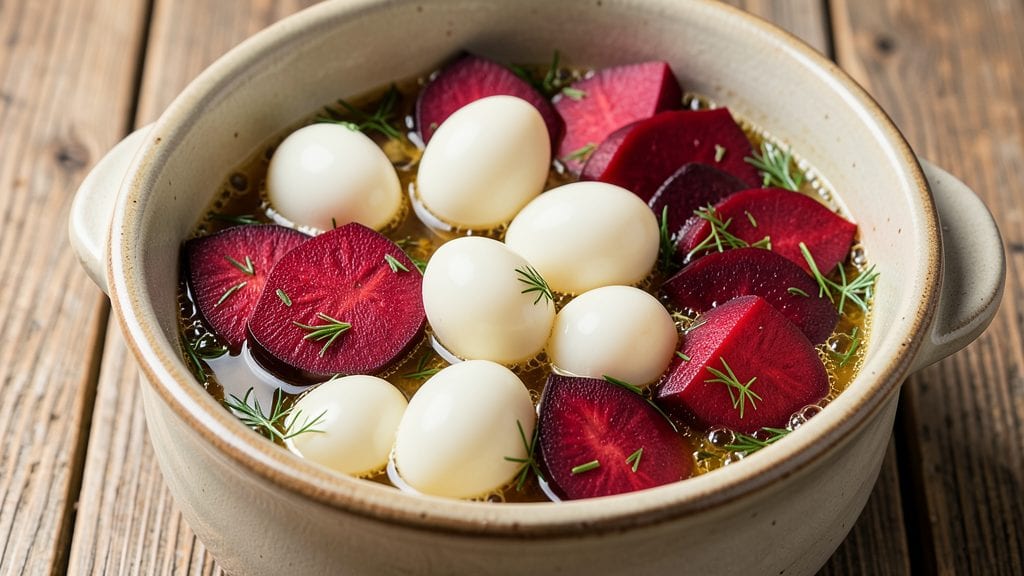
This Amish pickled eggs and beets recipe preserves fresh flavors in a tangy vinegar brine that lasts for months—perfect for breakfast, snacks, or charcuterie boards.
Growing up, I watched my Pennsylvania Amish neighbors transform simple ingredients into pantry staples that kept through winter, and their method for pickling eggs and beets became my go-to for long-lasting, tangy bites.
The secret lies in the precise balance of vinegar, salt, and spices that create that signature crunch and zesty bite.
The process is straightforward but requires patience—hard-boiled eggs and beets are packed into sterilized jars with a warm vinegar brine infused with mustard seeds, garlic, and black peppercorns. This isn’t just preservation; it’s a way to extend the harvest’s freshness while adding depth of flavor that store-bought versions can’t match.
The result? Eggs with crisp shells and tender yolks, beets that stay vibrant and slightly sweet, all infused with a bright, tangy punch that cuts through rich dishes.
What makes this recipe truly special is its versatility—use the pickled eggs as a protein-packed breakfast side, slice the beets into salads for a sweet-tangy crunch, or serve both as appetizers with crackers and cheese.
The jars keep for up to six months in a cool, dark place, making this a perfect project for canning season or whenever you want to stock your pantry with homemade goodness. Ready to transform ordinary eggs and beets into something extraordinary?
Here’s where traditional techniques meet modern convenience: no fancy equipment is needed, just a few basic tools and a little time. The step-by-step instructions will guide you through boiling, packing, and sealing the jars properly, ensuring your pickled eggs and beets stay fresh and flavorful.
Let’s get started on a recipe that’s as rewarding to make as it is delicious to eat.
Ingredients for amish pickled eggs and beets
Twelve eggs, three beets, and a tangy vinegar blend—simple ingredients for a pantry staple that keeps for months.
| Ingredient | Amount | Notes |
|---|---|---|
| Large Eggs 🥚 | 12 whole | Fresh, medium-sized, hard-boiled |
| Medium Beets 🍠 | 3 whole | Medium-sized, peeled and quartered |
| White Vinegar 💧 | 2 cups | Distilled, 5% acidity preferred |
| Water 💧 | 2 cups | Filtered or boiled for clarity |
| Diamond Crystal Kosher Salt 🧂 | ½ cup | Non-iodized, coarse grain |
| Granulated Sugar 🍚 | ¼ cup | White or light brown |
| Garlic Cloves 🧄 | 6 cloves | Fresh, peeled, smashed |
| Mustard Seeds 🌶️ | 2 tbsp | Yellow or brown, whole |
| Black Peppercorns 🌶️ | 1 tbsp | Freshly cracked |
| Dried Dill Weeds 🌿 | 1 tbsp | Or 1 tbsp fresh dill |
| Bay Leaves 🍃 | 2 whole | Dried, standard size |
| Clean Pint Mason Jars 🥫 | 4 whole | With lids and bands |
The beets and eggs are the stars here, so pick them fresh. Local farmers markets often have the best beets—look for firm, deep red ones without blemishes. Eggs should be large or extra-large for consistent boiling. For vinegar, Heinz or Texas Pete are reliable, but any white vinegar with 5% acidity works. The salt matters too—Diamond Crystal is the gold standard for pickling, but any kosher salt without iodine will do. I always buy extra mustard seeds and peppercorns because they make this recipe shine—they add that classic crunch and depth that store-bought versions miss.
No fresh dill? Dried works at double the amount, but fresh is ideal if you've got it. Short on bay leaves? One leaf per jar is perfect, but you can skip them entirely if needed. The sugar is optional but helps balance the tang—brown sugar adds a caramel note if you're feeling fancy. For jars, Ball or Kerr, but any clean, sterilized glass will work. If you're in a pinch, boil the jars and lids for 10 minutes to sterilize them. The garlic can be minced or left whole—I prefer smashed cloves for even flavor distribution.
This keeps for 6 months, but honestly, it disappears faster than that. Once opened, store in the fridge and eat within 2 weeks. The eggs stay crisp and the beets vibrant—no soggy disappointments here. I always make extra jars to give away; they’re the perfect hostess gift. For best results, let the jars sit at room temperature for 24 hours before refrigerating, which lets the flavors meld perfectly.
Why You'll Love This Recipe
- No Boiling Needed: I swear by this—just hard-boil the eggs, peel them, and let the vinegar brine do the magic. No fussing with constant stirring or watching a pot like a hawk.
- Sweet-Savory Magic: That tangy vinegar kiss on the beets? It’s like a flavor explosion—earthy, slightly sweet, with just enough bite. The eggs soak up the brine perfectly, turning ordinary into ridiculously good.
- Potluck Star: Between us, this is my go-to for church gatherings or summer picnics. It travels well, looks pretty in a mason jar, and everyone grabs seconds—no one expects it to be this good.
- Pantry Goldmine: Honestly, you’re using ingredients you already have. Vinegar, salt, eggs, beets—minimal cost, maximum payoff. Plus, once it’s made, it lasts weeks in the fridge, so I’m always covered for quick bites.
Step-by-step instructions for Amish pickled eggs and beets
Here's how to create a traditional Amish-style brine that keeps eggs and beets perfectly preserved for months.
Prepare the Eggs and Beets
Start by hard-boiling the 12 whole large eggs. Place them in a saucepan, cover with cold water by about 1 inch, and bring to a boil over high heat. Once boiling, reduce heat to medium-low, cover, and cook for exactly 10 minutes. Immediately transfer the eggs to an ice bath to stop the cooking process and make them easier to peel.
While the eggs cool, peel them completely and set aside. For the 3 whole medium beets, preheat your oven to 400°F. Wrap each beet tightly in aluminum foil and bake for 45-50 minutes until tender. Let them cool slightly, then peel and cut into 1-inch thick rounds or wedges. The beets should be cool enough to handle when ready for the brine.
Create the Brine Mixture
In a large bowl, combine the 2 cups white vinegar, 2 cups water, 0.5 cup diamond crystal kosher salt, and 0.25 cup granulated sugar. Stir until the salt and sugar are completely dissolved. This creates the foundation for your tangy, flavorful brine.
Add the 6 cloves smashed garlic, 2 tablespoons mustard seeds, 1 tablespoon freshly cracked black peppercorns, 1 tablespoon dried dill weeds, and 2 whole bay leaves to the mixture. Stir gently to distribute the spices evenly without crushing them too much. The spices will infuse the brine with their distinct flavors over time.
Pack the Jars
Divide the peeled eggs and beet pieces evenly among the 4 clean pint mason jars. You'll have about 3 eggs and 1 beet per jar. Arrange them vertically in each jar, packing them tightly but not forcing them. This ensures they stay submerged in the brine and preserves their shape.
Pour the prepared brine over the eggs and beets, making sure they're completely covered by at least 1 inch of liquid. Use a wooden spoon to gently press down the contents if needed. Leave about 1 inch of headspace at the top of each jar.
Seal and Store
Wipe the rims of the jars with a clean, damp cloth to remove any residue. Place the lids on the jars and screw on the bands until they're fingertip-tight. Don't overtighten, as this can cause the jars to seal improperly.
Process the jars in a water bath canner for 10 minutes to ensure a proper seal. Remove the jars and let them cool completely on a wire rack. You'll hear the satisfying "pop" as the lids seal. Once cooled, store the jars in a cool, dark place for up to 6 months. The flavors will deepen over time, creating a delicious, tangy preservation that's perfect for snacks or salads.
Pro Tips For Making Amish Pickled Eggs And Beets
- BOIL EGGS UNTIL COOL: Don’t pull them out when they’re still warm—wait until the water’s stone cold. I learned this after cracking eggs that were too soft and rubbery; the beets and brine need to work with eggs that’ve fully set but aren’t overcooked. Five minutes in ice water after boiling guarantees perfect texture.
- PEEL BEETS HOT: Roast the beets first, then peel them while still warm. The skins slide off effortlessly—no scrubbing, no peeling battles. Skip this, and you’ll spend 10 minutes scrubbing stubborn skins off raw beets. (Pro tip: Toss them in the oven at 400°F for 45-50 minutes, wrapped in foil.)
- BRINE COOL BEFORE PACKING: Let the vinegar-water-salt mixture sit at room temp for at least 30 minutes before adding eggs and beets. Cold brine makes the eggs absorb liquid unevenly, leading to watery pickles. Room temp ensures even penetration and crisper texture. (Yes, even if you’re eager to start.)
- WEIGH SALT BY VOLUME: Diamond Crystal kosher salt is fluffier than table salt—don’t eyeball it. Use 1/4 cup per quart of liquid, not 2 tablespoons. I used to under-salt batches, and the flavor was lackluster. Trust the measurement; the tang in these pickles depends on it.
Flavor customization for these flavors
Sweet-Tart Beet Variations
Swap the classic red beets for golden beets to add a mild, earthy sweetness that pairs beautifully with the tangy brine. I’ve also experimented with chioggia beets (striped) for a visually stunning presentation—their subtle sweetness and crisp texture make them a showstopper.
For a smoky twist, roast the beets with 1 teaspoon smoked paprika before adding them to the jars. 🌟
Spice Level Control
Adjust the heat to your taste by tweaking the spices. For a mild kick, reduce the black peppercorns to ½ tablespoon and add 1 teaspoon red pepper flakes instead.
If you love bold flavors, increase the mustard seeds to 3 tablespoons and add 1 teaspoon coriander seeds for a nutty depth. I often double the garlic to 12 cloves for a more intense aroma—just make sure to smash them well for even distribution. 🌶️
Herb and Aroma Swaps
Dill is classic, but don’t be afraid to experiment. Try 1 tablespoon fresh thyme or 1 teaspoon dried oregano for a Mediterranean twist. For a brighter profile, add 1 tablespoon fresh tarragon or 1 teaspoon fennel seeds—both add a licorice-like sweetness that balances the vinegar beautifully.
I once used 1 bay leaf + 1 sprig fresh rosemary for a rustic, herby flavor that felt like a countryside picnic. 🌿
Sweetness Adjustments
Skip the sugar entirely for a low-sugar version, or replace it with ¼ cup honey for a subtle floral note. For a caramelized depth, add 2 tablespoons maple syrup to the brine. If you’re using brown sugar, reduce it to ¼ cup to avoid overpowering the tang.
I’ve also tried 1 tablespoon apple cider vinegar in place of white vinegar for a fruity complexity—it’s a game-changer for those who prefer a milder acidity. 🍯
Protein and Veggie Add-Ins
Boost the jars with ¼ cup pickled red onions or 1 cup sliced radishes for extra crunch. For protein, add ½ cup cooked bacon bits or ¼ cup crumbled feta cheese—both pair wonderfully with the eggs and beets.
I’ve also included 1 cup cherry tomatoes (halved) for a sweet-tart contrast. Just ensure everything fits snugly in the jars and stays submerged in the brine. 🥓
Flavor Layering Tips
Infuse the brine with 1 cinnamon stick or 2 star anise pods for a warm, aromatic twist. For a citrusy brightness, add zest from 1 lemon or 1 orange to the brine before packing the jars.
I’ve even tried 1 tablespoon grated ginger for a zesty kick—it’s unexpected but works beautifully with the beets. Let the jars sit for 48 hours before refrigerating to let the flavors meld fully. ✨
Nutrition facts
Frequently asked questions
Why do Amish families traditionally pickle eggs and beets together?
The combination creates a perfect balance of flavors and textures. The tangy, crisp eggs contrast beautifully with the naturally sweet, earthy beets, making them a satisfying snack or side dish. Plus, the preservation method works equally well for both ingredients, creating a harmonious flavor profile that lasts for months.
Can I use store-bought pickled beets instead of fresh?
No, fresh beets are essential for the best texture and flavor. Store-bought pickled beets often have a softer texture and different flavor profile that won't complement the eggs as well. Fresh beets stay firm and vibrant when properly pickled, creating that perfect crunch you want in every bite.
How do I know when my pickled eggs and beets are properly sealed?
A properly sealed jar will have the lid concave downward and make a "popping" sound when pressed. If the lid stays up when pressed, the jar didn't seal properly and should be refrigerated and eaten within 1 week. Always check seals within 24 hours of processing.
What can I do if my eggs turn greenish during pickling?
Greenish eggs are usually caused by overcooking or using old eggs. To prevent this, use fresh eggs and cook them for exactly 10 minutes (no longer!). If it happens, the eggs are still safe to eat—the greenish tint is just iron reacting with sulfur compounds. Just enjoy them with extra beets to balance the flavor!
Can I make this recipe without a water bath canner?
Yes! For short-term storage (1 month), you can refrigerate the jars without processing. For longer storage, use the oven method: place jars on a baking sheet in a 200°F oven for 45 minutes. This mimics water bath canning but requires more monitoring. Always check seals carefully.