
Main Courses
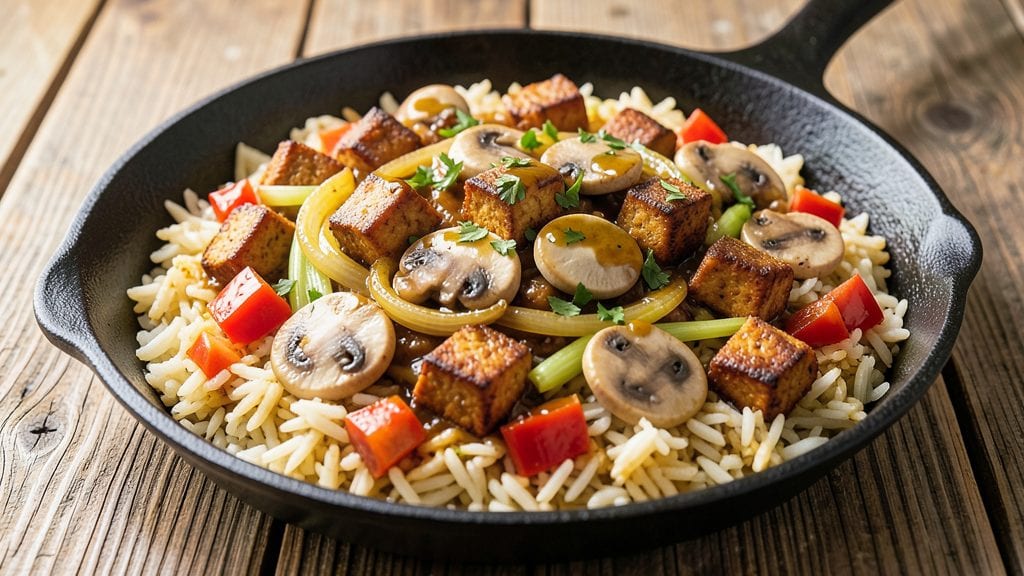
This vegetable jambalaya recipe transforms a classic Louisiana staple into a smoky, spice-packed one-pot wonder that delivers restaurant-quality depth without a single drop of meat.
The secret lies in building layers of flavor through slow-cooked vegetables, aromatic spices, and a rich plant-based broth that simmers until every ingredient melds into perfect harmony.
I developed this version after realizing traditional jambalaya could shine just as brightly with the right technique and ingredients—proof that bold flavors don’t require animal products.
The beauty of this recipe is its simplicity: just one pot to stir, one timer to set, and 30 minutes of active time before you can serve up a dish that tastes like it simmered all day.
We start with a proper "holy trinity" of onions, bell peppers, and celery—sautéed until caramelized—to form the flavor base, then add hearty mushrooms and tofu for protein.
The vegan broth, infused with smoked paprika and cayenne, carries all the smoky, spicy character you’d expect from jambalaya, while long-grain rice absorbs the flavors perfectly.
By the time you’re done, you’ll have a pot of jambalaya with tender, flavorful vegetables, perfectly cooked rice, and a sauce so rich it clings to every bite. The aroma alone—smoky, spicy, and slightly sweet—will have everyone gathered around the table.
This version works equally well as a weeknight dinner or a centerpiece for a plant-based potluck, and it reheats beautifully for leftovers.
For extra depth, serve with a side of collard greens or vegan cornbread to soak up every last bit of that smoky, spice-packed sauce. The recipe scales easily, so double it for a crowd—just keep the same ratio of rice to broth. Let’s get cooking!
Ingredients for veg jambalaya
One-pot magic with bold flavors—just 15 ingredients for a jambalaya that tastes like it simmered all day.
| Ingredient | Amount | Notes |
|---|---|---|
| Long-Grain White Rice 🍚 | 1 cup | Uncooked, preferably jasmine or basmati |
| Yellow Onion 🧅 | 1 whole | Medium size, diced small |
| Red Bell Pepper 🌶️ | 1 whole | Diced, seeds removed |
| Celery Stalks 🥬 | 3 whole | Diced, including leaves |
| Creamy Mushrooms 🍄 | 8 oz | Sliced, button or cremini |
| Extra-Firm Tofu 🥬 | 1 lb | Pressed, cubed |
| Smoked Paprika 🌶️ | 1 tbsp | High-quality, not sweet |
| Garlic Cloves 🧄 | 4 cloves | Minced, fresh preferred |
| Cayenne Pepper 🔥 | ½ tsp | Adjust for heat preference |
| Dried Thyme 🌿 | 1 tsp | Or 1 tbsp fresh |
| Ground Cumin 🌿 | ½ tsp | Toasted for deeper flavor |
| Vegetable Broth 💧 | 2 ½ cups | Low-sodium, homemade or store-bought |
| Tomato Paste 🍅 | 1 tbsp | Squeeze tube preferred |
| Lemon Juice 🍋 | 1 tbsp | Freshly squeezed |
| Extra-Virgin Olive Oil 🫒 | 2 tbsp | For sautéing |
| Sea Salt 🧂 | 1 ½ tsp | Diamond Crystal preferred |
| Black Pepper 🌶️ | ½ tsp | Freshly ground |
The holy trinity—onion, bell pepper, and celery—is non-negotiable. Yellow onions add sweetness, while red bell peppers bring freshness, and celery ties it all together. Grab fresh mushrooms at Whole Foods or your local market—they hold up better than pre-sliced. For the tofu, extra-firm is key; press it for 20 minutes to remove excess water. Trader Joe's sells pre-pressed blocks, which saves time. The rice? Jasmine or basmati stays separate and fluffy—avoid instant rice unless you're in a pinch.
No smoked paprika? Substitute half with chipotle powder for heat, but you’ll lose some smokiness. Fresh thyme is ideal, but dried works at one-third the amount. The tomato paste can be skipped if you’re using a rich broth—just add an extra splash of vegetable broth. For extra depth, stir in 1 tbsp nutritional yeast at the end—it mimics the umami of meat. The cayenne is where you control the heat, so start light and adjust to taste. If you’re serving kids or sensitive eaters, reduce it to a pinch.
This jambalaya tastes even better the next day—double the batch if you know you’ll have leftovers. Store in an airtight container for 4-5 days in the fridge or freeze for up to 3 months. The rice absorbs the sauce beautifully, so reheat with a splash of broth or water. For serving, a sprinkle of fresh parsley or scallions adds brightness. The sauce thickens as it cools, so don’t stress if it looks thin while cooking.
Why You'll Love This Recipe
- One-Pot Magic: I swear by this recipe—just one pot, no fuss. Sauté the onions, bell peppers, and celery (that classic holy trinity combo) until soft, then toss in the mushrooms and rice. The rice absorbs all the smoky, spiced liquid while you’re stirring, and suddenly, dinner’s ready. No extra bowls, no extra stress.
- Umami Bomb: Between us, the mushrooms are the star. Creamy and earthy, they soak up the jambalaya’s spices like a dream, while the bell peppers add a subtle sweetness that balances everything. Honestly, it’s the kind of dish where you take a bite and think, "Wait, is this vegetarian?"—but it’s not, and that’s the beauty.
- Lunchbox Hero: This makes amazing leftovers, but here’s the twist: it’s just as good cold as it is hot. Pack it in containers for work lunches, and the flavors only deepen overnight. My kids actually ask for it—yes, even on a Tuesday night—because it’s hearty enough to fill you up but light enough to not weigh you down.
- Budget Flex: You’re using pantry staples here: rice, onions, peppers, celery. Mushrooms stretch further than you’d think, and the spices (cumin, paprika, thyme) are cheap but pack a punch. I’ll be real: I’ve made this for under $8 for four servings, and no one’s ever complained. That’s a win in my book.
Step-by-step instructions for veg jambalaya
Here's how to build this smoky, spice-packed one-pot masterpiece using just your stovetop.
Sauté the Holy Trinity for Flavor Foundation
Heat the 2 tablespoons extra-virgin olive oil in a large, deep skillet or Dutch oven over medium-high heat. Add the 1 whole yellow onion, 1 whole red bell pepper, and 3 whole celery stalks, all diced as specified. Cook for 5-6 minutes, stirring occasionally, until the vegetables soften and the onion becomes translucent.
This is where the jambalaya's soul develops. You'll know it's ready when the vegetables release easily from the pan and develop a golden hue at the edges. If they stick, reduce the heat slightly—patience here prevents burning. I like to toss in the 4 minced garlic cloves at the 4-minute mark so they don't have time to burn before they infuse their flavor.
Build the Spice Base and Add Mushrooms
Lower the heat to medium and add the 1 tablespoon smoked paprika, 0.5 teaspoon cayenne pepper, 1 teaspoon dried thyme, and 0.5 teaspoon ground cumin. Stir vigorously for 30 seconds to toast the spices—this activates their aromas and prevents bitterness. You'll smell that deep, smoky complexity developing right away.
Add the 8 ounces sliced creamy mushrooms and cook for another 3-4 minutes until they release their moisture and begin to brown. The mushrooms should be tender but still hold their shape. This step builds the jambalaya's signature meaty texture without any animal products. If the pan gets too dry, add a splash of vegetable broth—just enough to keep everything moving.
Incorporate Tofu and Tomato Paste
Push the vegetable mixture to one side of the pan and add the 1 pound cubed extra-firm tofu directly to the empty space. Let it sear undisturbed for 2-3 minutes until golden brown on all sides. This creates the perfect textural contrast in the finished dish. Once browned, stir the tofu into the vegetable mixture.
Add the 1 tablespoon tomato paste and cook for 1 minute, stirring constantly. The tomato paste will darken slightly and deepen the jambalaya's rich color. This is your chance to taste and adjust seasoning—add 0.5 teaspoon black pepper if you want more heat, or a pinch of sea salt if needed. The dish should be vibrant and aromatic at this stage, with layers of smoky, earthy, and slightly spicy notes.
Simmer with Rice and Broth
Add the 1 cup long-grain white rice, stirring to coat each grain with the spice mixture. Pour in the 2.5 cups vegetable broth and bring to a gentle boil. Once boiling, reduce heat to low, cover the pan, and simmer for 20 minutes. Don't peek or stir during this time—this allows the rice to absorb liquid evenly and develop proper texture.
After 20 minutes, uncover the pan and stir gently. Add the 1 tablespoon lemon juice and continue simmering uncovered for another 5-7 minutes until the liquid has been absorbed and the rice is tender but still slightly firm in the center. The jambalaya should have a thick, stew-like consistency with a glossy surface. If it's too dry, add a splash more broth—just enough to loosen it to your preferred texture.
Rest and Serve with Confidence
Remove from heat and let the jambalaya rest, covered, for 5 minutes. This resting period allows the flavors to meld completely and the rice to finish absorbing any remaining liquid. The final dish should have a beautiful golden-brown crust on top from the caramelized spices and a rich, aromatic broth infused with all the vegetables.
Serve immediately with crusty bread or over steamed rice if you prefer a lighter base. The jambalaya should be packed with smoky, spicy, and slightly tangy flavors, with each bite delivering tender rice, hearty tofu, and a complex vegetable medley. The lemon juice brightens everything, cutting through the richness while adding a refreshing finish. This one-pot wonder delivers restaurant-quality results with minimal cleanup—exactly what makes jambalaya so special.
Pro Tips For Making Veg Jambalaya
- Sauté the Holy Trinity Slow: I used to rush the onion, bell pepper, and celery—now I cook them on medium-low for 8-10 minutes until the onion turns translucent and the bell pepper gives up its raw bite. This builds flavor without burning, and you’ll taste the difference when the rice soaks it up later.
- Dice Mushrooms Uniformly: Big chunks stay chewy; tiny bits disappear. Aim for ½-inch pieces so they cook evenly and hold texture. If using cremini, slice them slightly thinner—they’re denser and need even exposure to the heat.
- Toast the Rice First: Dry-toast the long-grain rice in the pot for 2-3 minutes before adding liquid—it prevents mushiness and adds a nutty depth. Skip this, and you’ll end up with a sad, gluey jambalaya.
- Simmer Rice in Broth: Use vegetable or chicken broth instead of water—it’s the flavor backbone. Bring the rice to a boil, then reduce to a gentle simmer, partially covered. Peeking every 5 minutes keeps it from sticking without overcooking.
Regional styles of this veg jambalaya
Cajun Roots
This recipe stays true to jambalaya’s Louisiana Cajun origins by keeping the holy trinity (onion, bell pepper, celery) and smoked paprika at its heart. The original dish was born in the French Quarter from immigrants blending French, Spanish, and African influences.
My version replaces andouille sausage with extra-firm tofu—pressed and seared to mimic the meaty texture. The cayenne pepper and thyme keep that signature Cajun kick while making it completely plant-based. 🌶️
Creole Twist
For a New Orleans Creole adaptation, swap the smoked paprika for 1 tbsp Creole seasoning (like Tony Chachere’s) and add 1 tsp filé powder (made from ground sassafras) at the very end. This version often includes tomatoes—add ½ cup diced Roma tomatoes with the mushrooms.
The Creole style leans sweeter, so I’d reduce the cayenne to ¼ tsp and add 1 tsp brown sugar to balance. Serve with hot sauce on the side for authenticity.
Texas-Style Adaptation
Texas jambalaya often includes chili peppers and corn—add ½ cup frozen corn with the rice and 1 diced jalapeño (seeds removed) with the holy trinity. Use 1 tsp chili powder instead of smoked paprika for a bolder, drier heat.
Top with avocado slices and cilantro for a Southwest fusion. This version works perfectly with vegan chorizo (like Trader Joe’s brand) for extra depth. 🌶️
Modern Fusion
For a global twist, try a Thai-inspired version: add 1 tbsp red curry paste with the spices, swap the tofu for chickpeas, and finish with lime zest instead of lemon.
Or go Mediterranean—use kalamata olives and sun-dried tomatoes with the mushrooms, and top with feta (or vegan feta) and fresh oregano. These adaptations keep the one-pot magic while introducing exciting new flavors.
Southern Comfort
For a Southern-style jambalaya, focus on slow-cooked vegetables and a rich broth. Use 1 cup low-sodium chicken-free broth and add 1 tbsp apple cider vinegar at the end for tang. Top with collard greens (sautéed with garlic) and serve with vegan cornbread.
This version feels hearty enough for a weeknight family dinner but elegant enough for company. The key is letting it simmer 10-15 minutes longer for deeper flavor development.
Nutrition facts
Frequently asked questions
Can I make this veg jambalaya without tofu?
Swap the tofu for 1 cup cooked chickpeas or ½ cup lentils for a different texture. For a meatier bite, use 1 cup crumbled tempeh instead. If you prefer a heartier option, add ½ cup diced sweet potatoes or 1 cup butternut squash—they’ll soak up all the smoky flavors beautifully.
How do I adjust the heat level?
The recipe includes ½ teaspoon cayenne pepper, which gives a mild kick. For more heat, add an extra ¼ teaspoon cayenne or ½ teaspoon crushed red pepper flakes. If you want a smoky heat without spice, increase the smoked paprika to 1.5 tablespoons instead. Always taste as you go—you can always add more, but you can’t take it out!
Can I use instant rice for this recipe?
Instant rice works in a pinch, but it won’t have the same texture or flavor as long-grain rice. If you must use it, reduce the broth by ½ cup and cook for 15 minutes total (instead of simmering with the vegetables). For best results, stick with jasmine or basmati rice—they stay separate and fluffy, soaking up the sauce perfectly. The extra effort is worth the restaurant-quality texture!
What’s the best way to store leftovers?
Let the jambalaya cool completely, then transfer it to an airtight container. It keeps well in the fridge for 4-5 days—the flavors actually deepen overnight! For freezing, portion into single-serving containers and store for up to 3 months. Reheat gently on the stove with a splash of broth or water to restore moisture. The sauce thickens as it cools, so don’t worry if it looks dry when reheated.
How can I make this dish gluten-free?
This recipe is naturally gluten-free, but check your ingredients for hidden sources. Use certified gluten-free vegetable broth and ensure your smoked paprika and spices are processed in a gluten-free facility. For extra insurance, toast your rice in a dry pan for 2 minutes before adding broth to remove any potential cross-contamination. Serve with gluten-free cornbread or a side salad to keep it safe and delicious!