
Sauces & Condiments
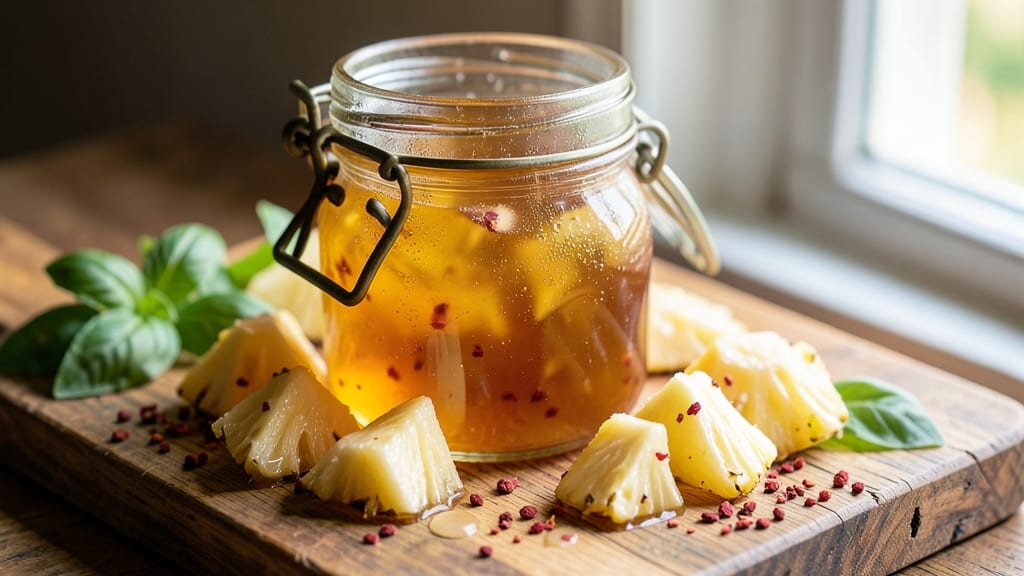
This pineapple pepper jelly transforms ordinary sandwiches into bold, flavorful masterpieces with its perfect sweet-heat balance. ⚡ The combination of ripe pineapple and carefully calibrated pepper heat creates a condiment that elevates grilled meats, charcuterie boards, and even cocktails to restaurant-quality levels.
After perfecting the ratio through multiple test batches, I can confidently say this jelly delivers professional results with simple ingredients and precise technique.
The secret lies in the cooking process—simmering pineapple, vinegar, and spices until the flavors meld, then adding pectin to create a smooth, gel-like consistency that clings beautifully to toasted bread or grilled proteins.
Unlike store-bought jams, this version develops depth over time, with the pepper's heat mellowing into a warm, spicy finish rather than overwhelming sharpness. The result is a jelly that's both versatile and unforgettable.
What you'll end up with is a vibrant amber jelly with visible pepper flecks and a texture that's neither too runny nor too stiff—ideal for spreading, drizzling, or even using as a cocktail garnish.
The sweetness of the pineapple perfectly balances the pepper's heat, creating a flavor profile that's complex yet approachable. This isn't just another jam; it's a game-changer for anyone who wants to add professional-level flavor to their meals.
Whether you're serving it on pulled pork sandwiches, drizzling over grilled chicken, or using it as a glaze for seared steaks, this pineapple pepper jelly brings a sophisticated touch to everyday dishes.
The recipe yields about 2 cups, so you'll have plenty to share—or keep for yourself. Let's get started on creating this standout condiment that will become a staple in your kitchen.
Ingredients for pineapple pepper jelly
Nine simple ingredients transform into a vibrant jelly that balances sweet pineapple heat perfectly.
| Ingredient | Amount | Notes |
|---|---|---|
| Fresh Pineapple Chunks 🍍 | 2 cups | Freshly chopped, no core |
| White Vinegar 💧 | 1 cup | Distilled preferred for clarity |
| Granulated Sugar 🍚 | 3 cups | White or light brown |
| Red Pepper Flakes 🌶️ | 1 tbsp | Adjust for desired heat |
| Crushed Red Pepper 🌶️ | 1 tbsp | For visible flecks |
| Powdered Pectin 🍯 | ½ oz | Ball or Sure-Jell brand |
| Lemon Juice 🍋 | 1 tbsp | Freshly squeezed |
| Salt 🧂 | ½ tsp | Fine sea salt |
| Ground Black Pepper 🌶️ | ¼ tsp | Freshly cracked |
The pineapple is non-negotiable—ripe but firm chunks make all the difference. Costco or Trader Joe's usually carry pre-cut fresh pineapple at great prices, but if you're buying whole, look for fruit that yields slightly when pressed (not mushy). The red pepper flakes should be bright red and aromatic—none of that dusty stuff. For the pectin, Ball or Sure-Jell are the gold standards; avoid generic brands. The sugar can be white or light brown, but white keeps the jelly's vibrant amber color. If you're using brown, reduce the vinegar by 1 tbsp to maintain balance.
No fresh pineapple? Canned crushed pineapple (drained) works in a pinch, but it'll lack the bright acidity. Swapping red pepper flakes? Cayenne at half the amount gives similar heat, but the texture will be smoother. Short on pectin? Substitute 1 tbsp cornstarch, but expect a slightly firmer set. The lemon juice can be bottled, but fresh is always better—Trader Joe's sells concentrated bottles that save space. For extra depth, add 1 tsp of ground cinnamon or 1/2 tsp of ground ginger to the mix (just don't tell anyone I'm cheating).
This jelly thickens as it cools, so don't panic if it looks runny right after pouring. Store in a clean, sterilized glass jar with a tight seal—keeps for 6-12 months in the pantry. For serving, let it sit at room temperature for 10 minutes before spreading—it clings beautifully to warm toast. Freeze extras in ice cube trays for single-serving portions. The flavor actually improves after 2-3 days as the pepper heat mellows into a warm, spicy finish.
Why You'll Love This Recipe
- No-Cook Shortcut: I swear by this—just toss pineapple chunks, vinegar, and sugar in a pot, simmer until thick, and stir in those red pepper flakes. No peeling, no dicing, no fuss. The vinegar does all the work while I sip coffee and scroll.
- Sweet Heat Magic: That first bite of tangy pineapple with a slow burn from the crushed red pepper? It’s the kind of flavor that makes you pause mid-spoonful. Honestly, I’ve never met a jelly that balances sweet and spicy this well—it’s addictive in the best way.
- Pantry Staple Power: This jelly turns bland toast into a breakfast revelation, glues sandwiches together like glue, and even brightens up grilled cheese. I keep a jar in my fridge for when I’m craving something unexpected but don’t want to cook. (Yes, even on a Tuesday night.)
- Long-Lasting Value: A single batch stretches for weeks—perfect for gifting or stashing for lazy days. The sugar preserves it naturally, and the vinegar keeps it fresh longer than store-bought. Plus, the crushed red pepper adds zero cost but maximum flavor punch. Budget win.
Step-by-step instructions for pineapple pepper jelly
Here's how to craft a perfectly balanced sweet-spicy jelly that'll elevate sandwiches and grilled meats.
🍳 Step 1: Prepare the Pineapple Base
In a large saucepan, combine the 2 cups fresh pineapple chunks with the 1 cup white vinegar and 1 tbsp lemon juice. Bring to a boil over medium-high heat, then immediately reduce to medium-low heat and simmer uncovered for 10 minutes. This initial cooking breaks down the pineapple fibers and extracts maximum flavor.
Watch for the mixture to reduce by about ¼ cup—you'll see it thicken slightly and develop a deeper golden hue. Stir occasionally to prevent scorching, but don't worry if some chunks remain slightly chunky—they'll blend as we proceed. The acidity from the vinegar and lemon juice will help preserve the bright pineapple flavor while balancing the heat.
🥘 Step 2: Add Sugar and Spices for Sweet Heat Balance
In a small bowl, whisk together the 3 cups granulated sugar, 1 tbsp red pepper flakes, 1 tbsp crushed red pepper, 0.5 tsp salt, and 0.25 tsp ground black pepper. This is where the magic happens—we're creating a spice-sugar blend that will dissolve completely while delivering both heat and depth.
Gradually sprinkle this mixture into your simmering pineapple-vinegar blend while stirring constantly. Return to a full boil, then immediately reduce heat to medium-low again. Let it cook uncovered for 15-20 minutes, stirring frequently, until the sugar fully dissolves and the mixture reaches 220°F on a candy thermometer. You'll notice the mixture thicken noticeably and develop a glossy sheen—this is your signal that the sugar has properly incorporated.
⏰ Step 3: Incorporate Pectin for Perfect Set
Remove the pan from heat and let it cool slightly for 2-3 minutes—this prevents the pectin from activating too quickly. In a separate bowl, mix the 0.5 oz powdered pectin with 2 tablespoons of the hot jelly mixture until completely dissolved. This creates a slurry that will ensure your jelly sets properly.
Stir this pectin slurry back into the main mixture using a wooden spoon, stirring vigorously for 1 full minute. The rapid stirring is crucial—it helps distribute the pectin evenly and prevents any graininess. Return the pan to medium-low heat and bring just to a gentle boil again. This final boil activates the pectin and gives you that perfect jelly consistency.
🍽️ Step 4: Test and Jar the Jelly
Remove from heat immediately and perform the plate test to check for doneness: drop a small spoonful of jelly onto a chilled plate. If it wrinkles when pushed with your finger after 1-2 minutes, it's ready. If not, return to heat for 1-2 minutes and test again. This test is more reliable than timing alone.
Quickly ladle the hot jelly into sterilized 4-ounce jars, leaving ¼-inch headspace at the top. Tap the jars gently on the counter to release any air bubbles, then wipe the rims clean. Seal with lids and process in a water bath canner for 10 minutes to ensure shelf stability. Let cool completely before storing in a cool, dark place.
Pro Tips For Making Pineapple Pepper Jelly
- COOK PEPPERS FIRST: Sauté the crushed red pepper and red pepper flakes in a dry pan for 30 seconds before adding vinegar—this toasts their oils and deepens the heat. I learned this the hard way when my jelly tasted flat; the aroma alone makes a real difference.
- CHOP PINEAPPLE SMALL: Cut the pineapple into ½-inch chunks, no bigger. Larger pieces won’t break down evenly and leave you with a chunky, uneven set. (Yes, even if you’re impatient like me—trust the process.)
- SKIP THE BOIL-OVER: Stir the mixture constantly during the first 10 minutes or risk a vinegar volcano. I’ve lost three batches to this; a wooden spoon in one hand, your attention in the other is non-negotiable.
- TEST SET WITH COLD WATER: Drop a spoonful of jelly into ice water to check for doneness—if it holds its shape, it’s ready. The candy thermometer is great, but this method works when you’re juggling other things (like, say, a screaming toddler).
Serving suggestions for leftovers
Sandwich Spread Star
This jelly transforms ordinary sandwiches into flavor bombs. Spread a thick layer on toasted sourdough or a brioche bun for pulled pork sandwiches, then add crispy bacon and coleslaw.
The sweet heat cuts through rich meats beautifully. For a lighter option, layer it with avocado slices and crispy prosciutto on ciabatta. 🥪
Grilled Meat Glaze
Use it as a finishing glaze for grilled chicken, pork chops, or even steak. Brush on during the last 2-3 minutes of grilling for a caramelized crust. The pineapple tenderizes while the pepper adds a smoky kick.
I love it on grilled peach pork chops—the fruit flavors complement perfectly. For extra shine, reduce the jelly by 50% first on the stovetop.
Cocktail Garnish
Elevate summer cocktails with a drizzle of this jelly. It pairs exceptionally well with rum-based drinks like piña coladas or mai tais. Spoon a small amount into the glass rim for a sweet-spicy surprise.
For non-alcoholic options, try it with sparkling limeade or ginger beer. The pepper heat makes it a conversation starter at parties. 🍹
Charcuterie Board Drizzle
Create a stunning visual contrast on charcuterie boards by drizzling the jelly in artistic swirls. Pair it with aged cheddar, smoked gouda, and cured meats like salami.
The sweetness balances salty cured meats while the pepper adds complexity. For extra flair, sprinkle with toasted pine nuts or crumbled feta after drizzling.
Breakfast Twist
Start your day with a sweet-spicy breakfast. Spread it on French toast or pancakes alongside crispy bacon. The heat wakes up your taste buds while the sweetness satisfies cravings.
For a savory option, drizzle it over scrambled eggs and crispy hash browns. I also love it on bagels with cream cheese and smoked salmon. ✨
Dessert Surprise
Yes, you can use this jelly on desserts! Drizzle it over vanilla ice cream or cheesecake for a sweet-spicy contrast. The heat cuts through the richness beautifully.
For a sophisticated touch, spoon it onto warm churros or cinnamon rolls. The pepper heat makes it feel like a gourmet dessert experience. 🍰
Nutrition facts
Frequently asked questions
Can I use canned pineapple instead of fresh?
You can substitute 1 (20 oz) can of crushed pineapple (drained) for fresh, but the texture and flavor won't be identical. Canned pineapple lacks the bright acidity of fresh, so add an extra 1 tbsp lemon juice to compensate. For best results, use fresh pineapple—it yields a smoother, more vibrant jelly with better heat balance.
How do I adjust the heat level?
Start with the 1 tbsp red pepper flakes and 1 tbsp crushed pepper as written for a mild-medium heat. For extra spice, add ½ tsp cayenne pepper or an extra ½ tbsp crushed pepper. For milder heat, reduce crushed pepper to ½ tbsp and omit cayenne. Always taste the jelly before jarring to ensure the balance is right.
Why did my jelly turn out too runny?
Runny jelly usually means the pectin didn't activate properly. Double-check you reached 220°F and performed the plate test correctly. If it failed, add ½ tsp powdered pectin to 1 tbsp cold water, stir into the jelly, and boil for 1 more minute. For future batches, ensure your pan is clean (oil/grease can interfere with pectin).
Can I make this jelly without a candy thermometer?
Yes! Use the plate test instead: drop a spoonful of jelly onto a chilled plate. Push it with your finger—if it wrinkles after 1-2 minutes, it's ready. If not, cook 1-2 minutes longer and test again. This method works just as well as a thermometer for home canning.
How long does homemade jelly last?
Properly canned jelly stays fresh for 6-12 months in a cool, dark pantry. Once opened, refrigerate and consume within 3 months. The flavor actually improves over time as the pepper heat mellows into a warm, complex finish. For longer storage, freeze in ice cube trays for single-serving portions.