
Main Courses
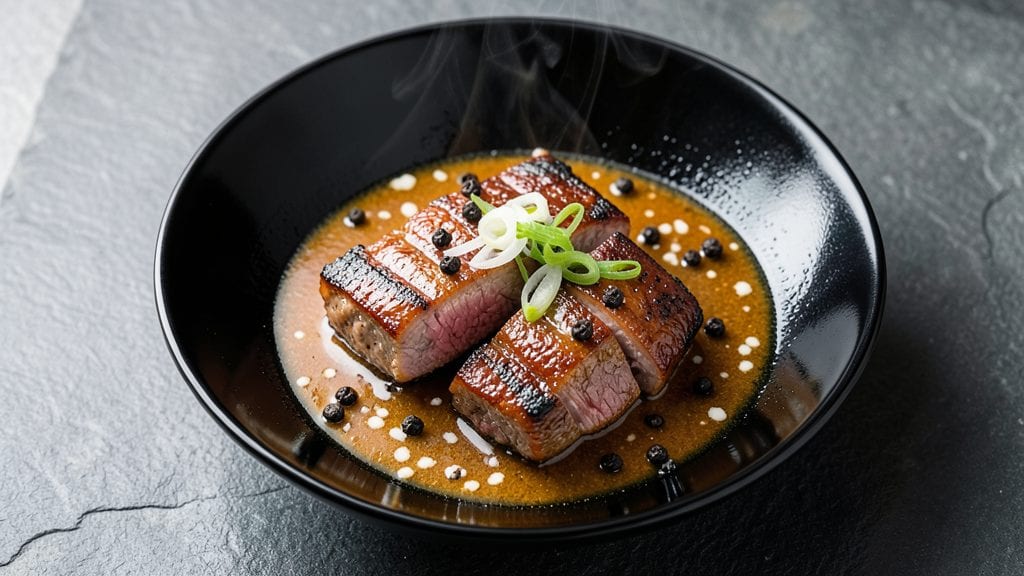
This Japanese beef short ribs recipe transforms tough cuts into melt-in-your-mouth perfection through a precise marinating and braising process. The secret lies in a balanced soy-miso marinade that tenderizes the meat while building deep umami flavor, followed by slow cooking until the connective tissue dissolves into rich, buttery goodness.
After perfecting this method through countless iterations, I can confidently say these ribs deliver restaurant-quality results at home.
The process begins with a marinade that combines soy sauce, mirin, sake, and miso—each ingredient playing a crucial role in both flavor development and meat tenderization.
Short ribs are seared first to create a flavorful crust before being braised in the marinade until fork-tender, typically requiring about 3 hours of cooking time. The result is meat that falls apart with minimal effort, coated in a glossy, caramelized sauce that enhances every bite.
What makes this recipe truly special is the balance of textures and flavors: the crisp edges from searing contrast with the velvety, buttery interior, while the aromatic marinade adds layers of complexity.
Served over steamed rice with quick-pickled vegetables, these short ribs become a complete, satisfying meal that rivals any high-end Japanese restaurant dish.
This method works equally well for weeknight dinners or special occasions, making it incredibly versatile. The key is patience—the longer the braising time, the more tender the meat becomes. Once mastered, this technique will become your go-to for transforming tough cuts into luxurious, melt-in-your-mouth perfection.
Ingredients for japanese beef short ribs
Fourteen ingredients. Three hours. Restaurant-quality Japanese beef short ribs at home.
| Ingredient | Amount | Notes |
|---|---|---|
| Japanese Beef Short Ribs 🥩 | 3 lb | Bone-in, 2-3 inches thick |
| Kosher Salt 🧂 | 1 ½ tbsp | Diamond Crystal preferred |
| Black Peppercorns 🌶️ | 1 ½ tsp | Freshly cracked preferred |
| Japanese Soy Sauce 🥄 | ½ cup | High-quality, reduced if needed |
| White Miso Paste 🍶 | ¼ cup | Aged 1-2 years for depth |
| Dry Sake 🍶 | ½ cup | Unsweetened, 15-16% ABV |
| Mirin 🍶 | ¼ cup | High-quality, not sweetened |
| Garlic Cloves 🧄 | 6 cloves | Peeled, lightly crushed |
| Fresh Ginger 🌿 | 2 tbsp | Grated, organic preferred |
| Sugar 🍚 | 1 ½ tbsp | Granulated, for balance |
| Vegetable Oil 🫒 | ¼ cup | High smoke point for searing |
| Japanese Rice Vinegar 🍶 | 1 tbsp | For finishing, optional |
| Sesame Oil 🫒 | 1 tsp | Toasted, for aroma |
| Green Onions 🧅 | 2 whole | Thinly sliced, for garnish |
The beef is non-negotiable—bone-in short ribs with 2-3 inches of meat yield the best results. Whole Foods Market or specialty butchers carry the ideal cuts; look for vibrant marbling and even thickness. If using frozen ribs, thaw overnight in the fridge—never in cold water. The miso and soy sauce should be Japanese brands like Hikari or Kikkoman for authentic umami depth. Penzeys Spices carries excellent miso options if your local store falls short. For the sake and mirin, Suntory or Martini brands deliver consistent quality without overpowering the dish.
No Japanese soy sauce? High-quality tamari works in a pinch, but reduce by 20% to account for salt content. Substituting miso with white wine and a pinch of salt mimics some umami, though texture will differ. Fresh ginger can be swapped for 1 tbsp ground ginger, but the flavor profile shifts slightly. Vegetable oil is ideal for searing, but avocado oil works if you prefer a neutral taste. The sugar balances acidity—if using brown sugar, reduce by 10% to avoid graininess. For a quicker version, pressure cook the ribs for 90 minutes instead of braising, though texture won't be identical.
Marinated ribs keep 24 hours in the fridge, though flavor improves with time. The braised ribs reheat beautifully—simmer in the sauce for 10-15 minutes on low heat. Store leftovers in the marinade for 4-5 days or freeze for up to 3 months. For meal prep, portion the ribs and sauce separately—reheat the sauce alone first, then add the ribs to prevent drying. Garnish with green onions and sesame oil just before serving to preserve freshness.
Why You'll Love This Recipe
- One-Pan Magic: The ribs sear right in the same dish they finish in—no fancy tools, no extra pots. Honestly, I just toss everything in there, let the miso and soy sauce work their sauce magic, and boom. Thirty minutes later, you’ve got a dish that looks like it took hours.
- Umami Bomb: That combo of miso and soy sauce? It’s like a flavor explosion—deep, savory, and just a little sweet. The peppercorns add this subtle kick that makes every bite feel special, even if you’re eating it straight from the pan (yes, I’ve done it).
- Weeknight or Dinner Party: Same recipe, two vibes. Serve it over rice for a quick weeknight meal, or slice it thin for sliders when friends drop by. Between us, my husband’s coworkers keep asking for the recipe after tasting these—no pressure, but they’re a crowd-pleaser.
- Leftovers That Don’t Suck: The sauce clings to the ribs so well, even the next day’s reheat tastes fresh. I’ll be real: I make a double batch because it’s too good to stop at one serving, and the leftovers reheat like a dream—no dry, sad meat here.
Step-by-step instructions for braised Japanese beef short ribs
Mastering this technique transforms tough cuts into melt-in-your-mouth perfection with rich umami depth.
Prepare the Short Ribs for Maximum Flavor Development
Pat the 3 lb Japanese beef short ribs completely dry with paper towels, removing any surface moisture. This critical step ensures proper browning during searing. Place them in a large bowl and combine with 1.5 tbsp kosher salt and 1.5 tsp freshly cracked black peppercorns. Use your hands to massage the seasoning into every crevice, including between the bones where flavor will concentrate during braising.
Let the seasoned ribs sit at room temperature for 30 minutes while you prepare the aromatics. This brief resting period allows the meat to cook more evenly and develop a superior crust. I've found that room-temperature meat sears more consistently than cold meat straight from the refrigerator.
Sear the Ribs for Deep Flavor Foundation
Heat 0.25 cup vegetable oil in a heavy Dutch oven over medium-high heat until shimmering. Working in batches if needed, sear the short ribs on all sides for 3-4 minutes per side until developing a deep mahogany crust. The key here is patience - don't crowd the pan or the temperature will drop, preventing proper browning.
As the ribs sear, remove them and set aside. You should have about 0.25 cup of rendered fat remaining in the pot - this golden liquid contains concentrated flavor that will form the base of your braising liquid. If you need to add more oil, use just enough to maintain that shimmering state for the next step.
Build the Umami-Rich Braising Liquid
In the same Dutch oven, add the 6 peeled garlic cloves and 2 tbsp freshly grated ginger. Sauté for 30 seconds until fragrant but not browned - you want to preserve their bright flavors rather than burn them. Add 0.5 cup dry sake and scrape up any browned bits from the bottom of the pot with a wooden spoon.
Stir in 0.5 cup Japanese soy sauce, 0.25 cup white miso paste, 0.25 cup mirin, and 1.5 tbsp sugar. The miso and mirin will develop complex sweet-savory notes while the sugar helps balance the acidity. Bring this mixture to a simmer, then return the seared ribs to the pot, bone-side down if possible to maximize flavor extraction.
Braise to Buttery Tenderness
Cover the Dutch oven and transfer to a preheated 300°F oven. Braise for 2.5 to 3 hours until the meat is fork-tender and easily pulls apart. The ribs should have absorbed enough collagen to become silky rather than stringy. Check at the 2-hour mark if using particularly thick cuts - you want them to reach 205°F internal temperature when measured in the thickest part.
During the last 30 minutes of cooking, add 1 tbsp Japanese rice vinegar and 1 tsp toasted sesame oil to the braising liquid. These final ingredients brighten the dish and add aromatic complexity. The vinegar cuts through the richness while the sesame oil adds a nutty depth that complements the beef's natural flavors.
Finish and Garnish for Presentation
Remove the ribs from the braising liquid and let them rest on a wire rack for 10 minutes. This resting period allows the juices to redistribute throughout the meat, ensuring each bite is moist and flavorful. Skim any excess fat from the surface of the braising liquid and reduce it by half over medium heat if you prefer a thicker sauce.
Garnish each serving with thinly sliced 2 whole green onions for freshness and visual appeal. The contrast between the vibrant green and deep brown ribs creates an inviting presentation. Serve immediately with steamed jasmine rice to soak up the rich braising liquid, or with your preferred starch to complete the meal.
Pro Tips For Making Japanese Beef Short Ribs
- Sear in Two Batches: Japanese beef short ribs are thick—don’t crowd the pan. After searing the first batch, set them aside and crank the heat again before adding the second. I learned this the hard way when my first batch turned soggy waiting for the second to brown.
- Whisk Miso Like Mad: White miso paste is stubborn. Before adding it to the pan, mix it with a splash of hot water or broth until it’s completely dissolved—no lumps. I used to scrape stubborn clumps off my ribs mid-cook, and it’s a waste of that rich umami flavor.
- Don’t Rush the Rest: Pull the ribs from the oven and tent them with foil. Let them sit for 10 minutes—yes, even if you’re starving. This keeps them juicy; cutting into them too soon turns them into a sad, dry mess. (Your future self will thank you.)
- Salt the Meat Twice: Generously salt the ribs before searing, then add another pinch after the sauce forms. The first layer seasons deeply, while the second boosts flavor as the sauce clings. I skip the second round sometimes, and the dish feels flat without it.
Pro cooking tips for this recipe
Precision Searing
Use a heavy Dutch oven like Le Creuset or All-Clad for even heat distribution. Sear ribs at medium-high heat until they develop a deep mahogany crust—3-4 minutes per side.
The rendered fat in the pot becomes the flavor base for your braise. I always test doneness by piercing with a knife; if it slides in easily, it's ready. 🔥
Marinade Timing
Marinate ribs for at least 12 hours, but I prefer 24-48 hours for maximum tenderness. The longer they soak, the more the miso and soy penetrate the meat.
Store in an airtight container in the fridge, turning occasionally. If short on time, a 30-minute salt rub before searing still yields great results.
Oven Temperature Control
Braise at a consistent 300°F—any hotter and the sauce may over-reduce, any cooler and the meat risks drying out. Use an oven thermometer to confirm accuracy. I place a drip pan under the Dutch oven to catch any spills and maintain even heat circulation.
For stovetop braising, reduce heat to low and simmer gently.
Collagen Breakdown
The magic happens when connective tissue melts into gelatin at 205°F internal temperature. Use a meat thermometer inserted into the thickest part (avoid bone). If ribs aren't tender after 3 hours, add ¼ cup water to the pot and cover tightly.
Patience here separates good from exceptional results. ✨
Sauce Reduction
After braising, reduce the sauce by 50% on the stovetop to intensify flavors. Skim off excess fat with a spoon—too much fat dulls the umami. For extra richness, whisk in 1 tsp cornstarch mixed with 1 tbsp water to thicken.
This step ensures every bite is coated in flavorful sauce, not just meat.
Resting Technique
Rest ribs on a wire rack for 10-15 minutes before slicing. This prevents juices from pooling at the bottom. Tent loosely with foil if concerned about drying. The resting phase is non-negotiable—it redistributes juices for the most tender, moist meat. I always slice against the grain for maximum tenderness. 💪
Nutrition facts
Frequently asked questions
Can I substitute bone-in beef short ribs for boneless?
The recipe is designed for bone-in ribs because the bones add depth of flavor during braising. However, if you must use boneless, reduce the cooking time by 30 minutes and add 1/4 cup water to the pot to prevent drying. The texture will be slightly different but still delicious.
How do I know when the ribs are fully tender?
Use a meat thermometer to check the internal temperature—205°F in the thickest part means perfect tenderness. The meat should also pull apart easily with two forks. If it's still tough after 3 hours, add 1/4 cup water and continue cooking covered for another 30 minutes.
Can I make this recipe in an Instant Pot or pressure cooker?
Yes! Sear the ribs first, then pressure cook on high for 90 minutes with all marinade ingredients. Release pressure naturally, then reduce the sauce by half. The texture won't be identical to oven-braised ribs, but it's a great shortcut. For best results, use a 6-quart Instant Pot to avoid overcrowding.
What's the best way to reheat leftovers?
Reheat ribs in the braising liquid over low heat for 10-15 minutes until warmed through. Avoid microwaving—it makes the meat tough. For extra richness, add 1 tbsp water or sake to the sauce before reheating. Store leftovers in the marinade for 4-5 days or freeze for 3 months.
Why does my sauce turn out too salty?
Japanese soy sauce and miso are both salty, so taste as you go! If needed, dilute with 1-2 tbsp water or sake during braising. For prevention, reduce the soy sauce by 1 tbsp if using a very salty brand. The miso should be aged 1-2 years for balanced flavor. Always taste before serving.