
Soups & Stews
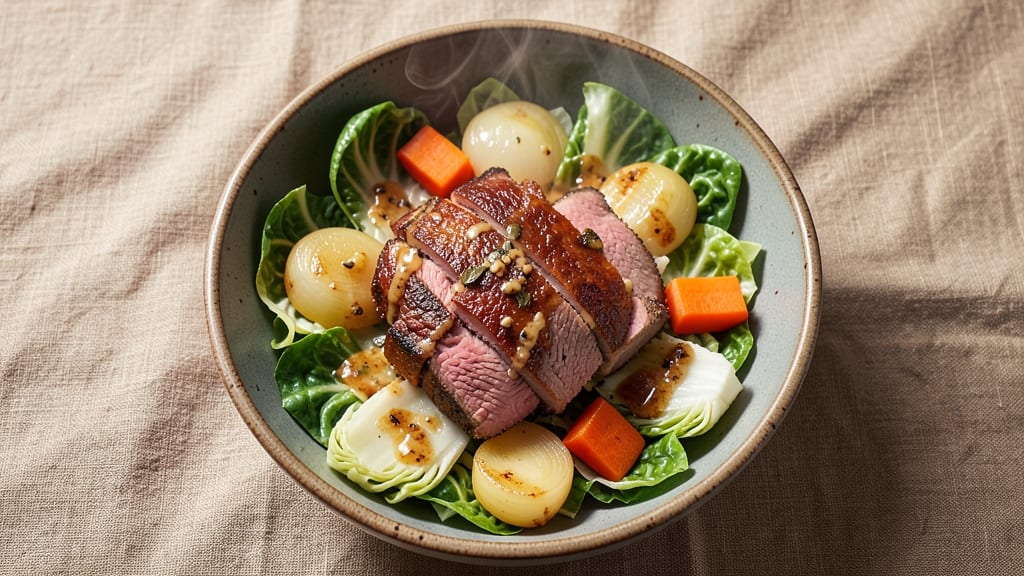
Ina Garten’s corned beef and cabbage recipe transforms a classic St. Patrick’s Day dish into an elegant stovetop pot roast with a signature herbed butter crust.
The secret lies in slow-cooking the beef with aromatic spices until it’s fork-tender, then finishing it with a golden, flavorful crust that elevates every bite. This method ensures a restaurant-quality result without the fuss of traditional brining.
What sets this recipe apart is Ina’s precise technique for balancing the rich, savory flavors of the corned beef with the fresh, slightly sweet cabbage. The beef simmers in a flavorful broth with onions, carrots, and bay leaves until it’s perfectly tender—about 3 hours on the stovetop.
Meanwhile, the cabbage boils just until it’s bright and crisp-tender, retaining its natural texture.
The final touch—a herbed butter crust—adds a luxurious finish that makes this dish feel special. Melted butter infused with parsley and garlic bastes the beef in the last minutes of cooking, creating a crispy, aromatic crust that seals in all the flavors.
The result is a dish that’s hearty, comforting, and undeniably impressive, perfect for feeding a crowd or a cozy family dinner.
Serve with crusty bread to soak up the rich juices and a side of classic horseradish for a tangy kick. This recipe delivers a dish that’s both nostalgic and refined—exactly what you’d expect from Ina Garten’s kitchen. Let’s get cooking!
Ingredients for ina garten corned beef and cabbage
Sixteen ingredients for a dish that tastes like a holiday feast every day.
| Ingredient | Amount | Notes |
|---|---|---|
| Corned Beef Brisket 🥩 | 3 lb | High-quality, pre-cooked brisket |
| Green Cabbage 🥬 | 1 whole | Heads, cut into wedges |
| Yellow Onions 🧅 | 2 whole | Peeled and halved lengthwise |
| Carrots 🥕 | 4 whole | Peeled and cut into chunks |
| Bay Leaves 🍃 | 4 whole | Dried, standard size |
| Garlic Cloves 🧄 | 6 cloves | Peeled and lightly crushed |
| Fresh Parsley 🌿 | ¼ cup | Chopped, stems removed |
| Unsalted Butter 🧈 | ½ cup | Cold, cut into pieces |
| Whole Milk 🥛 | 1 ½ cups | Full-fat preferred |
| Salt 🧂 | 1 ½ tsp | Kosher or sea salt |
| Black Peppercorns 🌶️ | 1 tsp | Freshly ground preferred |
| Crusty Bread 🍞 | 1 loaf | For serving, optional |
| Horseradish Sauce 🌶️ | ¼ cup | Classic prepared sauce |
| Beef Broth 💧 | 2 cups | Low-sodium preferred |
The corned beef brisket is the foundation. Look for high-quality pre-cooked brisket at specialty butchers or well-stocked grocery stores like Whole Foods or Kroger. A 3-pound cut ensures enough for leftovers, which this dish reheats beautifully. The cabbage should be firm and vibrant—avoid any with wilted outer leaves. Onions and carrots can be fresh or frozen (frozen works in a pinch), but fresh adds more depth. Bay leaves are non-negotiable for that classic flavor—dried works fine if you don't have fresh.
No fresh parsley? Dried will work at half the amount, though it lacks the bright green color. The butter matters here—unsalted, full-fat creates the best crust. Substituting margarine or low-fat butter will compromise the texture. For the milk, whole fat is ideal, but 2% works if that's what you have. The beef broth can be homemade or store-bought, but low-sodium is key to avoid over-salting. Horseradish sauce can be swapped for prepared mustard if needed, though the tangy kick is essential.
The corned beef keeps 3-4 days in the fridge once cooked, though it tastes even better the next day. Cabbage reheats well in the microwave—just cover with a damp paper towel to keep it crisp. The herbed butter mixture can be prepped 1 day ahead and stored in the fridge. For serving, toasted crusty bread soaks up all the juices perfectly. Leftovers freeze beautifully for up to 3 months—portion into individual servings for easy reheating.
Why You'll Love This Recipe
- One-Pot Magic: I swear by this recipe because it’s literally dump-and-go after the initial boil. You brown the brisket in the same pot, toss in the cabbage, onions, and carrots—no extra pans, no mess. That’s 20 minutes less cleanup and one less thing to wash.
- Herb-Packed Punch: The bay leaves and corned beef spices do all the heavy lifting here. The meat stays juicy with that perfect pink center, while the cabbage soaks up just enough salt to get ridiculously tender. Honestly, the flavor is so rich it feels like a hug in a bowl.
- Leftovers That Win: This recipe makes way more than you’ll eat in one sitting—and that’s a good thing. The brisket stays moist when reheated, and the cabbage? Even better the next day. I freeze portions for lazy Mondays, and no one ever complains.
- Budget-Friendly Feast: You’re getting a whole brisket for less than $20, plus veggies that stretch across multiple meals. It’s the kind of dish where you can feed four people for the price of takeout, and still have seconds. (Yes, even on a Tuesday night.)
Step-by-step instructions for Ina Garten corned beef and cabbage
Here's the method for tender corned beef brisket with perfectly cooked cabbage and carrots.
Prepare the Vegetables and Herbed Butter
Start by cutting the 1 whole green cabbage into 6 even wedges, keeping the core intact. Peel and halve the 2 whole yellow onions lengthwise, then peel and cut the 4 whole carrots into 2-inch chunks. In a small bowl, combine the 0.5 cup unsalted butter with the 6 cloves garlic cloves (lightly crushed), 0.25 cup chopped fresh parsley, 1.5 teaspoons salt, and 1 teaspoon freshly ground black peppercorns. Mix well and set aside.
This preparation ensures even cooking of the vegetables and creates a flavorful crust for the corned beef. The butter mixture will give the dish a rich, herbed finish that's characteristic of Ina Garten's approach. Don't skip the garlic crushing—it releases more flavor during cooking.
Sear the Corned Beef and Layer Vegetables
Heat a large, heavy pot (like a Dutch oven) over medium-high heat until hot. Add the 3 lb corned beef brisket and sear on all sides until golden brown, about 3-4 minutes per side. Remove the beef and set it aside. In the same pot, add the onion halves, carrot chunks, and cabbage wedges in a single layer, arranging them neatly around the pot.
This searing step creates a flavorful crust on the corned beef that forms the base for the rich sauce. The vegetables should fit snugly around the beef—if they don't, you may need to work in batches. The cabbage wedges should stand upright with their cores facing outward for even cooking.
Simmer the Corned Beef and Vegetables
Return the corned beef to the pot and add the 2 cups beef broth. Bring to a boil, then reduce heat to low, cover, and simmer for 1 hour and 15 minutes. After 1 hour, carefully spoon the herbed butter mixture over the corned beef and vegetables, then add the 4 whole bay leaves. Continue simmering for another 30 minutes.
The initial simmer allows the corned beef to rehydrate and the vegetables to soften. The herbed butter added midway creates a luxurious crust and infuses the dish with additional flavor. The bay leaves should be submerged in the liquid to release their aromatic oils. Keep the lid slightly ajar during the last 15 minutes to allow any excess liquid to evaporate.
Finish and Rest the Dish
Remove the corned beef from the pot and let it rest on a cutting board for 10 minutes. Strain the cooking liquid through a fine-mesh sieve into a clean pot and return it to medium heat. Whisk in the 1.5 cups whole milk, simmering until slightly thickened, about 3-4 minutes. Season with additional salt if needed.
This resting period allows the juices to redistribute in the corned beef, ensuring each slice remains moist. The milk added to the cooking liquid creates a velvety sauce that complements the rich flavors of the corned beef. The sauce should coat the back of a spoon but remain pourable—if it thickens too much, whisk in 1-2 tablespoons of water.
Serve with Horseradish Sauce and Crusty Bread
Slice the corned beef against the grain into 6 equal portions. Arrange the cabbage wedges, carrots, and onions on a platter, spooning the sauce over everything. Serve immediately with the prepared horseradish sauce on the side and the 1 loaf crusty bread for dipping.
The corned beef should be tender enough to pull apart with a fork, with a rich, pink center. The cabbage should be tender but still hold its shape, and the carrots should be fork-tender with a slight bite. Each serving should include a generous portion of the herbed butter sauce and a wedge of cabbage. The horseradish sauce adds a bright, spicy contrast to the rich main dish.
Pro Tips For Making Ina Garten Corned Beef And Cabbage
- CRANK THE HEAT FIRST: That corned beef brisket needs a screaming-hot pan for the first 3 minutes—no simmering yet. I used to wimp out and start low, and the crust would turn out pale and sad. Get it red-hot before adding the meat, then turn it down to medium-low for the rest. That’s when the Maillard reaction actually happens.
- SLICE THE CABBAGE THIN: Thick wedges? Nope. Quarter the cabbage lengthwise, then slice each wedge into ¼-inch strips—no thicker. My first time, I left some chunks bigger than a nickel, and they stayed crunchy while everything else got mushy. Thin slices soften faster and soak up all that juicy beef flavor.
- DON’T DROWN THE VEGETABLES: The onions and carrots should sizzle, not swim. After browning the meat, add them to the same pan with just a splash of water—maybe 2 tablespoons max. Cover and let them steam in their own juices. Too much liquid = sad, watery veggies. (Yes, even if the recipe says otherwise.)
- REST THE MEAT UNDER FOIL: As soon as the beef hits 195°F, pull it from the heat and tent it with foil for 10 minutes. I learned this after slicing into a brisket that was still fighting me—juices everywhere, meat pulling apart. Letting it rest keeps it tender and makes slicing a breeze. (Your future self will curse you if you skip this.)
Troubleshooting great ina garten corned beef and cabbage
Dry Corned Beef
If your corned beef ends up dry, it likely didn’t simmer long enough or the heat was too high. Always maintain a gentle simmer at 190-200°F—use a meat thermometer to check.
For extra moisture, add ½ cup beef broth during the last 30 minutes of cooking. I’ve found that pre-slicing the beef before simmering can also help distribute moisture more evenly. 🌡️
Mushy Cabbage
Overcooked cabbage becomes limp and unappetizing. To avoid this, reduce simmering time to 20-25 minutes (instead of 30) and keep the lid slightly ajar during the last 10 minutes to allow steam to escape.
For extra crunch, add 1 tablespoon apple cider vinegar to the cooking water—it helps preserve texture. 🥬
Blander Than Expected
Flavor loss often happens when spices aren’t properly incorporated. Always toast whole spices (like peppercorns) in a dry pan for 30 seconds before adding to the pot.
For extra depth, add 1 teaspoon smoked paprika to the herbed butter mixture. I also recommend using low-sodium beef broth to avoid overpowering the natural flavors. 🌶️
Butter Crust Not Forming
The herbed butter crust requires precise timing. Add the butter mixture only after 1 hour of simmering, when the beef is nearly tender. For a better seal, melt the butter over low heat until it forms a glossy sauce before spooning it over the beef.
If the crust still fails, try using European-style butter (like Plugrá), which has higher fat content. 🧈
Sauce Too Thin or Too Thick
Sauce consistency is all about balance. For a thicker sauce, simmer the milk mixture longer or whisk in 1 tablespoon cornstarch mixed with 2 tablespoons water. If it’s too thin, reduce it uncovered for 5 minutes to evaporate excess liquid.
I’ve also had success adding 1 tablespoon cold butter at the end to enrich the sauce without thinning it. 🥄
Uneven Cooking
Uneven cooking often happens when the pot isn’t large enough or the beef isn’t submerged. Use a Dutch oven that’s at least 6-quart capacity to accommodate the beef and vegetables.
If your pot is too small, cook the beef and vegetables in batches—first the beef in broth, then the veggies separately. Always add enough liquid to cover the beef by 1 inch. 🔥
Nutrition facts
Frequently asked questions
Can I use regular corned beef instead of pre-cooked brisket?
No, this recipe specifically calls for pre-cooked corned beef brisket to achieve Ina Garten's signature tender texture. Regular corned beef (like canned) would be too dry and lack the depth of flavor. Look for high-quality pre-cooked brisket at specialty butchers or well-stocked grocery stores.
How do I prevent the cabbage from turning mushy?
Cook the cabbage wedges for only 20-25 minutes total in the simmering liquid. Keep the lid slightly ajar during the last 10 minutes to allow steam to escape. For extra crunch, add 1 tablespoon apple cider vinegar to the cooking water—it helps preserve the cabbage's natural texture.
What's the secret to the herbed butter crust?
The crust forms when you add the herbed butter mixture after 1 hour of simmering, when the beef is nearly tender. For best results, melt the butter over low heat until it forms a glossy sauce before spooning it over the beef. Use European-style butter like Plugrá for higher fat content that creates a better seal.
Can I make this recipe in a slow cooker?
Yes, but with adjustments. Sear the beef first, then combine everything in your slow cooker on low for 6-7 hours. Add the herbed butter mixture during the last 30 minutes of cooking. The texture will be slightly different but still delicious. Just check the cabbage's doneness early—it cooks faster in a slow cooker.
How far ahead can I prepare the components?
You can prep the herbed butter mixture 1 day ahead and store it in the fridge. The corned beef keeps 3-4 days in the fridge once cooked, though it tastes even better the next day. For serving, toast the crusty bread just before plating to keep it fresh. The cabbage reheats well in the microwave—cover with a damp paper towel to maintain texture.