
Sauces & Condiments
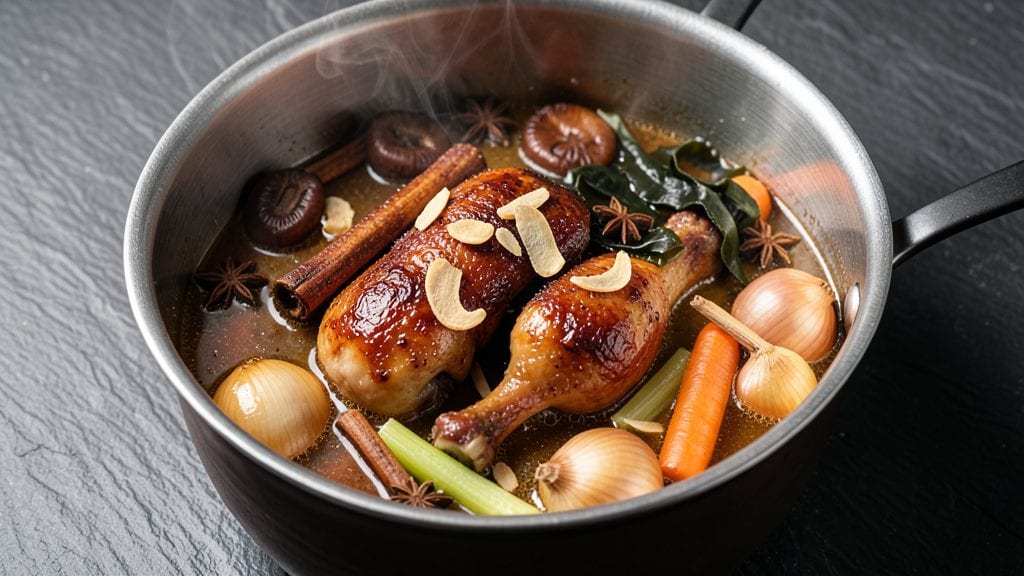
Creating a Chinese stock recipe from pantry staples is one of those kitchen skills that transforms ordinary meals into extraordinary ones—especially when you need that deep, umami-rich base for stir-fries or soups.
After years of testing different methods, I’ve perfected a foolproof technique that delivers restaurant-quality results without requiring specialty ingredients. The secret lies in balancing aromatics, simmering time, and a few unexpected pantry staples that unlock layers of flavor.
This recipe builds on my grandmother’s approach to stock-making, where patience and precise timing create a broth that’s both clear and deeply flavorful. You’ll use chicken bones (or pork for a richer version) along with common vegetables like carrots, celery, and onions—all simmered for hours to extract maximum flavor.
The result is a versatile, aromatic stock that forms the foundation for countless dishes, from dumpling wrappers to braised meats.
What makes this stock special is its ability to adapt to different needs: use it as a clear base for delicate soups or reduce it slightly for a richer, more concentrated flavor in stir-fries.
The process is straightforward—no fancy equipment required—but the payoff is a broth that tastes like it simmered all day, even if you’re working with a weeknight schedule. Once you try this, store-bought stock will never compare.
Store it in the fridge for up to 5 days or freeze in ice cube trays for convenient portions. Let’s get started—your kitchen will smell like a Chinese restaurant in no time.
Ingredients for chinese stock
Pantry staples meet aromatic treasures for this umami-packed Chinese stock base.
| Ingredient | Amount | Notes |
|---|---|---|
| Chicken Bones 🍗 | 4 lb | Raw, with meat attached preferred |
| Dried Shiitake Mushrooms 🍄 | ½ cup | Whole or torn pieces, stems included |
| Dried Kombu Seaweed 🌊 | 1 piece | Whole sheet, rinsed |
| Dried Ginger 🌿 | 1 tbsp | Freshly grated preferred |
| Star Anise Pods 🌟 | 3 whole | Lightly crushed for aroma |
| Cinnamon Sticks 🌿 | 2 whole | 2-inch pieces |
| Cloves 🌶️ | 6 whole | Lightly crushed |
| Onions 🧅 | 2 whole | Yellow or white, cut into chunks |
| Carrots 🥕 | 4 whole | Medium, cut into chunks |
| Celery Stalks 🧅 | 6 whole | Cut into 2-inch pieces |
| Garlic Cloves 🧄 | 8 cloves | Smashed, skins on |
| Light Soy Sauce 🥫 | 2 tbsp | Kikkoman preferred |
| Sesame Oil 🫒 | 1 tbsp | Toasted, for finishing |
The bones are the foundation—chicken thighs with skin deliver the deepest flavor, but chicken backs or necks work too. Look for bones with meat still attached at the butcher counter or frozen section of stores like Whole Foods or Trader Joe's. If using pork, swap for pork trotter or ribs—just double the simmering time. The dried shiitakes and kombu are non-negotiable for that authentic umami punch; grab them in the Asian aisle. Asian Food Grocer or H Mart carry reliable brands, but any reputable dried goods section will do. Fresh ginger is ideal, but the dried version works if you toast it briefly in a dry pan first—just be sure to grate it finely.
No shiitake mushrooms? Dried porcini or cremini mushrooms at half the amount will work, though the flavor profile shifts slightly. Kombu unavailable? Swap for 1/2 cup dried kelp flakes or even 1/4 cup nori sheets, but don’t skip it entirely—it’s the secret to that deep oceanic richness. Running low on star anise or cinnamon? Five-spice powder at 1/2 tbsp covers both, though it lacks the individual complexity. For the aromatics, frozen chopped onions and carrots save time—just thaw and drain them first. The soy sauce adds depth, but coconut aminos work in a pinch for a gluten-free version.
This stock peaks after 3-4 hours of simmering, but it keeps developing flavor for up to 8 hours. Strain through a fine-mesh sieve into a large bowl—don’t press the solids or it’ll get cloudy. For long-term storage, cool quickly in an ice bath, then freeze in ice cube trays (perfect for single-use portions). In the fridge, it stays vibrant for 5 days, while frozen stock maintains quality for up to 6 months. The sesame oil should be added only at the very end—just a drizzle over finished dishes to brighten the aroma.
Why You'll Love This Recipe
- Pantry Magic: I swear by this stock—no fresh market runs, no last-minute ingredient hunts. Just pull those dried shiitakes and kombu from your cupboard, toss in the chicken bones, and let the simmer do the work. Honestly, I’ve made it on days when my fridge was basically a science experiment.
- Umami Bomb: That first sip? Pure flavor payoff. The shiitakes and kombu deepen into a savory richness, while the star anise and ginger add this subtle, warming complexity—like a hug in a bowl. It’s the kind of stock that makes you pause mid-slurp and think, “Wait, I made this?”
- Weeknight Swiss Army: This isn’t just for soup. Use it to deglaze a wok for stir-fry, stretch it into ramen, or even braise tofu in it. I keep a batch in the freezer for lazy nights when I’m craving something comforting but don’t have time to source five specialty ingredients.
- Budget Goldmine: Chicken bones are cheap, dried aromatics last forever, and one pot yields gallons. Freeze what you don’t use—it’s my secret for stretching meals without breaking the bank. Plus, the leftovers? They taste even better the second time around, like a flavor upgrade.
Step-by-step instructions for Chinese stock recipe
Transform humble pantry ingredients into a deeply flavorful, umami-rich broth that forms the foundation of countless Asian dishes.
Prepare the Bones and Aromatics
Begin by rinsing the 4 lb chicken bones under cold water to remove any impurities, then place them in a large stockpot. The bones should be raw with meat still attached if possible—this ensures maximum flavor extraction. Add the 2 whole onions, 4 whole carrots, and 6 whole celery stalks, all cut into large chunks. These vegetables form the classic "holy trinity" of stock building, providing sweetness, earthiness, and depth.
Add the 0.5 cup dried shiitake mushrooms, 1 piece dried kombu seaweed (rinsed), 1 tbsp dried ginger, 3 whole star anise pods (lightly crushed), 2 whole cinnamon sticks, and 6 whole cloves (lightly crushed). The kombu and shiitake mushrooms are particularly important—they contribute deep umami that elevates the stock beyond ordinary chicken broth. The spices add warmth and complexity, but remember to remove them before serving unless you're using the stock in a cooked dish where they'll be strained out later.
Toast the Spices and Sear the Bones
Place the stockpot over medium heat and bring the contents to a simmer. Once the liquid begins to bubble gently, reduce the heat to low and let it cook uncovered for 15 minutes. This initial simmer allows the spices to toast slightly in the liquid, releasing their aromatic oils. You'll notice a subtle increase in fragrance as the spices infuse the broth—this is your cue that they're working their magic.
After 15 minutes, increase the heat to medium-high and let the liquid come to a rolling boil. Skim off any foam or impurities that rise to the surface using a fine-mesh skimmer or ladle. This step is crucial for clarity—removing impurities now prevents a cloudy final broth. Let the stock boil vigorously for 5 minutes to help extract collagen from the bones and break down the vegetables.
Simmer and Develop the Flavor
Once the stock returns to a gentle simmer, reduce the heat to low and maintain a steady barely bubbling temperature. Cover the pot with a lid and let it cook for 3 hours. This long, slow simmer is non-negotiable—it's the only way to coax out the deep, complex flavors locked in the bones and aromatics. You'll know it's working when the broth takes on a rich, golden hue and the scent becomes impossibly aromatic.
After 3 hours, add the 8 cloves garlic (skins on, smashed) and 2 tbsp light soy sauce. The garlic adds a subtle pungency that balances the broth, while the soy sauce deepens the umami and adds a touch of saltiness. Let the stock simmer uncovered for another 30 minutes to allow these final ingredients to meld into the broth. The soy sauce will also help develop a beautiful mahogany color.
Strain and Finish
Carefully strain the stock through a fine-mesh sieve or cheesecloth-lined colander into a clean pot or bowl. Press down gently on the solids to extract every last drop of flavor, but avoid squeezing too hard or you'll end up with a cloudy broth. Discard the solids—there's no need to save them for this application.
Return the strained stock to the pot and bring it to a gentle simmer over low heat. Stir in the 1 tbsp sesame oil and taste. The stock should be deeply flavorful with a perfect balance of umami, sweetness, and savoriness. If it needs more seasoning, add a pinch of salt or a splash of additional soy sauce. Let the stock simmer for another 5 minutes to fully incorporate the sesame oil, which adds a delicate nutty aroma and richness.
Cool and Store
Remove the stock from heat and let it cool to room temperature. Once cooled, transfer it to airtight containers or jars. The stock will keep in the refrigerator for up to 5 days or can be frozen for 3 months. When reheating, do so gently over low heat to prevent the broth from curdling or losing its delicate flavors. This umami-rich stock is incredibly versatile—use it as a base for soups, braises, stir-fries, or even as a cooking liquid for grains and rice.
Pro Tips For Making Chinese Stock
- BLANCH BONES FIRST: Toss those chicken bones in boiling water for 2-3 minutes before simmering—this removes blood and impurities that’ll cloud your stock later. I learned this the hard way after making a stock so murky it looked like pond water.
- SOAK MUSHROOMS, NOT GINGER: Rehydrate dried shiitakes in hot water for 20 minutes—they’ll plump up and infuse the stock deeply. Skip soaking the dried ginger, though; just crack the pods and toss them in whole for a subtle, aromatic punch.
- REMOVE KOMBU EARLY: Pull the kombu seaweed out after 10 minutes of simmering—it’s done contributing its umami once it turns soft and fragrant. Leave it in too long, and your stock will taste bitter, like someone forgot to rinse the seaweed.
- CRUSH STAR ANISE: Lightly crush the star anise pods with a rolling pin before adding them—this releases their oils without overpowering the stock. Sounds weird, but it works: the flavor’s richer, not cloying.
Essential equipment for great chinese stock
Stockpot Essentials
Your stockpot is the workhorse of this recipe—nothing less than an 8-quart heavy-bottomed pot will do. I swear by my All-Clad stainless steel stockpot (or a Le Creuset Dutch oven in a pinch) because they distribute heat evenly and prevent scorching.
Avoid thin, aluminum pots—they warp under long simmering times and can impart metallic flavors. If you're on a budget, a Cuisinart MultiClad or Farberware Classic Stainless Steel stockpot works beautifully. 🔥
Fine-Mesh Strainer
A dedicated fine-mesh strainer or cheesecloth-lined colander is non-negotiable for clarity. My go-to is a OXO Good Grips fine-mesh sieve—it’s sturdy, easy to clean, and gets every last drop of flavor without pressing.
For a budget option, Ball Mason jars with a fine-mesh sieve (placed upside-down) work in a pinch. If you press too hard, you’ll end up with a cloudy broth, so take your time. The goal is to strain, not squeeze.
Immersion Blender
This is a game-changer for quick emulsification when you want to use your stock in sauces or soups. I use a Ninja Professional Countertop Immersion Blender to blend the strained stock directly in the pot—no transferring needed.
For a cheaper alternative, the Hamilton Beach Multi-Speed works well. Pro tip: Blend for 10-15 seconds on low to avoid creating a paste-like texture. This tool also helps break down any remaining particles for ultra-smooth results. 💡
Thermometer
A kitchen thermometer ensures your stock simmers at the perfect 180-190°F range—critical for extracting collagen without curdling. My ThermoWorks Thermapen ONE is my favorite because it’s instant-read and accurate, but a Taylor Precision Digital Thermometer is a great budget pick.
For long simmers, I place the probe near the bones to monitor temperature. If it drops below 180°F, increase the heat slightly—this keeps the broth clear and flavorful.
Storage Containers
For fridge storage, I use glass Pyrex storage containers with snap-on lids—they’re airtight and won’t absorb odors. For freezing, quart-sized silicone ice cube trays are perfect for single-use portions (just pop out cubes and transfer to a freezer bag).
Avoid plastic containers for long-term storage—they can leach chemicals into the broth over time. Label everything with the date to track freshness. 📅
Spice Toasting Tools
While not mandatory, a small dry skillet or spice toaster helps deepen the aroma of your star anise, cinnamon, and cloves before adding them to the stock.
I lightly toast spices in a Lodge cast iron skillet over medium heat for 1-2 minutes until fragrant—this releases essential oils that elevate the stock’s complexity. No skillet? Toast them directly in the stockpot during the initial 15-minute simmer for the same effect. 🌟
Nutrition facts
Frequently asked questions
Can I make this Chinese stock without chicken bones?
For a vegetarian version, use mushroom stems, kelp, and tofu skins to mimic umami depth. Swap chicken bones for 2 lb king oyster mushrooms or 1 lb dried shiitake stems, and add 1 tbsp miso paste for extra savoriness. The simmering time remains the same—just ensure your aromatics are well-toasted first.
Why does my stock turn cloudy?
Cloudiness usually means you pressed the solids too hard during straining or didn't skim impurities early enough. For crystal-clear stock, strain through a double-layered cheesecloth instead of pressing, and skim foam vigorously during the first 10 minutes of boiling. If it's already cloudy, chill the stock overnight—the fat will solidify on top and can be skimmed off before reheating.
How do I use this stock in cooking?
This versatile broth works in everything from dumpling wrappers to stir-fry sauces. Use it as a 1:1 replacement for water in recipes—simmer grains like rice or noodles in it for extra flavor, or reduce it by half for a rich sauce. For soups, add a splash of Shaoxing wine or sesame paste to enhance its depth. The soy sauce and sesame oil in the recipe make it perfect for braising meats too.
Can I make a lighter or darker version?
For a lighter, clearer stock, reduce the soy sauce to 1 tbsp and skip the sesame oil until the very end. For a darker, richer version, add 1 tbsp molasses or 1 charred onion during the final 30 minutes of simmering. The kombu and shiitake will naturally deepen the color—just adjust the soy sauce to taste after straining.
What if I don’t have kombu or shiitake mushrooms?
No problem! Kombu can be replaced with 1/4 cup nori sheets (cut into strips) or 1 tbsp fish sauce for umami. For shiitake mushrooms, use 1/2 cup dried porcini mushrooms or even 2 tbsp mushroom powder. While the flavor won't be identical, these swaps will keep your stock deeply savory. The star anise and ginger will still provide that signature aromatic complexity.