Main Courses
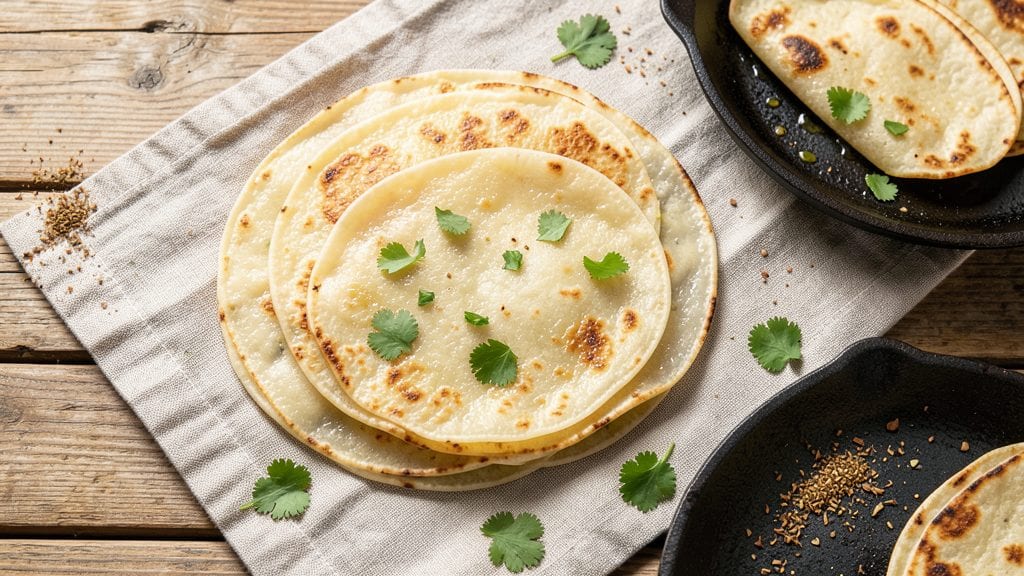
This simple flour tortilla recipe delivers perfectly soft, flexible tortillas every time—no store-bought shortcuts required. After years of testing different methods, I’ve perfected a foolproof technique that balances traditional ingredients with modern convenience, ensuring you’ll never buy another package again.
The secret lies in the dough’s resting time and the right amount of fat, whether you use lard or vegetable oil.
The process is straightforward: mix flour, water, salt, and fat until a smooth dough forms, then rest it for 30 minutes before rolling. This resting period is critical—it relaxes the gluten, making the tortillas easier to roll out and preventing them from cracking.
Once rolled, cook them on a hot griddle or comal until golden and pliable, just a minute or two per side.
What you’ll end up with is a stack of soft, flexible tortillas that hold their shape without becoming tough or brittle. These are the kind of tortillas that transform tacos, burritos, and quesadillas into restaurant-quality meals.
The dough is forgiving, so even if you’re new to tortilla-making, you’ll achieve professional results with minimal effort.
For variations, try swapping half the flour for whole wheat or adding herbs like cilantro or oregano to the dough. Let’s get started—your kitchen will soon smell like fresh tortillas, and your meal prep will never be the same.
Ingredients for simple flour tortilla
Six simple ingredients transform into restaurant-quality tortillas with perfect flexibility.
| Ingredient | Amount | Notes |
|---|---|---|
| All-Purpose Flour 🌾 | 4 cups | Sifted for smooth dough |
| Warm Water 💧 | 1 ½ cups | 110°F for ideal activation |
| Sea Salt 🧂 | 1 tsp | Fine grain preferred |
| Vegetable Oil or Lard 🫒 | ¼ cup | Lard for authentic flavor |
| Cilantro Leaves 🌿 | ¼ cup | Optional, finely chopped |
| Dried Oregano 🍃 | 1 tsp | Mexican oregano preferred |
The flour is your foundation—King Arthur or Bob’s Red Mill work best for consistent results. Warm water (around 110°F) activates the gluten faster than cold, giving you smoother dough. If you're feeling adventurous, swap half the flour for whole wheat for a nuttier flavor. The fat matters too: lard delivers that authentic Mexican tortilla taste, but vegetable oil works perfectly fine for a neutral option. I keep both on hand—lard when I want tradition, oil for convenience. Look for unrefined lard if you can find it; it’s less processed and adds better flavor.
No cilantro? Fresh parsley or a pinch of garlic powder adds brightness instead. Running short on oregano? Dried thyme at the same amount gives a similar earthy note. The dough should be slightly tacky but not sticky—add a splash more water if needed, but don’t overdo it. For a cheat, use a food processor to mix everything in 30 seconds instead of kneading. Just pulse until the dough comes together. And if you’re worried about the dough cracking while rolling, let it rest 30 minutes covered with a damp towel—this relaxation step is non-negotiable for perfect tortillas.
Fresh tortillas keep their flexibility best when stacked with parchment paper between each. Store in an airtight container at room temperature for 3 days, or freeze for up to 3 months. To reheat, warm in a dry skillet for 20 seconds per side. I make a double batch every time—one for immediate use, one frozen for lazy days. The secret to reheating? A hot, dry pan. No steam, no soggy tortillas.
Why You'll Love This Recipe
- Pantry Magic: I swear, this recipe only needs five things you already own. No yeast, no waiting—just flour, water, salt, and a splash of oil or lard. Honestly, it’s the kind of recipe that makes me feel like a genius when I remember I can make tortillas without buying a pack.
- Fresh & Earthy: That cilantro isn’t just for garnish—it’s woven into the dough, giving each bite a bright, herby punch. Lard adds a subtle richness, but oil keeps it light. Between us, the first one out of the pan is always the best.
- Breakfast to Burrito: These aren’t just for tacos. I use them for breakfast quesadillas, lunch wraps, or even a quick grilled cheese. Between my kids’ school lunches and my husband’s post-work snacks, they disappear faster than I can make them.
- Budget Stretch: A bag of flour lasts me weeks, and I only need a tablespoon of oil per batch. I’ll be real: I’ve made these for $0.50 a dozen. Plus, they freeze like a dream—so I bake a big batch and pull them out whenever I need a quick fix.
Step-by-step instructions for soft and flexible flour tortillas
Here's the straightforward method I've perfected for homemade tortillas that rival store-bought in both texture and flavor.
Mix the Dough to Perfect Consistency
In a large mixing bowl, combine the 4 cups of all-purpose flour and 1 teaspoon of sea salt. Create a well in the center and pour in the 0.25 cup of vegetable oil or lard. Using your fingers, rub the fat into the flour until it resembles coarse crumbs with small pea-sized pieces remaining.
Gradually add the 1.5 cups of warm water while mixing with a wooden spoon. The dough should begin to come together but remain slightly shaggy. If it feels too dry, add 1 tablespoon of water at a time until it forms a smooth, pliable ball that doesn't stick to your hands. This is crucial - the dough should be soft but not sticky, similar to Play-Doh consistency.
Knead for Maximum Elasticity
Turn the dough onto a lightly floured surface and knead for 5-7 minutes by hand, pressing down and folding the dough repeatedly. You're looking for a smooth, elastic texture that springs back slightly when pressed. This kneading develops gluten, which gives the tortillas their signature flexibility.
Here's the thing - don't overwork the dough. Once it becomes smooth and elastic, stop kneading immediately. Overworking develops too much gluten, which can make the tortillas tough. The dough should be soft enough to press gently with your thumb and leave a slight indentation that doesn't fill back in.
Rest the Dough for Optimal Texture
Shape the dough into a ball, place it in a lightly oiled bowl, and cover with a damp kitchen towel. Let it rest at room temperature for 30 minutes. This resting period allows the gluten to relax, making the tortillas easier to roll out and preventing them from shrinking during cooking.
While the dough rests, preheat your comal or skillet over medium heat. The ideal temperature should be hot enough to sizzle slightly when you place a small piece of dough on it, but not so hot that it burns instantly. You'll know it's ready when you see a few tiny bubbles form around the edges of the dough.
Roll and Cook to Golden Perfection
Divide the rested dough into 12 equal balls (about 2 ounces each). Working with one at a time, roll each ball between your palms to smooth the surface, then use a rolling pin to press into a 6-inch circle. Keep the rolled tortillas covered with a clean towel to prevent drying.
Place the rolled tortilla on the preheated surface and cook for 30-45 seconds per side, until small bubbles form and the edges begin to lift slightly. You'll see the tortilla puff up slightly in the center - this is normal and indicates proper cooking. The tortillas should be lightly golden in spots but not browned.
Keep Warm and Flexible
Transfer the cooked tortillas to a clean kitchen towel and cover with another towel to keep them warm and pliable. The residual heat will continue cooking them gently. If they begin to stiffen, simply place them back on the warm surface for 10-15 seconds to restore their flexibility.
Here's my pro tip: For the best results, use the tortillas immediately or store them between layers of parchment paper in an airtight container. They'll keep at room temperature for 2 days or can be frozen for up to 3 months. To reheat, simply warm in a dry skillet over medium heat for 20-30 seconds per side.
Pro Tips For Making Simple Flour Tortilla
- Knead Just Until Combined: Stop when the dough holds together—no need to overwork it. I used to think more kneading meant better tortillas, but this dough gets tough fast, and you’ll end up with chewy, dense results instead of tender, pliable discs.
- Use Lard for Flavor: Swap vegetable oil for lard if you can—it adds richness and that classic Mexican flakiness. If lard’s not an option, warm the oil slightly before mixing; cold oil makes the dough fight you when rolling.
- Rest Dough 30 Minutes: Let the dough sit covered while you prep everything else. This relaxes the gluten, making it easier to roll thin and even—no more tearing or uneven thickness. (Yes, even if you’re impatient like me.)
- Roll Fast, Cook Hot: Keep the comal or skillet screaming hot and roll tortillas right before cooking—no waiting. Cold tortillas steam instead of sear, and you’ll end up with soggy, flavorless discs. Speed matters more than perfection here.
Dietary considerations for simple flour tortilla
Gluten-Free Adaptation
If you need gluten-free tortillas, swap the all-purpose flour for a 1:1 gluten-free flour blend like Bob’s Red Mill or King Arthur Measure for Measure. Add 1 teaspoon xanthan gum to help bind the dough since gluten-free flours lack natural elasticity.
The dough will be slightly crumbly, so use your hands to gently press it together—don’t overwork it. These tortillas won’t be as pliable as traditional ones but still work great for tacos or quesadillas. 💪
Low-Carb Options
For a lower-carb version, replace half the flour with almond flour or coconut flour (but reduce the water by ¼ cup since these absorb more liquid). The texture will be denser, so roll them thinner and cook for 10-15 seconds per side to avoid drying.
I’ve found that adding 1 egg yolk to the dough helps bind everything together. These hold up best for stuffing, like burritos, rather than folding.
Dairy-Free Fat
If you’re avoiding dairy, use vegetable oil or avocado oil instead of lard. Both work perfectly and give a neutral flavor. For extra richness, try coconut oil—it adds a subtle sweetness that pairs well with savory fillings.
Just make sure your oil is at room temperature before mixing so the dough doesn’t get greasy. I keep a jar of unrefined coconut oil in my pantry for this exact purpose. 🥥
Nut-Free Allergies
For nut-free kitchens, stick with vegetable oil or lard—no substitutions needed. If you’re also avoiding gluten, use a certified nut-free gluten-free flour blend like Cup4Cup. Always check labels, as some blends contain traces of nuts.
I’ve made these tortillas for friends with allergies by keeping prep surfaces clean and using separate utensils. The key is patience—nut-free flours can be trickier, so let the dough rest 45 minutes instead of 30 to improve texture.
Soy-Free Considerations
Most standard flour tortilla recipes are naturally soy-free, but double-check your ingredients. Some brands of lard or vegetable oil may be processed in soy facilities. For absolute safety, use expeller-pressed vegetable oil (like safflower or sunflower oil) and confirm your flour is soy-free.
I’ve never had an issue with this recipe, but if you’re highly sensitive, opt for a dedicated soy-free kitchen space during prep. The flavor stays neutral, so you won’t sacrifice taste. ✨
Nutrition facts
Frequently asked questions
Why does my dough feel too sticky or too dry?
The perfect dough should be soft but not sticky—like Play-Doh. If it's too dry, add 1 tablespoon of warm water at a time until it comes together smoothly. If too sticky, sprinkle a little more flour (1 tablespoon) and knead gently. The resting time helps balance this, but adjust during mixing first.
Can I make these tortillas without a rolling pin?
Use your hands or a heavy pan. Press each dough ball between your palms to flatten, then use the bottom of a cast-iron skillet to roll it into a 6-inch circle. The key is even pressure—don't press too hard or the edges will get tough. A warm, slightly greased surface helps too.
What's the best way to store homemade tortillas?
Stack them between parchment paper in an airtight container at room temperature for 2-3 days. For longer storage, freeze them for up to 3 months. To reheat, warm in a dry skillet over medium heat for 20-30 seconds per side until pliable. Never microwave—they'll turn rubbery.
Why do my tortillas crack when rolling?
Cracking usually means the dough needs more rest time. Let it sit 30-45 minutes covered with a damp towel before rolling. If it's still cracking, your surface might be too dry—keep the dough and rolling pin lightly floured. Kneading too much can also cause cracks, so stop once the dough is smooth and elastic.
Can I use this recipe for whole wheat tortillas?
Yes! Replace half the all-purpose flour with whole wheat flour, but add 1-2 tablespoons extra water since whole wheat absorbs more. The dough will be stickier, so knead gently and rest it 45 minutes instead of 30. These tortillas will be heartier and slightly denser but still flexible when cooked properly.