Salads
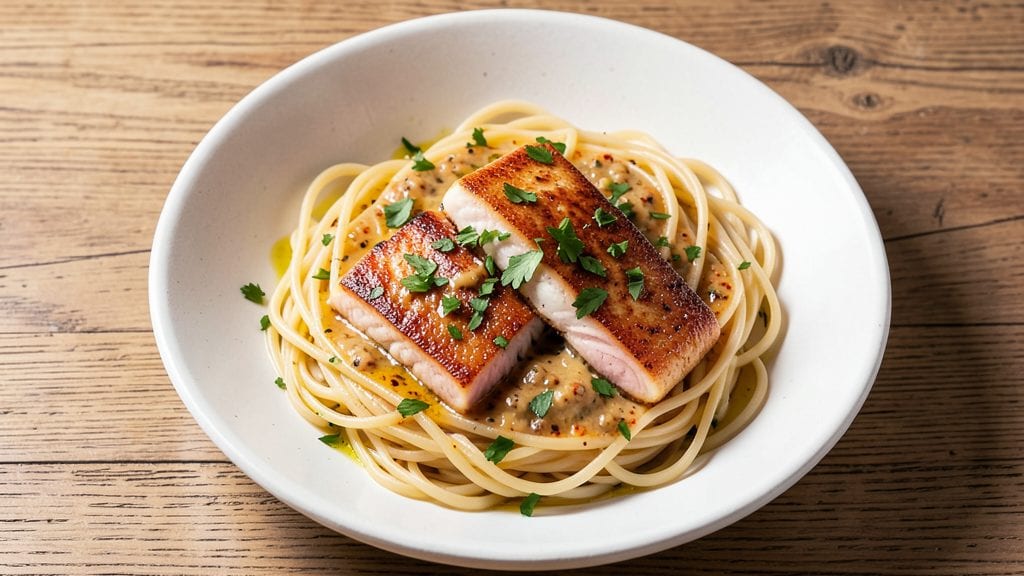
This halibut pasta recipe delivers a perfect balance of tender flaky fish and al dente pasta, all finished with a bright lemon-garlic butter crust that ties every bite together.
The secret lies in searing the halibut just until it releases its natural oils, then finishing it in the oven to achieve that ideal flakiness. I developed this dish after years of testing different seafood-pasta combinations, and this version consistently delivers restaurant-quality results at home.
The foundation of this recipe is simple yet precise: high-quality halibut fillets cooked to perfection, pasta that's cooked just shy of al dente for better texture, and a sauce that's built in layers. The lemon-garlic butter crust isn't just garnish—it's what transforms this into a cohesive, visually appealing dish.
What makes this recipe stand out is how the flavors come together without overwhelming the delicate taste of the fish.
By the time you plate this dish, you'll have perfectly flaky halibut resting atop al dente pasta, all blanketed in that golden lemon-garlic butter crust. The sauce clings to both components, creating a harmonious bite with every forkful.
This is the kind of meal that feels special enough for company but simple enough for a weeknight dinner.
The recipe includes optional garnishes like fresh parsley and red pepper flakes to add color and a subtle kick, but even without them, the dish shines. Serve with a simple side salad to complete the meal. Let's get started on creating this elegant yet approachable seafood pasta.
Ingredients for halibut pasta
High-quality halibut, al dente pasta, and a bright lemon-garlic butter crust make this elegant seafood dish shine.
| Ingredient | Amount | Notes |
|---|---|---|
| Halibut Fillets 🐟 | 2 whole | Center-cut, 6 oz each, skinless |
| Spaghetti 🍝 | 12 oz | Al dente preferred, medium thickness |
| Unsalted Butter 🧈 | ½ cup | Cold, cut into pieces for crust |
| Garlic Cloves 🧄 | 6 cloves | Minced, fresh preferred |
| Lemon Zest 🍋 | 1 tbsp | From 1 large organic lemon |
| Lemon Juice 🍋 | 2 tbsp | Freshly squeezed |
| Extra-Virgin Olive Oil 🫒 | ¼ cup | For searing halibut |
| Kosher Salt 🧂 | 1 ½ tsp | Divided for seasoning |
| Fresh Parsley 🌿 | ¼ cup | Chopped, for garnish |
| Crushed Red Pepper Flakes 🌶️ | ½ tsp | Optional, for heat |
| Heavy Cream 🥛 | ¼ cup | Full-fat for richness |
| White Wine 🍷 | ½ cup | Dry, like Sauvignon Blanc |
| Freshly Ground Black Pepper 🌶️ | ½ tsp | Freshly cracked |
| Panko Breadcrumbs 🍞 | 2 tbsp | For crispy topping |
The halibut is the star—center-cut fillets stay moist and flaky. Look for bright, translucent flesh at Whole Foods or your fishmonger, and ask for skinless pieces. If you can't find halibut, cod or mahi-mahi work too, but halibut's delicate flavor is ideal here. The spaghetti should be medium thickness—De Cecco or Barilla are reliable brands. For the butter, Plugrá or Land O'Lakes are good choices, but any unsalted butter will do. The garlic should be fresh, not jarred—peeled and minced just before using for maximum flavor.
No white wine? Fish stock or dry vermouth works in a pinch. Substituting heavy cream? Half-and-half thinned with milk keeps it lighter. The red pepper flakes are optional but add a nice contrast—Penzeys or Trader Joe's carry quality crushed varieties. For the lemon, zest from an organic lemon has more flavor than conventional. If you're short on time, pre-minced garlic from a jar is fine, but fresh is always better. The panko should be lightly toasted for extra crunch, but skip this if you're in a hurry.
Store leftover halibut in an airtight container with a splash of lemon juice for 2 days. Pasta reheats best with a splash of water and a cover. The lemon-garlic butter crust can be prepped ahead—just reheat gently before serving. This dish freezes beautifully for up to 1 month, though the texture changes slightly. For a restaurant-worthy presentation, plate the pasta first, then top with halibut and sauce. Garnish with parsley and red pepper flakes just before serving.
Why You'll Love This Recipe
- Foolproof in 25 Minutes: I swear by this—just sear the halibut in butter with garlic until it’s golden, toss it with al dente pasta, and finish with lemon zest. No fancy techniques, no stress, just restaurant-quality in one pan.
- Bright & Buttery Magic: That lemon zest cuts through the richness of the butter like a breath of fresh air. The halibut stays tender while the pasta soaks up the garlic-infused oil—simple, but ridiculously flavorful.
- Weeknight or Weekend Star: Throw it together for a busy Tuesday or dress it up with fresh herbs for a date night. Same recipe, just different vibes—no rules, just flexibility.
- Leftovers That Don’t Suck: Halibut reheats beautifully, and the pasta holds up better than most. I’ve had this for lunch the next day, cold with extra lemon, and it’s still a winner—no sad, dry noodles here.
Step-by-step instructions for lemon-garlic butter crust with flaky fish
Master the technique for perfectly flaky halibut and rich lemon-garlic butter sauce in this elegant dish.
Create the Lemon-Garlic Butter Crust
In a small bowl, combine the 0.5 cup unsalted butter with the 6 cloves minced garlic cloves and 1 tbsp lemon zest. Mix until the butter is fully softened and the garlic is evenly distributed. This creates the flavor base for your crust.
Place the mixture between two sheets of plastic wrap and flatten into a ¼-inch thick rectangle using a rolling pin. Chill in the refrigerator for 20 minutes to firm up. The cold butter will create a beautiful, crispy crust when baked. If you notice any garlic clumps, gently press them down with your fingers to ensure even distribution throughout the butter.
Sear the Halibut for Flakiness
Heat 0.25 cup extra-virgin olive oil in a large skillet over medium-high heat until shimmering. Season each 6 oz halibut fillet evenly with 0.75 tsp kosher salt and 0.25 tsp freshly ground black pepper. Sear the fillets for 3-4 minutes per side until they develop a golden crust and the flesh flakes easily when tested with a fork.
Remove the halibut from the skillet and set aside on a warm plate. The residual heat will continue cooking the fish slightly. Keep the skillet on the burner for the next step—those flavorful browned bits are essential for the sauce.
Cook the Spaghetti Al Dente
Bring a large pot of well-salted water to a rolling boil. Add the 12 oz spaghetti and cook until 1 minute before the package's recommended al dente time. Reserve 1 cup pasta water before draining, as this starchy liquid will help emulsify the sauce.
Drain the pasta and return it to the pot. Toss immediately with 1 tbsp lemon juice and 0.5 tsp crushed red pepper flakes to prevent sticking and infuse subtle heat. Keep the pasta warm while you prepare the sauce.
Build the Lemon-Garlic Wine Sauce
Add the chilled lemon-garlic butter mixture to the hot skillet and let it melt completely over medium heat. Pour in the 0.5 cup white wine and scrape up any browned bits from the bottom using a wooden spoon. Simmer for 3-4 minutes until the wine reduces by half and the sauce begins to thicken.
Reduce heat to low and stir in the 0.25 cup heavy cream. Add the drained spaghetti to the skillet and toss gently to coat. If the sauce becomes too thick, add reserved pasta water 1 tablespoon at a time until you reach a silky consistency. The sauce should cling beautifully to each strand of pasta.
Assemble and Finish
Divide the spaghetti between four serving plates. Place each halibut fillet on top of the pasta. Sprinkle evenly with the remaining 0.75 tsp kosher salt, 0.25 tsp freshly ground black pepper, and 0.25 cup chopped fresh parsley. For the crispy topping, place the chilled lemon-garlic butter rectangle on top of each fillet.
Broil for 3-5 minutes until the butter is golden brown and bubbly. Watch closely to prevent burning. Garnish with additional lemon zest if desired. Serve immediately with the crust intact—it will melt slightly into the pasta, creating an irresistible texture contrast between the crispy topping and flaky fish beneath.
Pro Tips For Making Halibut Pasta
- SEAR HALIBUT SEPARATELY: Cook the halibut fillets in a separate pan first—medium-high heat for 3-4 minutes per side—until they’re just opaque in the center. Tossing them straight into the pasta sauce will turn them rubbery before the pasta’s even al dente, and nobody wants that.
- ZEST BEFORE ZUCCA: Grate that lemon zest fresh right before tossing with the pasta, not when you’re chopping garlic or prepping the halibut. The oils in butter and heat will kill the bright citrus notes if you wait, and you’ll end up with a dish that tastes like it’s missing something.
- DON’T OVERCOOK THE PASTA: Pull the spaghetti exactly when the package says “al dente”—no waiting, no second-guessing. Halibut finishes cooking in seconds once it hits the plate, but overcooked pasta turns mushy when you toss it with butter and fish. Trust the timer.
- SALT THE PASTA WATER HARD: Use two tablespoons of salt per gallon of water—yes, even if your butter is unsalted. The pasta needs that flavor foundation, and the halibut’s delicate taste won’t overpower it. Taste the water before cooking; it should sting like the ocean.
Troubleshooting great halibut pasta
Overcooked Halibut
If your halibut turns rubbery or dry, it was likely overcooked. The magic window for searing is 3-4 minutes per side—any longer and the delicate flesh will tighten. Use a meat thermometer to check for 125°F internal temperature (halibut is best slightly underdone).
Immediately transfer seared fillets to a warm plate and let rest for 2 minutes before finishing in the oven if needed. 🌡️
Sauce Too Thin
A watery sauce usually means you didn't reduce the wine enough or added too much pasta water. Simmer the wine until it reduces by half (about 3-4 minutes on medium heat).
For extra thickness, stir in 1 tsp cornstarch mixed with 1 tbsp cold water at the end. The heavy cream should naturally thicken the sauce as it warms.
Pasta Sticking Together
Underseasoned pasta water or insufficient tossing causes clumping. Always cook pasta in water with 1 tbsp salt per quart and toss immediately with 1 tbsp lemon juice after draining.
For extra insurance, add 1 tbsp olive oil to the drained pasta before mixing with sauce. This creates a protective barrier between strands. 🍝
Butter Crust Not Crispy
The butter crust fails when it's not chilled properly or broiled too long. Chill the butter mixture for at least 20 minutes until firm. Broil on high for just 3-5 minutes, watching closely to prevent burning.
If the crust softens too quickly, place plates on a wire rack over boiling water for 1 minute before serving to maintain crispness.
Fish Tasting Bland
Fresh halibut needs proper seasoning and high heat to develop flavor. Season generously with kosher salt (about 0.75 tsp per fillet) and freshly cracked black pepper. Sear in a hot skillet until golden brown—this creates the Maillard reaction that enhances natural flavors.
For extra depth, deglaze the pan with 2 tbsp white wine after removing the fish and use that reduction in your sauce.
Sauce Breaking Apart
Sauce separation happens when acid (lemon) and fat (butter) aren't properly emulsified. Add the lemon juice gradually while stirring vigorously. For extra stability, whisk in 1 tbsp cold butter at the end to bind the sauce.
If it still separates, blend 2 tbsp reserved pasta water with 1 tsp cornstarch** and stir back in for a silky finish. ✨
Nutrition facts
Frequently asked questions
What's the best pasta shape for this halibut dish?
Spaghetti works perfectly here because its long strands help hold the lemon-garlic butter sauce beautifully. For variety, try linguine or fettuccine—their flat surfaces create more surface area for the sauce to cling. Avoid short shapes like penne or farfalle, as they'll make the dish look messy when topped with flaky fish.
Can I substitute halibut with another white fish?
Cod, mahi-mahi, or even snapper work well—they all have delicate flavors that pair nicely with the citrusy sauce. Just adjust cooking time slightly: halibut needs 3-4 minutes per side while mahi-mahi may only need 2-3 minutes. The key is to keep the fish slightly underdone so it flakes perfectly when finished.
How do I make this dish ahead of time?
Prepare the lemon-garlic butter crust and sauce components separately up to 1 day ahead. Store the butter rectangle wrapped in plastic in the fridge, and keep the sauce (without pasta) in an airtight container. Reheat the sauce gently on the stove, toss with freshly cooked pasta, and assemble with fresh halibut just before serving. The butter crust should be made fresh for maximum crispiness.
What wine pairs best with this dish?
A crisp Sauvignon Blanc or Pinot Grigio complements the lemon-garlic flavors perfectly. For red wine lovers, try a light Pinot Noir—its earthy notes won't overpower the delicate seafood. Avoid heavy reds like Cabernet, as they'll clash with the bright citrus sauce. Serve the wine slightly chilled (50-55°F) to enhance the dish's freshness.
Why does the butter crust sometimes get soft?
The crust loses crispness when it's not properly chilled before broiling or when exposed to heat too long. Always chill the butter mixture for at least 20 minutes until firm, and broil for just 3-5 minutes. For extra crispness, place plates on a wire rack over boiling water for 1 minute before serving—this reheats the crust without melting it completely.