Desserts
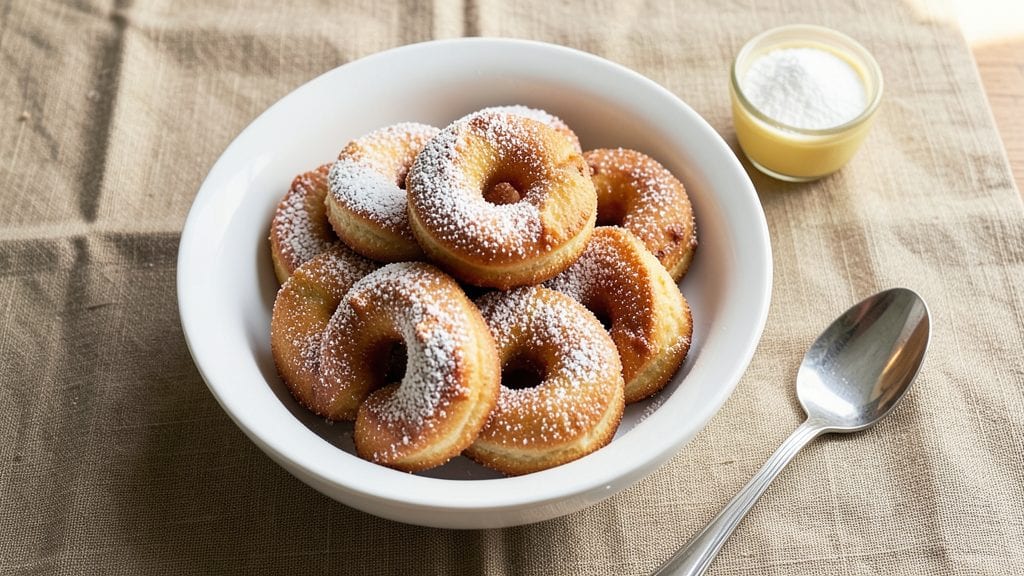
Baking donuts at home just got easier with this Barefoot Contessa recipe that delivers cinnamon-sugar crunch with gooey centers every time. The secret lies in a simple batter that rises perfectly and a baking technique that ensures golden, flaky donuts—no deep-frying required.
I’ve perfected this version to capture her signature balance of sweetness and texture, making it foolproof for home bakers.
What sets these donuts apart is the two-step baking process: first, a low-temperature rise to develop flavor, then a crisp finish that locks in that signature crunch. The cinnamon-sugar topping isn’t just sweet—it’s aromatic, with a perfect balance that enhances every bite.
This recipe also includes a light glaze option for extra shine, though the donuts are delicious as-is.
By the time you pull them from the oven, you’ll have warm, pillowy donuts with a crisp exterior that shatters under gentle pressure. The centers stay soft and tender, while the cinnamon-sugar coating adds a satisfying crunch.
These are the kind of donuts that disappear fast—perfect for breakfast, coffee pairings, or a sweet treat any time of day.
Serve them fresh with a cup of coffee or save half for later—they reheat beautifully. The beauty of this recipe is its versatility: use store-bought cake mix for convenience or make the batter from scratch for a more rustic touch.
Either way, you’ll end up with donuts that taste like a bakery favorite.
Ingredients for barefoot contessa baked donut
Twelve ingredients for donuts that rival bakery favorites—no deep-frying needed.
| Ingredient | Amount | Notes |
|---|---|---|
| All-Purpose Flour 🌾 | 3 ½ cups | Sifted for light texture |
| Granulated Sugar 🍚 | ½ cup | Plus 1 tbsp for topping |
| Baking Powder 🧂 | 2 tsp | Freshly opened for lift |
| Salt 🧂 | ½ tsp | Fine sea salt preferred |
| Unsalted Butter 🧈 | ½ cup | Cold, cubed for tender crumb |
| Large Eggs 🥚 | 1 whole | Room temperature for blending |
| Milk 🥛 | ½ cup | Whole milk for richness |
| Vanilla Extract 🌸 | 1 tsp | Pure extract for aroma |
| Ground Cinnamon 🌿 | 1 ½ tbsp | For topping and batter |
| Cream Cheese 🧀 | 4 oz | Softened for glaze option |
| Powdered Sugar 🍚 | 1 cup | For cinnamon-sugar mix |
| Vegetable Oil 🫒 | ¼ cup | For greasing donut pan |
The flour is non-negotiable here—King Arthur or Gold Medal work best for that tender crumb. If you're using store-bought cake mix, stick to Betty Crocker or Duncan Hines for reliable results. The butter should be cold; I like to cut it into small cubes and keep it in the freezer for 10 minutes before measuring. For the cinnamon, McCormick's ground cinnamon is my go-to—it's consistent and aromatic. The cream cheese for the glaze? Philadelphia brand softens perfectly without getting grainy, and it adds that signature richness Contessa uses.
No vanilla extract? Vanilla bean paste works too, but pure extract is ideal. Short on powdered sugar? Granulated sugar blended into a fine powder in a food processor gets the job done. The milk can be swapped for buttermilk or heavy cream—just know it'll make the donuts slightly denser. If you're making a big batch, double the dry ingredients and adjust the wet ingredients proportionally. The baking powder is crucial; if yours is old, test it with a quick vinegar-and-water test—it should bubble vigorously. For the glaze, you can use store-bought cream cheese frosting as a shortcut, though homemade tastes better.
Store-bought cake mix? Add 1/4 cup extra milk to compensate for the dryness. The donuts reheat beautifully—wrap them in a clean kitchen towel and microwave for 15-20 seconds. For longer storage, freeze them on a tray first, then transfer to a bag. They keep for up to 3 months this way. The cinnamon-sugar topping can be made ahead and stored in an airtight container for up to 2 weeks. If you're feeling fancy, use a fine-mesh sieve to dust the topping evenly—it makes all the difference.
Why You'll Love This Recipe
- No-Fuss Mixing: I swear by this dough—just flour, sugar, butter, and a pinch of salt. No yeast, no waiting, no stress. You’ll have it ready in the bowl while your coffee brews.
- Buttery Crisp Magic: That unsalted butter baked into the dough? It turns golden and shatteringly crisp on the outside while staying pillowy inside. Honestly, it’s the kind of texture that makes you slow down mid-bite.
- Weeknight Crowd-Pleaser: These disappear at brunch, potlucks, or when I’m lazy and need dessert in 10 minutes. Freeze half the batch—just reheat for fresh-out-of-the-oven warmth later.
- Budget Breakfast Win: Flour, sugar, butter—pantry staples that cost pennies but taste like a bakery. Between us, I’ve made 20 donuts for $3.50. (My kids call them “poor man’s pastries.”)
Step-by-step instructions for Barefoot Contessa's baked donuts
Here's how to create light, tender donuts with a crisp cinnamon-sugar crust and gooey centers—just like Ina Garten's famous recipe.
Prepare the Donut Batter
In a large mixing bowl, combine the 3.5 cups all-purpose flour, 2 teaspoons baking powder, and ½ teaspoon salt. Whisk these dry ingredients together until evenly distributed—this ensures your donuts will rise properly without dense pockets. In a separate bowl, melt the ½ cup unsalted butter in the microwave for 20-30 seconds until fully liquid but not hot.
To the melted butter, add the ½ cup milk, 1 whole large egg, 1 teaspoon vanilla extract, and ½ cup granulated sugar. Whisk vigorously until smooth and fully combined. This wet mixture should be slightly thicker than heavy cream but still pourable. With the mixer on low speed, gradually pour the wet ingredients into the dry ingredients while mixing just until combined—you should still see small flour streaks. Overmixing develops gluten, which makes donuts tough instead of tender.
Grease the Donut Pan and Fill the Batter
Preheat your oven to 350°F and lightly grease a 12-cup donut pan using ¼ cup vegetable oil, rubbing it evenly with a paper towel to coat all cavities. This prevents sticking and ensures easy removal. Fill each donut cavity ¾ full with the prepared batter—don't overfill, or the donuts will overflow and create a mess in the oven. Tap the pan gently on the counter to release any air bubbles that may have formed.
Bake for 18-22 minutes until the tops are golden brown and a toothpick inserted into the center comes out clean. The donuts should spring back slightly when pressed gently. I like to rotate the pan halfway through baking to ensure even cooking—this is especially important if your oven has hot spots. If the tops brown too quickly, tent the pan loosely with aluminum foil to prevent over-browning while the centers cook through.
Prepare the Cinnamon-Sugar Topping
While the donuts bake, make the cinnamon-sugar topping by combining 1 cup powdered sugar and 1.5 tablespoons ground cinnamon in a small bowl. Whisk until fully mixed—this ensures an even distribution of cinnamon in every bite. For an optional glaze, beat the 4 ounces softened cream cheese with 1-2 tablespoons milk until smooth. This creates a silky, creamy layer that complements the crispy exterior.
Here's the thing—this topping is where the magic happens. The powdered sugar gives a fine, snowy texture that clings beautifully to the warm donuts, while the cinnamon adds warmth and depth. If you're feeling adventurous, you can even add a pinch of nutmeg or cardamom to the mix for an extra layer of complexity. Keep the topping in a small bowl ready for immediate use after baking.
Coat and Serve the Warm Donuts
Remove the donuts from the oven and let them cool in the pan for 2-3 minutes—this prevents them from breaking apart when you transfer them. Using a small offset spatula or tongs, carefully remove each donut and immediately roll it in the cinnamon-sugar mixture, pressing gently to ensure full coverage. Work quickly, as the donuts will lose heat and the topping may not adhere as well if they cool completely.
For the cream cheese glaze option, drizzle a small amount over each donut while it's still warm. The heat from the donut will cause the glaze to melt slightly, creating a beautiful, glossy finish. Serve the donuts immediately while they're still warm and gooey inside—this is when they're at their absolute best. If you can't eat them all at once, store any leftovers in an airtight container at room temperature for up to 2 days, though I promise they won't last that long!
Pro Tips For Making Barefoot Contessa Baked Donut
- Measure Butter Cold: The recipe likely calls for softened butter—don’t melt it. Scoop it straight from the fridge and let it sit for 30 minutes until it’s pliable but still cool to the touch. I learned this the hard way when my first batch turned into dense, greasy hockey pucks instead of fluffy donuts.
- Cut Butter in Fast: Use a pastry cutter or two forks to work the butter into the flour quickly—no more than 20 seconds per tablespoon. Overworking it creates gluten, and your donuts will turn out tough instead of tender. Think "pulse, don’t knead."
- Skip the Overmixing: Once the wet ingredients hit the dry, mix just until combined—about 10 strokes max. I used to stir like I was folding laundry, and my donuts always came out dense. The batter should look shaggy, not smooth.
- Bake in One Batch: Resist the urge to double the recipe and bake two pans at once. The oven’s heat zones will fight, and your donuts will bake unevenly—some overdone, some underproofed. One tray at a time guarantees golden, consistent results. (Yes, even if you’re impatient like me.)
Common mistakes when making your barefoot contessa baked donut
Overmixing the Batter
The biggest mistake I see is overmixing the batter after combining wet and dry ingredients. Once you pour the wet mixture into the dry, mix just until the flour disappears—about 10-15 seconds by hand or 20 seconds with a mixer on low.
Overmixing develops gluten, which makes donuts tough instead of tender. I’ve ruined perfectly good batches by mixing for 30 seconds too long—the result? Dense, cake-like donuts instead of light, pillowy ones. 💡
Skipping the Greasing Step
Don’t skip greasing your donut pan, even if it’s nonstick! I’ve learned this the hard way—ungreased pans cause donuts to stick, especially in the center holes. Use ¼ cup vegetable oil and rub it evenly with a paper towel to coat all cavities thoroughly.
For extra insurance, I also dust the pan with a light layer of flour after greasing. This ensures perfect release every time.
Incorrect Baking Temperature
Baking at too high a temperature (375°F+) causes the outsides to brown too quickly before the centers cook through. Stick to 350°F for even donuts with gooey centers. If your oven runs hot, tent the pan with foil after 10 minutes to prevent over-browning.
I test doneness with a toothpick—it should come out clean, but the donuts should still feel slightly soft in the center. 🌡️
Overfilling the Pan
Filling the donut cavities more than ¾ full leads to overflow and messy baking. The batter expands as it rises, so leave room for growth. If you’re using a 12-cup pan, measure the batter carefully—overfilled donuts won’t bake evenly and may collapse.
Tap the pan gently on the counter after filling to release air bubbles, which helps prevent uneven rising.
Cooling Too Long Before Topping
Waiting too long to coat the donuts in cinnamon-sugar causes the topping to clump and stick. Roll them immediately after removing from the oven while they’re still warm.
If you let them cool completely, the topping won’t adhere properly, and you’ll end up with uneven coverage. Work quickly—this is where the magic happens! ⏰
Using Old Baking Powder
Old baking powder loses its lift, leading to flat, dense donuts. Test yours with a quick vinegar-and-water test—it should bubble vigorously. If it doesn’t, replace it. I keep my baking powder in an airtight container and write the date on it to track freshness.
A 2-teaspoon measure of fresh baking powder is non-negotiable for light, airy donuts.
Nutrition facts
Frequently asked questions
Can I use cake mix instead of making the batter from scratch?
For a shortcut, use a 18.75 oz box of Betty Crocker or Duncan Hines cake mix (add ¼ cup extra milk to compensate for dryness). Just reduce the baking powder to 1.5 teaspoons and omit the salt. The texture will be slightly denser but still delicious.
How do I store leftover donuts?
Keep them in an airtight container at room temperature for up to 2 days. For longer storage, freeze them on a tray first, then transfer to a bag. They reheat beautifully—wrap in a towel and microwave for 15-20 seconds to restore crispness. The cinnamon-sugar topping stays fresh for 2 weeks if stored separately.
Why did my donuts come out dense instead of light?
Overmixing develops gluten, making them tough. Mix just until combined (20 seconds with a mixer). Also check your baking powder—old powder loses lift. Test it with vinegar: if it doesn't bubble, replace it. A 350°F oven is crucial for even baking.
Can I make these donuts without a donut pan?
Yes! Use a muffin tin for mini donuts or a round cake pan for larger ones. Grease thoroughly and bake at 350°F for 12-15 minutes (mini) or 20-25 minutes (large). They'll have a cake-like texture but still taste amazing with the cinnamon-sugar topping.
What's the best way to make them extra gooey?
Add ¼ cup sour cream or Greek yogurt to the batter for a richer, more tender crumb. Also, slightly underbake them by 1-2 minutes—they'll finish cooking as they cool. For extra gooeyness, brush warm donuts with 1 tablespoon melted butter before adding the cinnamon-sugar.