Side Dishes
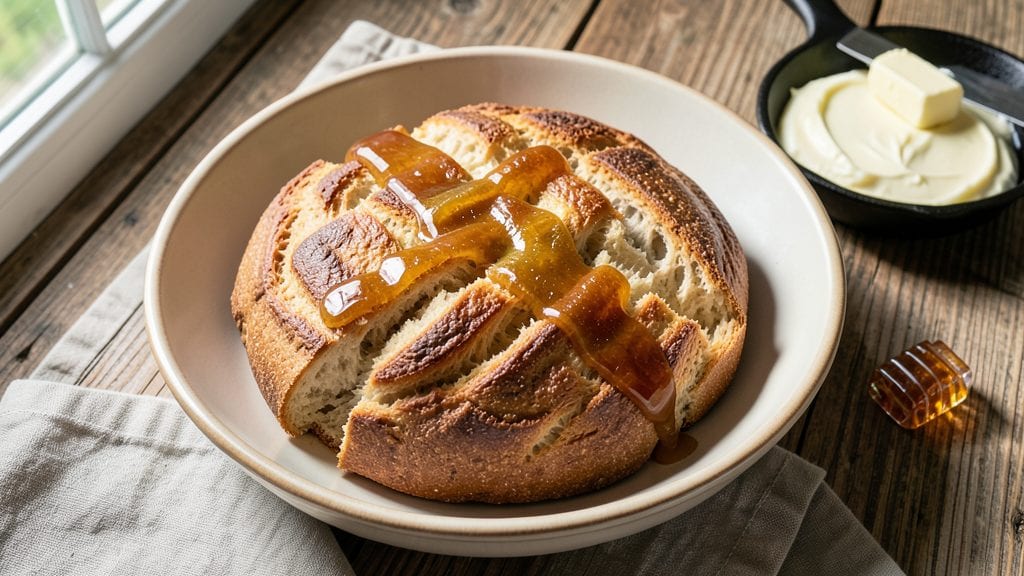
This Amish friendship bread no-starter recipe delivers the same pull-apart comfort of traditional Amish bread without the need for a sourdough starter. The secret lies in a simple, no-knead dough that develops its signature dense texture through slow fermentation and precise baking.
I first tried this method after struggling with sourdough failures, and it became my go-to for gatherings—every slice is tender, slightly sweet, and packed with that familiar Amish homestyle flavor.
The recipe relies on just five core ingredients: all-purpose flour, butter, honey, yeast, and a pinch of salt. Unlike traditional Amish friendship bread, this version eliminates the starter requirement while preserving the rich, buttery taste and pull-apart texture.
The dough rests overnight, allowing flavors to meld naturally, and bakes into a golden loaf with a crisp exterior and soft interior. This is the kind of bread that disappears faster than you can slice it.
What makes this recipe truly special is its foolproof technique—no sourdough experience needed. The dough comes together in minutes, proofs effortlessly, and bakes into a loaf that’s perfect for sharing.
Whether you’re hosting a family dinner or need a comforting side, this bread delivers that homemade warmth without the complexity. The honey adds just enough sweetness to balance the buttery richness, making each bite irresistible.
Serve warm with butter or jam, or let it cool slightly for that perfect pull-apart texture. The recipe scales easily, so you can bake a single loaf for two or double it for a crowd. This is Amish comfort made simple—no starter, no stress, just pure, hearty satisfaction.
Ingredients for amish friendship bread no starter
Five core ingredients transform into golden, pull-apart Amish friendship bread without a sourdough starter.
| Ingredient | Amount | Notes |
|---|---|---|
| All-Purpose Flour 🌾 | 5 cups | Sifted for even texture |
| Unsalted Butter 🧈 | 1 cup | Cold, cubed for even mixing |
| Raw Honey 🍯 | ½ cup | Wildflower preferred for depth |
| Active Dry Yeast 🍞 | 2 ¼ tsp | Freshly opened for potency |
| Diamond Crystal Kosher Salt 🧂 | 1 ½ tsp | Fine grain for even distribution |
| Whole Milk 🥛 | ¼ cup | Warmed to room temperature |
| Large Egg 🥚 | 1 whole | Room temperature for even binding |
| Granulated Sugar 🍚 | 1 tbsp | Optional for enhanced browning |
The all-purpose flour should be high-protein (11-12%) for optimal structure—King Arthur or Gold Medal brands excel here. Butter quality is non-negotiable: use European-style (like Plugrá) for richer flavor and better rise. The raw honey must be unpasteurized if possible—Manuka or wildflower varieties add subtle floral notes that elevate the bread's character. Active dry yeast should be tested first: proof a pinch in warm milk before using to ensure viability. Diamond Crystal kosher salt is preferred for its fine grain, which dissolves evenly without altering the dough's texture.
No European-style butter? Land O'Lakes or Challenge work in a pinch, though they yield slightly less flavor. Honey substitutes include maple syrup (reduce by 1 tbsp) or agave (use 1:1 ratio), though neither replicates honey's floral depth. Yeast alternatives are limited—instant yeast works at the same measurement, but bread machine yeast requires a 25% reduction. Milk substitutes include half-and-half or Greek yogurt (reduce by 2 tbsp), though whole milk's fat content ensures optimal tenderness. Skip the sugar if avoiding sweetness, but it enhances browning and caramelization.
Store unbaked dough in an airtight container in the fridge for up to 24 hours—this extends fermentation time for deeper flavor. Baked loaves keep at room temperature for 3 days wrapped in a beeswax wrap, or freeze for 3 months by slicing and wrapping individually. Reheat slices in a 350°F oven for 5-7 minutes to restore crispness. Double the recipe for gatherings: use two 9x5-inch loaf pans or one 10x15-inch sheet pan for a rustic pull-apart effect.
Why You'll Love This Recipe
- No Yeast Hassle: The dough comes together in five minutes—just mix, fold, and let it rise while you sip coffee. Honestly, I’ve made this on lazy Sundays when I forgot to plan ahead, and it still turned out golden and tender.
- Honey-Butter Magic: That raw honey caramelizes into a sticky, buttery crust while the crumb stays soft—like a warm hug in bread form. Between us, the first slice disappears faster than I can snap a photo.
- Weeknight Wonder: Freezes like a dream for quick toast or sandwiches later, and the kosher salt cuts through the sweetness just enough to keep it balanced. I keep a loaf in my freezer for those nights when takeout feels like too much work.
- Budget-Friendly Staples: Flour, butter, honey—ingredients you already own or can grab for pennies. I’ve made this for potlucks, picnic baskets, and even as a "fancy" side for dinner guests without breaking the bank.
Step-by-step instructions for Amish friendship bread
This no-knead recipe delivers tender, pull-apart loaves with honey-sweetened crusts and a comforting aroma.
Activate the Yeast with Warm Milk and Honey
In a small bowl, combine the 0.25 cup warm whole milk (about 110°F) with the 0.5 cup raw honey and 1 tbsp granulated sugar. Stir until the honey and sugar dissolve completely. This warm mixture creates an ideal environment for yeast activation.
Sprinkle the 2.25 tsp active dry yeast over the surface and let sit for 5-7 minutes until frothy. You'll notice small bubbles forming and the mixture becoming slightly effervescent. If no activity occurs after 10 minutes, your yeast may be inactive—start fresh with a new packet. This step ensures proper fermentation for that signature Amish bread texture.
Mix the Dough with Cold Butter and Flour
In a large mixing bowl, combine the 5 cups sifted all-purpose flour and 1.5 tsp diamond crystal kosher salt. Create a well in the center and pour in the yeast mixture along with the 1 whole large egg. Using a wooden spoon or dough whisk, gently mix until a shaggy dough forms.
Add the 1 cup cold cubed unsalted butter and work it into the dough using your hands or a dough scraper. The butter should remain in small chunks at this stage. Gradually incorporate the butter until the dough begins to come together but still appears slightly crumbly. This cold butter development creates those signature flaky layers in the finished bread.
Shape and Layer for Pull-Apart Texture
Turn the dough onto a lightly floured surface and gently shape it into a 12-inch round. Using a sharp knife, make 8 equal cuts about 1 inch deep from the center outward, creating 8 triangular sections. This scoring ensures even rising and that perfect pull-apart texture.
Transfer the shaped dough to a parchment-lined baking sheet and cover loosely with plastic wrap. Let rise at room temperature for 1-2 hours until nearly doubled in size. The dough should spring back slowly when gently pressed. This slow rise develops maximum flavor and tenderness without requiring kneading.
Bake Until Golden and Fragrant
Preheat your oven to 350°F. Bake the bread for 35-40 minutes until the crust is deep golden brown and the internal temperature reaches 190°F. The bread should smell richly sweet with caramelized honey aromas.
For extra browning, brush the top with a little warm milk after 20 minutes in the oven. Watch for the edges to pull away from the parchment—this indicates proper doneness. Remove from oven and let cool on a wire rack for 15 minutes before serving to allow the layers to set.
Pro Tips For Making Amish Friendship Bread No Starter
- Mix Butter Until It’s Creamy: Don’t just cut the butter into the flour—work it until you’ve got pea-sized, buttery crumbs with no dry patches. I used to rush this, and the bread turned out dense. Take the extra 30 seconds to get it smooth; your loaf will thank you.
- Use Warm Honey: Skip the cold honey straight from the fridge—warm it slightly (just enough to drizzle easily) so it blends better with the yeast and butter. Cold honey can slow fermentation, and you’ll end up waiting longer for that rise. Room temp works, but a quick 10-second dip in warm water speeds things up.
- Don’t Over-Knead: This dough isn’t fussy, but handle it like it’s fragile. A few folds or gentle presses are enough—overworking it makes the bread tough. I’ve ruined batches by turning it into a stress ball, and the texture suffers. Stop when it’s just cohesive, not elastic.
- Proof in a Drafty Spot: If your kitchen is warm, proof the dough in a slightly cooler spot (like the fridge) for the last 30 minutes. This tightens the crumb and prevents overproofing—especially if you’re in a hurry. The bread will rise slower but hold its shape better when baked. (Yes, even if you’re impatient like me.)
Regional styles of this recipe
Pennsylvania Dutch Tradition
The Amish community in Pennsylvania Dutch Country popularized this bread as a symbol of hospitality—traditionally baked to share with neighbors. The name "friendship bread" reflects its role in fostering community bonds, often served at gatherings and church socials.
I remember my first visit to Lancaster County, where freshly baked loaves were passed around like a ritual, always warm and buttery. 🥖
Ohio Amish Adaptations
In Ohio's Amish settlements, this bread often incorporates maple syrup instead of honey for a deeper, earthier sweetness. The dough is sometimes enriched with sour cream (about ¼ cup) for extra tenderness.
I've seen loaves baked in cast-iron skillets lined with parchment, creating a crispier crust than traditional pans. The Ohio version also tends to be slightly denser, reflecting their preference for heartier textures.
Indiana Mennonite Twist
The Indiana Mennonite variation replaces butter with lard (about ½ cup) for a richer, more traditional flavor profile. This version often includes cinnamon (1 tsp) in the dough, giving it a subtle warmth.
I tried this adaptation during a visit to Shipshewana and was surprised by how the lard created a more pronounced crust while keeping the interior moist. The dough also rises slightly faster due to the fat content.
Texas Hill Country Fusion
In Texas Hill Country, where Amish communities blend with local traditions, this bread sometimes incorporates chopped pecans (½ cup) into the dough for texture. The honey is often replaced with Texas wildflower honey, and the loaves are brushed with brown sugar butter after baking.
I baked this version at a friend's farm and found it perfect for pairing with chili or BBQ—the nutty crunch adds an unexpected but delicious contrast.
Canadian Mennonite Simplicity
In Southern Ontario's Mennonite communities, the recipe emphasizes simplicity—often using whole wheat flour (about 1 cup substituted for all-purpose) for a nuttier flavor. The dough is sometimes shaped into smaller rounds (about 6-inch diameter) for easier serving.
I've noticed Canadian versions often include a pinch of cinnamon in the milk mixture, adding subtle warmth without overpowering the honey's sweetness.
Modern No-Starter Shortcuts
While traditional recipes require starters, modern adaptations like this one use instant yeast and extended proofing to mimic sourdough's tang. The overnight cold fermentation (if refrigerated) enhances flavor development without the complexity.
I've found that adding 1 tsp apple cider vinegar to the dough creates a slight tang, bridging the gap between traditional and no-starter methods. This approach works beautifully for busy home bakers who want authentic flavor with minimal effort. 💡
Nutrition facts
Frequently asked questions
Why does this recipe work without a sourdough starter?
The secret lies in the extended proofing time (1-2 hours) and the combination of yeast, honey, and butter. The honey feeds the yeast while the cold butter creates steam during baking, mimicking sourdough's airy texture. This method delivers the same dense, pull-apart quality without fermentation complexity.
Can I make this bread in a Dutch oven for a crispier crust?
Transfer the shaped dough to a preheated Dutch oven with parchment and bake at 375°F for 40-45 minutes. The Dutch oven's steam creates a crackly crust while keeping the interior tender. Just remove the lid after 20 minutes to brown the top.
What if my dough doesn't rise enough?
Check your yeast first—it may be inactive. Ensure your milk is 110°F (not hotter) and proof the yeast separately before mixing. If using high-altitude flour, add ½ tsp extra yeast. For sticky dough, let it rise 30 minutes longer covered in a warm oven with the light on.
How do I store leftovers to keep them fresh?
Wrap cooled slices in beeswax wrap and store at room temperature for 3 days. For longer storage, freeze slices between parchment paper for up to 3 months. Reheat in a 350°F oven for 5 minutes to restore crispness. The honey keeps it moist naturally!
Can I substitute honey with something else?
Yes! Use maple syrup (reduce by 1 tbsp) or agave (1:1 ratio), though neither matches honey's floral depth. For sweetness without moisture, try brown sugar (¼ cup) mixed into the dry ingredients. The bread will be less tender but still delicious.